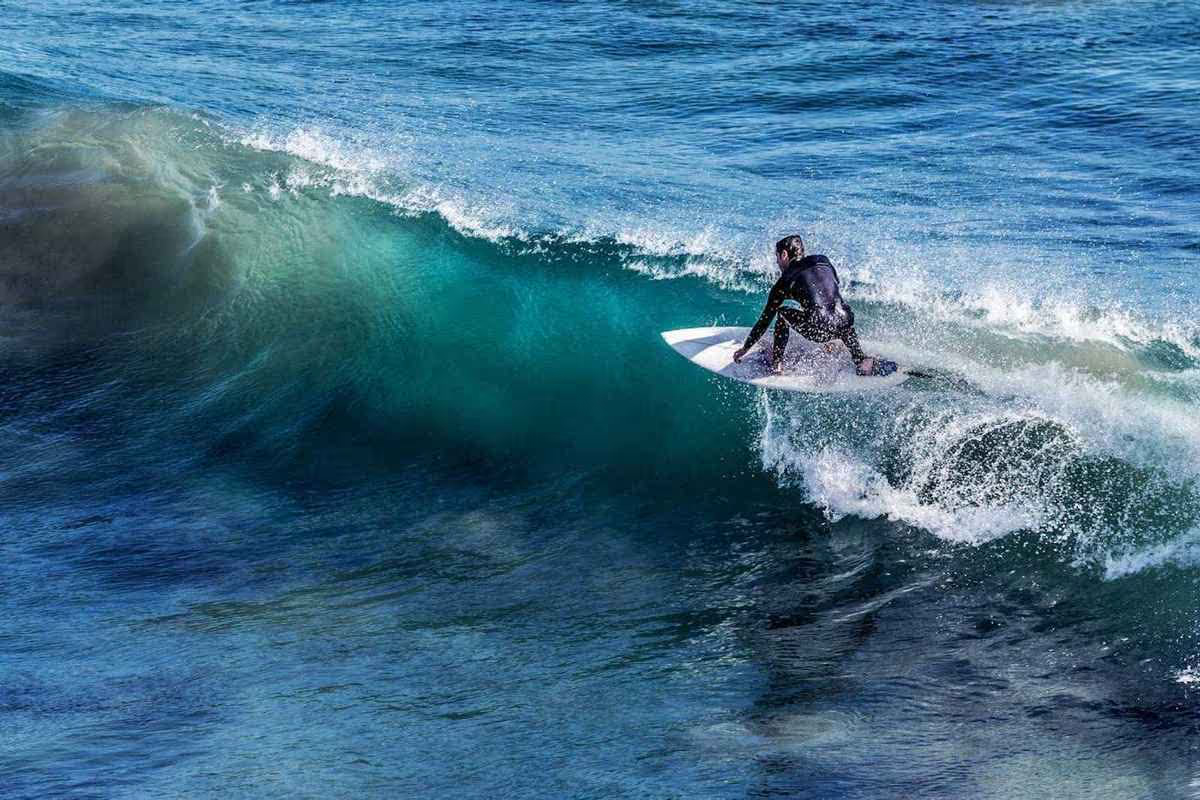
T-Land
A 300-to-400-meter mechanical left peeling over shallow coral with the precision of a Swiss watch. T-Land is the reason surfers find Rote in the first place -- and the reason they come back.
Type
Left-hander
Level
Intermediate -- ExpertWave Size
2' -- 15'+
Best Season
May -- October (dry season)
Water Temp
27degC / 80degF year-round
Access
Walk or paddle from Nemberala village
The wave
Also known as Besialu Reef
Nemberala Bay, south coast · < 1 km (in front of the village)
T-Land breaks on Besialu Reef, a flat coral shelf on the southern edge of Nemberala Bay. Indian Ocean groundswells generated in the Roaring Forties travel thousands of miles of uninterrupted fetch before hitting this reef, arriving with periods of 12 to 20 seconds. That energy gets compressed over the shallow coral, producing waves that are dramatically bigger and more powerful than their open-ocean height suggests -- a 2-foot reading on the buoy can translate to clean 4-to-6-foot faces on the reef.
The wave splits into four distinct sections, each with its own character. On a solid south-west swell at low tide, you can connect all four in a single ride that runs 400 meters or more. The south-east trade winds blow directly offshore here, grooming the faces and holding the lips open all day. You can surf from dawn to dusk in season without the wind ruining it -- something that almost never happens at Indonesian reef breaks.
The channel next to the reef provides an easy paddle-out even on bigger days. No duck-diving through whitewater, no dangerous currents -- just paddle up the channel and swing into the lineup. It's one of the things that makes T-Land accessible to strong intermediates despite being a genuine world-class reef break.
The sections
T-Land breaks into distinct zones, each with its own character and conditions.
The Point
The outermost section with the shallowest reef. Near-vertical take-offs into fast, technical barrels. Advanced surfers only. High risk of reef contact at low tide.
The Pyramid
The most consistent and forgiving section. A triangular A-frame structure that pushes water for 300+ meters. Works in everything from 1-foot fun waves to 12-foot bombs. Accessible to intermediates.
The Mountain
Named for the enormous hydraulic jacking that happens over the deep reef step. Dormant below 3--4 feet, but in big swells it produces top-to-bottom cylinders that require a gun (7'6"+ board) and real commitment.
Bananas
The innermost section where the wave curves sharply. Unlike the rest of T-Land, Bananas works best on medium to high tide -- low tide here is lethal with exposed coral. On a high tide it produces empty, hyper-technical tubes that cap off a 400-meter ride.
Best conditions
What you need for T-Land to fire. Swell, tide, wind, and timing.
Swell Direction
210deg -- 230deg (South-West)
Tide
Low tide (~0.5m) for barrels, all tides surfable
Low tide (0.5m) produces the fastest, most hollow sections. High tide makes it fat and slow below 4ft. The reef tolerates all phases but rewards patience at low water.
Wind
90deg -- 135deg — E -- SE trade winds (offshore)
Season
May -- October (dry season)
Before you paddle out
Safety
Shallow coral reef throughout. Reef booties strongly recommended, helmet advisable at The Point on bigger days. The channel provides a safe paddle-out but respect the lineup hierarchy -- locals have priority.
Pro tip
Session timing matters. Dawn patrol gets the cleanest conditions before the trades pick up, but the offshore wind actually improves the barrels throughout the morning. The sweet spot is usually 7--10am at low tide on a solid swell.
Frequently asked
Common questions about surfing T-Land on Rote Island.
Is T-Land good for intermediate surfers?
Yes. The Pyramid section works in all conditions from 1 to 12 feet and is accessible to confident intermediates who can handle a reef break. Avoid The Point and The Mountain -- those are for advanced and expert surfers only.
What is the best tide for T-Land?
Low tide (~0.5m) produces the fastest barrels, especially at The Point. Mid-tide is the safest all-round option. High tide above 4ft still works, but below that the wave goes fat. Bananas (the inside section) is the exception -- it needs mid to high tide.
How big does T-Land get?
T-Land holds from 2 to 15+ feet. Thanks to the deep channel next to the reef, it doesn't close out even on the biggest swells. Above 8 feet you need experience and a longer board.
When is the best time to surf T-Land?
May through October (dry season). South-east trade winds blow offshore all day and consistent south-west groundswells arrive from the Southern Ocean. The shoulder months (April and November) can also be excellent with lighter winds.
How do I get to T-Land from Nemberala?
Walk. T-Land breaks directly in front of Nemberala village. Paddle out through the channel -- it takes about 5 minutes from the beach to the lineup.
Location
T-Land
Nemberala Bay, south coast · < 1 km (in front of the village)
Plan your session at T-Land
We can help you find accommodation near the break, arrange surf guides, and put you in touch with locals.
Plan your session