Type “rote island monthly rental” into Google and watch it flail. It offers you Roatan in Honduras. It offers you Rhode Island. It pulls up booking pages for a dozen places that happen to share a few letters with this one. The reason is plain. Almost nobody has written about renting a place on Rote by the month, because the monthly market here doesn’t live on the internet. It lives in conversations you have after you land.
That’s the first thing to unlearn if you’re arriving from Bali. On Rote you don’t lock a villa from your laptop in Lisbon with a card deposit and a signed lease. You show up, you look, you talk, and you settle a price in person. Once that clicks, planning a long stay gets a lot easier, because you stop hunting for a booking button that was never going to exist.
The Four Ways People Actually Live Here for a Month or More
Nearly everyone who stays a month or longer ends up in one of four setups, and each one costs something different. The figures below are what you’ll realistically hand over once you’ve negotiated on the ground, quoted in rupiah with the dollar value at roughly 16,000 IDR to the dollar.
A room in a village homestay is the cheapest way in. You’re renting a simple room in a family’s compound, often with breakfast and a shared bathroom, and you become a temporary part of the household. Monthly deals here run around 1.5 to 3 million IDR (about $95 to $190). It suits a solo long-stayer who wants to live cheaply and doesn’t mind a fan instead of air conditioning.
A basic beachfront bungalow is the classic Rote long-stay. Wooden or bamboo, a porch, a bed, a fan, sometimes a kitchenette, twenty steps from the water. Booked by the night these get pricey, but negotiated by the month they typically land between 3 and 6 million IDR (about $190 to $375), depending on whether you want air conditioning and how far into low season you’re arriving.
A small local house rented long-term is the option most people don’t realise exists, because it’s never advertised. Families with an empty second house near the coast will rent it whole to someone staying several months, usually 2 to 5 million IDR (about $125 to $315). You get a kitchen, your own space and privacy, and in exchange you’re on your own for maintenance and furnishing gaps.
A room in a resort on an off-season monthly rate is the top of the range. Outside the busy months, places built for week-long surf guests will do a long-stay deal rather than sit empty, often 6 to 12 million IDR (about $375 to $750) with air conditioning, reliable power and someone handling the cleaning. It’s the closest thing to a serviced apartment the island offers, and it’s what a lot of remote workers quietly settle into once they’ve done a month in a bungalow and decided they want a desk and a stable connection.
Why No One Will Quote You a Monthly Rate Online
Because publishing a monthly price would cost the owner money. The nightly rate on the booking sites is the tourist rate, and it’s deliberately high so there’s room to come down for anyone who commits to weeks. Put a low monthly number on the internet and you’ve just told the week-long surf guest what the local really pays. So the number stays off the page, and you unlock it by turning up.
The move that works: book one or two nights through a booking site so you have a bed the day you arrive, then spend that first stay walking the coast, asking at the places you like, and settling a monthly figure directly with whoever runs it. It feels backwards if you’re used to sorting everything before you fly. On Rote it’s the only way the good deals actually surface, and it’s the same logic that shapes where to stay along the Nemberala coast once you’re picking a specific stretch of sand.
If you’d rather see the spread of places that exist before you commit to anything, the island’s catalogue of rote island accommodation gives you names, locations and rough price bands to shortlist from. Treat it as your starting map, then do the real negotiating on foot.
How the Money Moves Once You Land
Rote runs on cash, and specifically on rupiah in hand. Card machines are close to nonexistent outside the bigger resorts, and the ATMs cluster in Ba’a, the main town. Plan to draw what you need when you pass through town and carry it, because the coast where you’ll actually live has no cash points worth relying on.
Monthly rent is almost always paid in cash, often month by month rather than the whole stay upfront. Deposits are modest by Western standards, commonly a month or nothing at all, and the “contract” is usually a verbal agreement and a handshake. That cuts both ways. There’s no paperwork protecting you, so the relationship with the owner is what protects you, which is exactly why arriving, meeting people and reading the place in person matters more here than any listing ever could.
From abroad, the honest list of what you can actually arrange in advance is short. You can book your first nights. You can line up a pickup from the ferry or the little airport. Everything else, the monthly rate, the house, the length of stay, gets settled once you’re standing there. If you’re planning to string several months together, it’s worth reading up on the visa options for a long stay before you fly, since that’s the one piece you genuinely can’t fix after landing.
Can You Actually Work Online From a Rote Guesthouse?
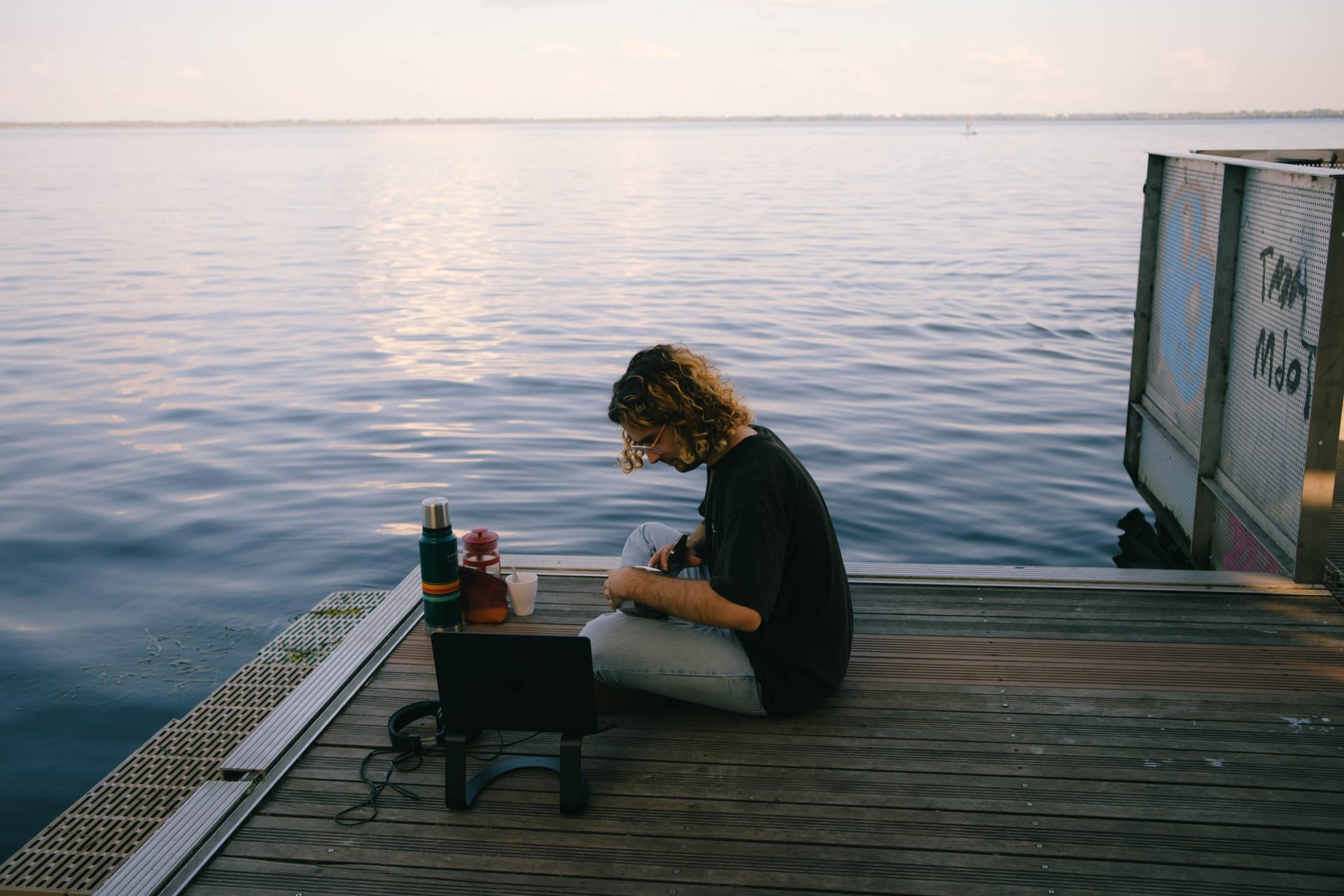
Yes, but you choose the place for its connection, not the connection for the place. A handful of guesthouses have invested in decent internet, Starlink is spreading fast across the coast, and Telkomsel is the one mobile network worth having a SIM for out here. The weak link is power, which cuts often enough that a generator or a battery setup is what separates a workable base from a frustrating one.
Here’s the practical filter for a remote worker. Before you agree a month anywhere, ask three things and verify them yourself: what the internet actually is (fibre is rare, Starlink is the growing answer, plain mobile data is the fallback), whether there’s a generator or backup when the grid drops, and whether you can run air conditioning without the setup browning out. A place with fast Starlink and no power backup is still dead every time the electricity goes. This is the whole game for anyone earning online from the island, and it’s worth going deeper on internet and connectivity on Rote before you pick a base, because the answer changes street by street.
One rhythm to plan around: with about 80 percent of Rote’s population Christian, Sundays are genuinely quiet, shops shutter and life slows for church.1 Do your grocery run and your important calls on another day and the island’s pace works for you instead of against you.
Where on the Island to Base Yourself
Nemberala and the west coast around Bo’a is where most guesthouses and the whole long-stay scene sit, and it’s where the slow surfing crowd waits out the flat spells for the days that make the patience worth it. But Rote is bigger than that one strip. The island covers roughly 1,227 km², which is a lot of coast and rolling hills to have quietly written off because a booking site only shows you the surf beach.2
Ba’a, the main town, is the practical anchor. It has the ATMs, the market, the hospital and the ferry link, and some long-stayers base near it precisely so town errands aren’t an hour’s ride each way. Getting on and off the island runs through Kupang on West Timor, which is why it pays to treat Kupang as your logistics base for the bigger supply runs and the flights out. The daily ferry crosses from Kupang to Ba’a in about two hours, leaving at 8:30 in the morning, and the fare had climbed to around 202,000 IDR (about $13) by 2023. If you’d rather skip the boat, Wings Air runs the same hop in about 30 minutes.1
What to Nail Down Before You Hand Over a Month’s Rent
Walk the place with a checklist and use it out loud, because sorting this before you pay saves the month that goes sideways after. Confirm the kitchen situation, since eating out three times a day for months adds up and quietly rewrites your cost of living on Rote. Check air conditioning against a fan and, more importantly, whether running the AC trips the power. Ask about water, laundry, and how far you are from a pharmacy and a decent shop, because “twenty minutes on a scooter to buy anything” is a real tax on a long stay.
Then the two questions that decide it for a remote worker: is the connection fast enough to hold a video call, and does the power stay on long enough for you to earn a living. Sit down, open your laptop, and test it during that first booked night before you commit a rupiah to the month. On Rote the deal you talk yourself into on the porch is only as good as the connection that’s still standing at nine on a Tuesday morning.
Sources
Footnotes
-
Rote Island — Wikipedia. en.wikipedia.org ↩ ↩2
-
Rote Island — dati (Wikidata). wikidata.org ↩