
Rote has no international school. The nearest campus running a British, Australian, or American curriculum is a ferry crossing plus a domestic flight away, over in Bali or Jakarta. If you are picturing a bilingual classroom down the road from your rented house by the beach, this is the part of the plan to sort out before you sign anything, because for a family the school question is what decides whether living on Rote three to eight months a year actually works or quietly falls apart.
The island itself sits low and remote, 1,227 square kilometres of mostly farming and fishing country, about 500 km northwest of the Australian coast and southwest of Timor, with a population that is roughly 80% Christian and speaks a handful of local languages alongside Indonesian.12 It is a lovely place to raise young kids for a season. It is also a place where the formal schooling ladder you know from home simply does not exist. Both truths are real, and which one matters more depends almost entirely on how old your children are.
What “international school in Indonesia” actually means from here
When people search for international schools indonesia, they usually picture a fee-paying campus teaching a foreign curriculum in English, leading to exams recognised back home. Those exist, and there are good ones, but they cluster in exactly three or four places: Bali (Canggu, Ubud, Sanur, Denpasar), Jakarta, and Surabaya. That is the whole realistic map for a long-stay family in eastern Indonesia.
None of them is anywhere near Rote. To reach a proper international campus from the island you are looking at the boat to Kupang or a short flight, then a connection onward to Bali. That is not a school run. That is a relocation. For most of the school year, choosing an international school in Indonesia and choosing Rote are two different decisions that pull your family in opposite directions. You can have the campus or you can have the island. Holding both at once means splitting the household, and that cost is measured in flights, rent in two places, and a parent living apart from the kids for months.
Is there a school in Kupang for expat children?
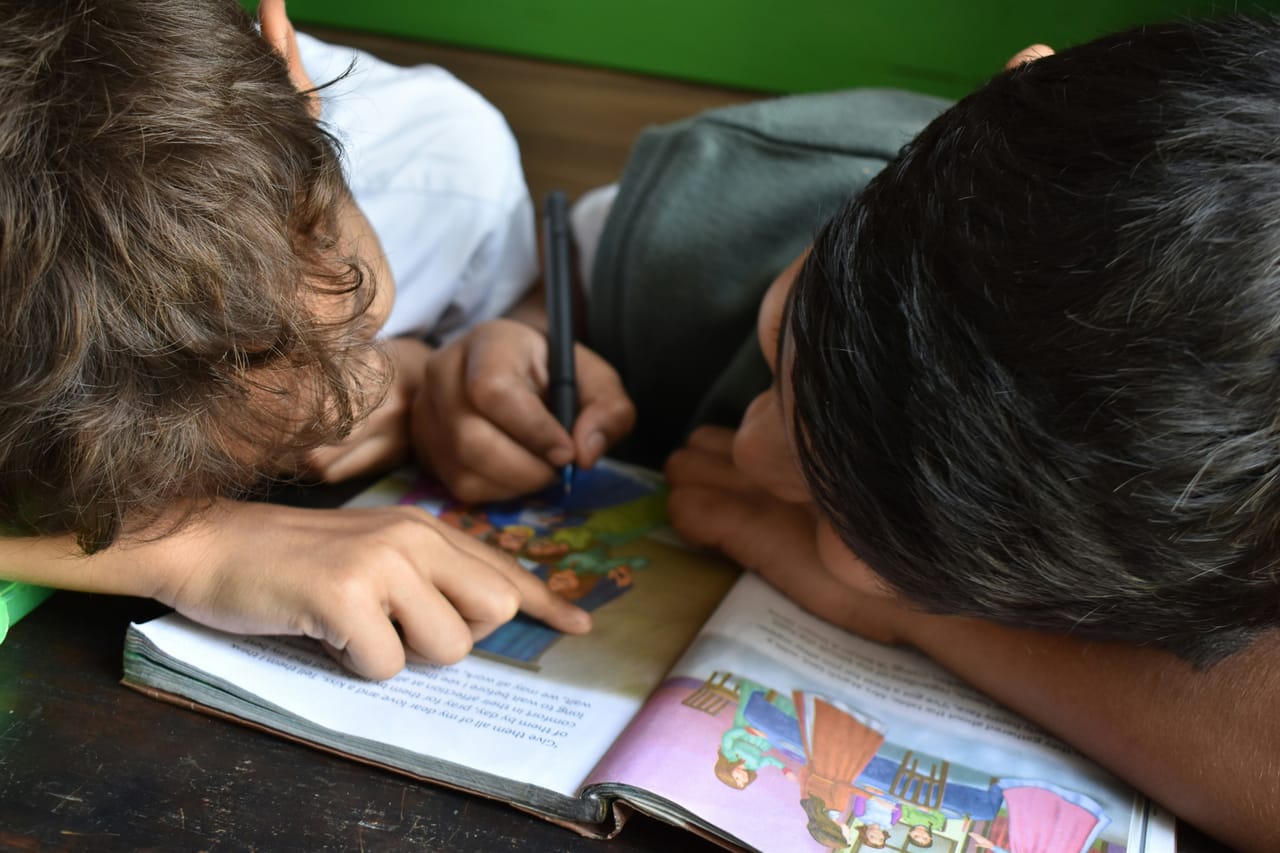
In the international-campus sense, no. Kupang, the provincial capital across the strait, is the largest town in the region and has private and “national-plus” schools that teach some subjects in English and follow the Indonesian national curriculum. What it does not have is a full foreign-curriculum international school of the kind you would find three islands over in Bali.
This matters because Kupang is the natural fallback in a lot of family plans. People assume that if Rote is too small, the nearby city fills the gap. For most things it does, and using Kupang as a base genuinely solves flights, hospitals, and supplies. Schooling is the exception. A search for schools in kupang for expat children turns up national and national-plus options, and they can work for a young child comfortable learning in Indonesian, but a teenager on a British or American track will not find a matching programme there. Be clear-eyed about that before you build a plan around it.
The three real paths, and what each one costs a family

There are three ways families actually do this, and the right one depends on your child’s age and how many months a year you plan to be here.
The first is the local Indonesian primary school, the Sekolah Dasar. It is free or close to it, taught entirely in Indonesian, and for a five- or six-year-old it can be the best thing that happens to them. Small kids absorb the language in a few months and end up more integrated into village life than their parents ever will. The trade-off is obvious. The curriculum, standards, and language will not line up with anything back home, so it suits a family settling in for the long stretch. A family dipping in for a single season should look elsewhere.
The second is homeschooling or an accredited online school, run over your internet connection. This is the default for part-year and remote-working families, and it is worth its own section below.
The third is a structured school off the island, which in practice means moving a parent and the kids to Bali for term time while the other parent commutes, or the whole family basing in Bali and treating Rote as the long holiday. This is the option that delivers a real international-curriculum education, and it is also the one that ends the fantasy of raising your kids on a quiet island. You are choosing Bali with Rote weekends.
Homeschooling in Indonesia: the frame that actually works
Homeschooling in indonesia sounds exotic until you realise how ordinary home education has become elsewhere. In the United States alone the number of homeschooled children climbed from about 850,000 in 1999 to over 1.7 million by 2016, and more than a third of parents already weigh several schooling options for a single child rather than defaulting to the nearest school.34 You would not be doing anything strange. You would be doing something millions of families already do, from a nicer location.
The version that works for a foreign family on Rote goes well beyond improvised teaching at the kitchen table. It is enrolment in an accredited distance programme from your own home system, one that follows a recognised curriculum, provides materials and assessment, and keeps your child on a track that transfers cleanly when you go back. Families who want their kids inside the Indonesian national system can pursue the domestic equivalency route instead, but almost nobody on a three-to-eight-month rhythm bothers with that paperwork; they keep the home-country curriculum and treat Indonesia simply as the address.
The catch is entirely practical and it is spelled c-o-n-n-e-c-t-i-v-i-t-y. An online school lives or dies on the internet. Live lessons, uploads, timed assessments, video calls with a teacher in another time zone, all of it assumes a connection that holds. On Rote that assumption needs checking against reality before you enrol a child. Sort the connection question first and the homeschooling plan becomes genuinely workable. Skip it and you have signed your kid up for a course they cannot reliably attend.
The part-year family: the plan nobody spells out
Here is the option the brochures never mention, because it does not sound romantic. You keep your children fully enrolled in their normal school back home, and you come to Rote in the windows that do not wreck their school year.
For a lot of families this is the sane answer. School holidays, a long summer, a parent with remote work and flexible term-time absence, and suddenly Rote becomes three to five months of the year without a single schooling compromise. You are not homeschooling, not fighting a foreign curriculum, not splitting the household for a term. The kids miss nothing. This is where the calendar does real work. Line up your home country’s long breaks with Rote’s dry season, and the best months on the island fall exactly when school is out.
It also changes the boring adult logistics in your favour. Shorter, planned stays sit more comfortably inside visa limits, so your visa runs get simpler, and you are far less likely to trip the 183-day rule that turns you into a tax resident somewhere you did not intend. Coming for the right months instead of all of them is often the difference between a plan that survives contact with real life and one that collapses by the second term.
Which ages this works for, and which it fights
Age is the honest filter, more than budget or visa or anything else.
Under school age, roughly the three-to-five window that education researchers treat as the early-years, school-readiness stage, Rote is close to ideal.5 There is nothing to disrupt, the environment does the teaching, and a small child thrives on beach, freedom, and village kids. If your children are little, come with confidence.
Primary age, six to about eleven, is where the two on-island paths work best. Kids this age slot into the local Sekolah Dasar and pick up Indonesian fast, or they follow an accredited online programme without much drama because the workload is still light and the stakes are low. This is the group for whom homeschooling in indonesia is least stressful.
Then come the exam years. Teenagers heading into 15, 16, 17, the stretch education statisticians track as the 16-to-19 band, are the hardest case by a wide margin.5 This is precisely when an interrupted or improvised schooling path costs the most, when qualifications and continuity matter, and when uprooting a kid from their friends does real damage. For this group the honest advice is usually to keep them in their home-country school and become a part-year family, or accept that serious Rote time waits until they finish. Do not move a fifteen-year-old to an island with no matching school and hope it sorts itself out.
The honest limits
Rote works beautifully for families with young children, for those willing to homeschool over a solid connection, and for anyone who can time long stays around a home-country school calendar. It does not work for a family that wants a conventional foreign-curriculum school within reach and is not prepared to base in Bali to get it. It does not work well for teenagers mid-exam-track. And it does not forgive a plan built on a school in Kupang that turns out not to teach in a language or curriculum your child can use.
The families who do best here decide the schooling question first and the beach house second. Pack for the life you are actually committing to, and let the practical realities of what to pack for Indonesia and the rest of the setup follow that decision rather than lead it. If you want a second pair of eyes on whether your children’s ages and school situation fit an island this remote, that is exactly the kind of question worth asking someone who lives here before you book anything.
Sources
Footnotes
-
Rote Island — dati (Wikidata). wikidata.org ↩
-
Rote Island — Wikipedia. en.wikipedia.org ↩
-
School Choice in the United States: 2019. nces.ed.gov ↩
-
U.S. public, private and charter schools in 5 charts. pewresearch.org ↩
-
America’s Children 2025 - Education Figures. childstats.gov ↩ ↩2