
The first question people ask me before they commit to moving here has nothing to do with surf, rent or visas. It’s this: can I keep my job? You’re on WITA time zone, UTC+8, and the honest answer depends almost entirely on one thing, where your colleagues or clients sit. Rote doesn’t decide your schedule. Berlin does, or New York does, and the gap between their clock and yours is what you’ll actually be living around at month four. This is one piece of living and working remotely from Rote, and it’s the piece most people underestimate until their first 11 p.m. call.
What time zone is Rote Island in?
Rote Island runs on WITA, Waktu Indonesia Tengah, or Central Indonesia Time, which is UTC+8 all year. Indonesia does not observe daylight saving time, so your local clock never moves. Whatever offset you calculate today holds in July and holds in December.
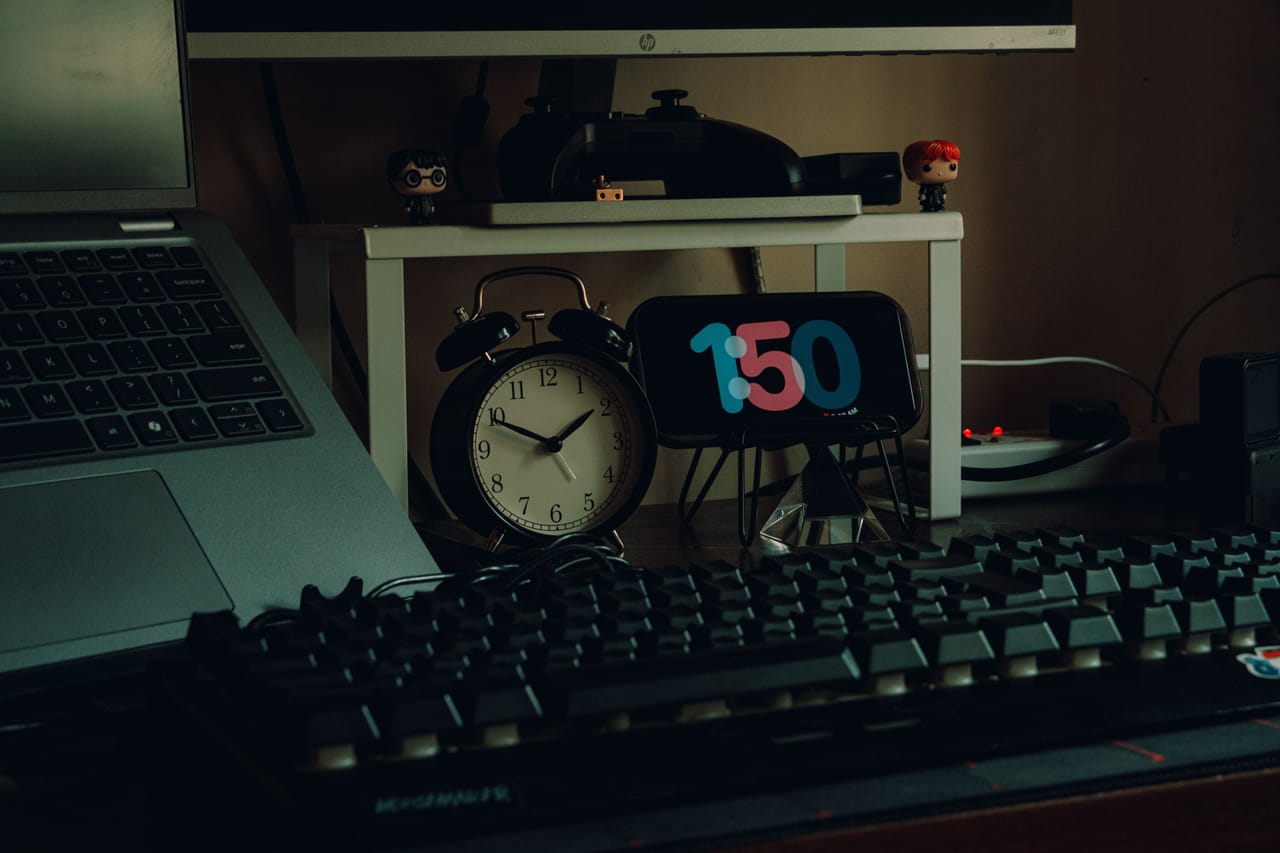
Indonesia is split across three zones. WIB (UTC+7) covers Jakarta and Java, WITA (UTC+8) covers Bali, Makassar, Kupang and Rote, and WIT (UTC+9) covers Papua. Rote sits in the middle band, down at roughly 10.7° south, 123.1° east 1. One practical thing that trips people up: Jakarta is an hour behind you. When you book a flight that routes through the capital, the departure time on the ticket is WIB, not your clock, so keep that hour straight, especially if you’re connecting through Kupang as your logistic base with a tight layover.
The upside of UTC+8 is that you share a clock with a lot of places worth knowing:
| Same clock as Rote (UTC+8) |
|---|
| Bali |
| Singapore |
| Perth |
| Hong Kong |
If a service quotes you Singapore or Bali hours, that’s your time too, no math required.
How many hours is Europe behind Rote?
Europe is the friendlier setup, and the one I’d steer most people toward if they get a choice. In winter, Central European Time (Berlin, Paris) sits 7 hours behind you. In summer, when Europe moves to CEST, that gap shrinks to 6. The UK and Portugal are one hour further back, 8 in winter and 7 in summer.

Put in real numbers, here’s what 9 a.m. in Europe looks like on your kitchen clock:
| European city, 9:00 local | Winter (Rote) | Summer (Rote) |
|---|---|---|
| Berlin / Paris | 16:00 | 15:00 |
| London / Lisbon | 17:00 | 16:00 |
So a full European morning starts landing on you in the early-to-mid afternoon. The window that genuinely works is 15:00 to 20:00 WITA. That block covers the entire European morning and the start of their afternoon, which is when most of the real-time work actually happens, the stand-ups, the client calls, the “quick sync” that runs long. Anything a colleague tries to schedule after 21:00 your time is the part you negotiate away, and with a European employer you usually can, because it’s their evening too.
What makes this sustainable past the novelty stage is the shape of your day. Your morning is free, and it’s free during the exact hours the island is awake and functioning. The market has fish, the roads are quiet, the office you might rent or the home and coworking setup on Rote is cool before the heat builds. You work through the hot part of the afternoon when sitting still is what you want anyway. That free morning is also, not by coincidence, when the ocean is usually cleanest, which is the whole point of slow surfing for anyone staying long enough to wait for the right day.
There’s a numbers argument underneath all this too. The average actual working week across the EU is about 35.9 hours, with full-time men around 39.4 and full-time women around 37.6 2. Over a year that’s roughly 1,686 hours for the average employee 3. You are not being asked to be reachable for all of them. A European job needs a few hours of dependable overlap and asynchronous discipline for the rest, and 15:00 to 20:00 WITA gives you that overlap without eating your evening.
Can you work US hours from Rote?
East Coast, yes, if the job needs a few hours of overlap rather than a synchronous nine-to-five. West Coast, realistically no. The offset is simply too wide, and a schedule that starts at 1 a.m. is one nobody keeps past the first month.
Here’s the arithmetic. The US East Coast is 13 hours behind you in winter (EST) and 12 in summer (EDT). Move west and each zone adds an hour.
| US city, 9:00 local | Winter (Rote) | Summer (Rote) |
|---|---|---|
| New York | 22:00 | 21:00 |
| Chicago | 23:00 | 22:00 |
| Denver | 00:00 (+1 day) | 23:00 |
| Los Angeles | 01:00 (+1 day) | 00:00 |
New York at 9 a.m. is 10 p.m. on Rote. That’s the survivable version, and only under one condition. If your work needs two or three hours of overlap, you take calls from roughly 21:00 to 24:00 WITA, catch the top of the American morning, then close the laptop. Your daytime on the island stays entirely yours. That’s a real, repeatable life.
The version that quietly destroys people is a US employer who expects synchronous 9-to-5 Eastern time. On Rote that translates to working 22:00 through 06:00, every night, in the dark, sleeping through the daylight you moved here for. People promise themselves they’ll tough it out, and they last about a month before the body wins and the job or the move falls apart. Be honest with yourself before you sign anything.
West Coast makes the point starkly. Los Angeles at 9 a.m. is 1 a.m. your time in winter. There is no arrangement of a normal life around that. If your main client is in California, treat Rote as a place you do deep async work and occasional odd-hour calls, and don’t build the plan on live overlap.
Two lived details matter here. The sun on Rote drops around 6 p.m. all year, so every one of those American evening calls happens after dark, which means your reliable power is the weak link in the chain. Grid supply gets shaky in the evening, so if you’re doing late US video calls you plan around power cuts on Rote and lean on a backup connection and Starlink as the actual spine of the call, not a nice-to-have. Coordinating across a 12-hour gap is hard enough without your electricity choosing 11 p.m. to quit; distributed teams have spent two decades building process precisely because that separation breaks things when it’s left to chance 4.
Daylight saving: the twice-a-year shift that breaks your calendar
Indonesia never changes its clocks, which sounds like it removes the problem. It moves the problem onto the other end. Twice a year the US and Europe shift, and because they do it on different dates, your fixed offset silently changes and your standing meetings jump an hour with no warning.
The US moves in mid-March and again in early November. Europe moves on the last Sunday of March and the last Sunday of October. Those are not the same days. So for roughly two to three weeks in March, and about a week around late October into early November, your gap with America and your gap with Europe are shifting on different calendars. A recurring 22:00 call with New York quietly becomes 21:00, or a 16:00 Berlin sync becomes 15:00, and if you weren’t watching, you show up an hour off.
The fix is boring and it works. Set your recurring meetings in the other person’s time zone, not yours, so the invite carries their clock and lets the calendar recalculate your side automatically. Then put four dates in your own calendar as all-day reminders, the two US changeover weekends and the two European ones, so when a colleague seems to have “moved” a meeting, you already know it’s daylight saving and not chaos. For the two or three overlap weeks, confirm call times in writing rather than trusting muscle memory.
The schedule that survives to month four
Tools are the easy part of all this. World Time Buddy, a shared calendar, a Slack status showing your hours, all of that takes an afternoon to set up. The real question for anyone staying three to eight months, or for good, is which schedule you can still stand in week sixteen.
The answer that lasts is async-first with a narrow, protected live window. You pick your overlap block, 15:00 to 20:00 for Europe or 21:00 to 24:00 for the US East Coast, and you defend it. Everything outside it is written, recorded, handed off. You are not on call for a full foreign workday, and you shouldn’t pretend to be, because that’s the version that burns out. Every one of us gets the same 24 hours 5, and living well on Rote means spending the daylight ones on the island, not glued to someone else’s afternoon.
Get the overlap right and the geography stops being a tax. Your morning belongs to the market, the water and the quiet, the afternoon carries the work, and the evening is yours or, at most, a short call in the dark with the router humming on backup power. That’s the setup that makes the move hold, and it’s worth mapping out honestly against what remote work from Rote can actually support before you tell your employer you’re going.
Sources
Footnotes
-
Rote Island — dati (Wikidata). wikidata.org ↩
-
Statistics Explained. ec.europa.eu ↩
-
Comparative analysis of working time in the European Union. ec.europa.eu ↩
-
Making Globally Distributed Software Development a Success Story: International Conference on Software Process, ICSP 2008 Leipzig, Germany, May 10-11, 2008, Proceedings. books.google.co.id ↩
-
I tempi della vita quotidiana - Lavoro, conciliazione, parità … istat.it ↩