
The tide is out early, and the flats in front of the resorts turn into a workplace. Women and men wade out across the exposed reef to tie and check lines of seaweed while, further along the same beach, a handful of surfers stand on a deck reading the swell at T-Land. That split screen is Nemberala. Most people meet this corner of southwest Rote from the line-up or a resort balcony, and they never see the other side of the beach. This is the village you actually live in if you stay for months rather than days, the one that keeps going long after the slow surfing crowd has flown home. If you are weighing a long stay here, the wave is the last thing you should be researching.
Nemberala Is a Village First, and a Surf Spot Second
Nemberala is a Rotenese village in Kecamatan Rote Barat, in Rote Ndao Regency, East Nusa Tenggara, with a registered population of just over 1,200 people 1. It sits on a small, low-lying island, so nothing here is far from the sea. The surf strip is a thin skin on the beach side of a place that farms, fishes, raises pigs and sends its kids to school like any other village in the province.
The reason outsiders know the name at all is the wave. Provincial tourism has leaned on Nemberala Rote as its headline draw for years, and back in 2016 the beach was voted the country’s Most Popular Surfing Spot in the national Anugerah Pesona Indonesia awards 2. That framing is exactly what makes people underestimate the village. The recap of the wave stops here. If you want the break itself, that belongs with the Rote surf spots, not with the place you rent a room.
What the Village Actually Lives On: Seaweed, Fish, Livestock
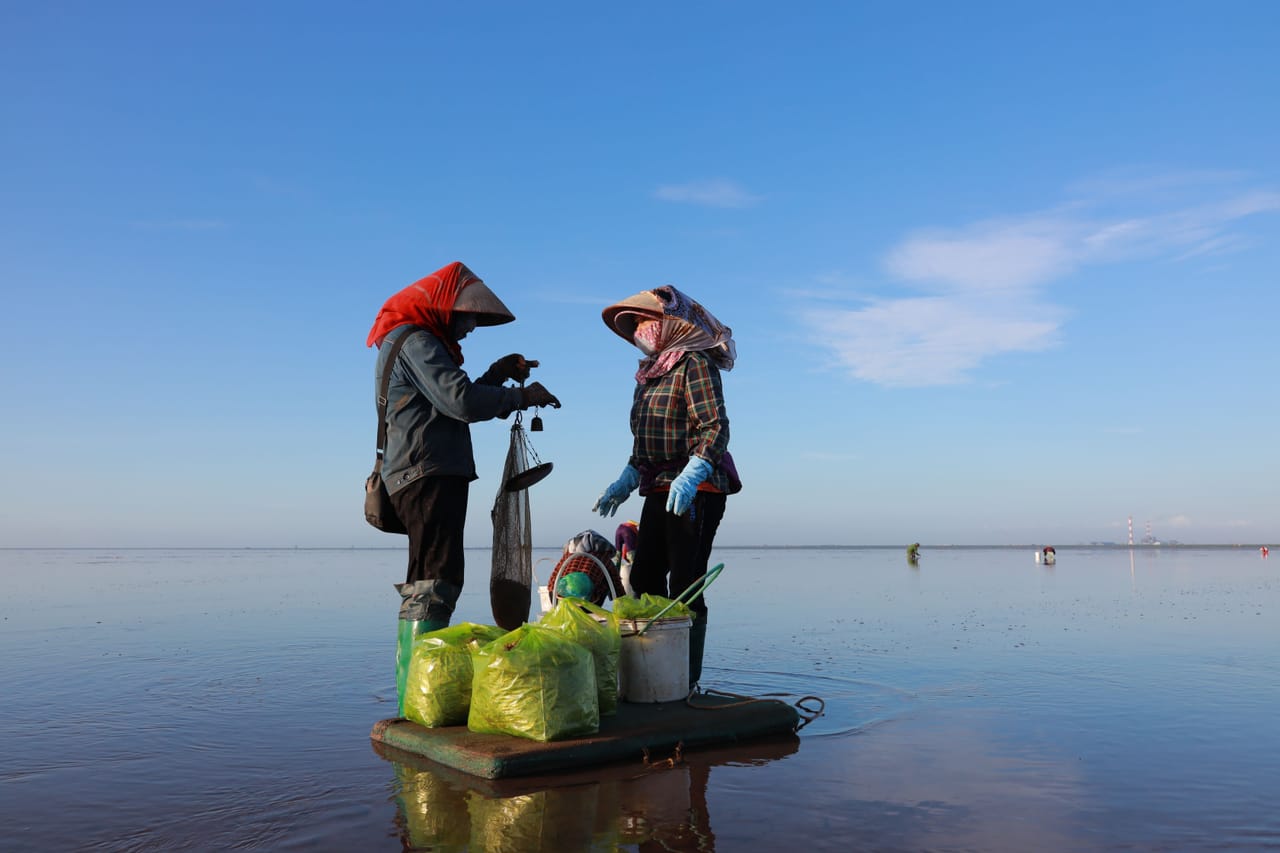
Strip away the surf and Nemberala runs on seaweed. Roughly 45% of the village works as seaweed farmers, and one count put it at 317 farmers out of 628 registered workers, ahead of every other job including private-sector employees, civil servants and honorary staff 3. This is the real economy of Rote Island village life, and you watch it happen from your own terrace.
The seaweed flats at low tide
The rhythm here belongs to the moon, not the clock. When the water pulls back and exposes the seabed, that shallow reef becomes the farm 4. Farmers head out to plant and tend lines while the flats are dry enough to walk 4. Seaweed farming isn’t ancient here either. It started in the village in 1998, and it has been the backbone ever since 3.
The money is thin and out of the farmers’ hands. A family works a limited number of lines, and one bad run of weather wipes them out. Along this coast, storms grew frequent enough between 2017 and 2021 to destroy harvest after harvest, and the best planting window has narrowed to the calmer stretch of the year 4.
Fishing boats and the catch you’ll end up eating
Fishing sits right next to the seaweed, and it runs deep. Researchers documenting the local Rote language found 160 distinct fishing terms still in use in Nemberala, a whole vocabulary for reading tides, gear and species 5. That is the fish you buy at the shoreline in the morning and cook that night. It is also worth knowing that the same reef that feeds the village is the reef you paddle over, so treat cuts seriously and keep a plan for coral cut treatment if you spend real time in the water.
Pigs, goats and buffalo on the road
Livestock is not decorative here. What that means for you is practical. Animals share the road, your scooter has to yield to them, and an unfenced garden is an open invitation.
What this means for you as a resident:
- Plan your day around the tide, not office hours. The village is busiest on the flats when the water has pulled back.
- The freshest food is local and seasonal, sold direct, not shelved in a shop.
- Fence anything you plant, and ride slowly at dawn and dusk when animals are on the road.
A Week Shaped by the Tide, Not the Clock
Daily life in Nemberala answers to the sea before it answers to a calendar. The single biggest variable in the week is the tide, because that is what sends the whole seaweed workforce out to the flats and pulls them back in 4. Learn the tide chart and you understand the village.
Schooling still structures the mornings. Kids move to and from school in waves, and the roads around the school get busy in those windows. Government services run at a village scale, which tells you the level of care you can expect on the spot and where that level ends.
Invitations You Can’t Skip

Spend a week walking the lanes and you notice how much of family life stays in plain view here. Read what you see as a sign of how tightly family and place are bound, not as something strange to photograph.
The practical side of that closeness reaches you fast once neighbours know you by name. Funerals and weddings are community events, and a foreign resident who has been living on the lane will get invited. Turning up matters more than anything you bring. Go, dress with some care and modesty, sit where you are put, and contribute something honest to the family rather than making a show of it. You do not need to understand every custom. You do need to show that you took the invitation seriously, because in a village this size your absence is noticed as clearly as your presence.
Two Nemberalas: High Season and the Months Everyone Leaves

There are two versions of this village, and you should meet both before committing. When the swell fills in and the visitors arrive, the beach strip wakes up. The whole regency drew about 3,290 visitors in 2016, roughly 1,399 of them foreign, and a large share of those pass through Nemberala for the surf 2. Rooms fill, prices firm up, and the foreign faces on the sand outnumber the ones you have come to know.
Then the season turns and most of them go. The calmer stretch of the year is when the flats are worked hardest and the village is at its most itself 4. Businesses that lean on surfers get quiet, availability opens up, and the place gets very still. That quiet is either the whole appeal or the reason you leave. It lines up with the surf calendar and with the wind season that reshapes this coast, so plan a stay long enough to see the swap happen at least once.
Living Among Neighbours You’ll See Every Day
In a village of a thousand-odd people, you will pass the same faces every single day, and they will pass you. That changes how you behave. Roosters, generators, church noise and the occasional long night of karaoke are part of the soundtrack, and there is no soundproofing your way out of it. Privacy is looser than you are used to. Kids will appear at your gate, things get borrowed and lent, and learning even a handful of words of Bahasa Indonesia buys you more goodwill than any amount of rent paid on time.
That same-faces dynamic follows you into the water. The lineup at the local break is small and local, and the way you treat people there travels straight back to the lane you live on, which is why surf etiquette is really just village etiquette with a leash on. Where you base yourself along this coast decides how much of this you get. The village centre puts you inside the daily rhythm, while spots further along the shore trade some of that closeness for space.
What the Village Doesn’t Have
Be honest with yourself about the gaps before you sign a lease. Nemberala runs light on services, and some of what you might treat as basic simply is not here.
- Health care in the village is basic, and anything serious means leaving.
- Limited shops with limited, seasonal stock, not a supermarket.
- Patchy power and water that you learn to manage rather than assume.
- Real medical care, larger stores, banking and transport connections are a trip away to Kupang, the mainland base most long-stayers rely on for the things Rote can’t supply.
There is also a slower structural pressure worth naming. As tourism grows on coasts like this one, land and shoreline get contested, and the darker side of that growth has displaced local communities across the Global South 6. Living here well means being on the right side of that, as a guest who adds to the village rather than crowds it out.
Is Nemberala Right for You?
For a two-week surf trip, Nemberala usually disappoints, and the honest answer is to look elsewhere. It suits patient long-stayers who actually want village life: remote workers who can handle thin infrastructure, retirees after quiet, and slow surfers willing to wait months for the right day. It does not suit anyone who needs nightlife, reliable services or a clinic within reach. Come for the community and the pace, and the wave becomes a bonus. Come only for the wave, and the village will feel like an obstacle.
If you are seriously thinking about months in Nemberala rather than a week, the smart move is to rent for one full season change before you commit to anything longer, and talk to people who already pay rent here. The village will tell you quickly whether it is yours.
Sources
Footnotes
-
Profil | Website Resmi Desa Nemberala. nemberala.digitaldesa.id ↩
-
Rote Ndao Andalkan Destinasi Surfing Nemberala. bali.bisnis.com ↩ ↩2
-
Analysis of socio-economic conditions of seaweed farmers … cyberleninka.ru ↩ ↩2
-
The Life of a Woman Seaweed Farmer on the Shores … atsea-program.com ↩ ↩2 ↩3 ↩4 ↩5
-
Ecolexicon of Fisheries in Culture of the Nemberala … journals.bilpubgroup.com ↩
-
Tourism, Land Grabs and Displacement: The Darker Side of the Feel-Good Industry. play.google.com ↩