
Type “indonesia digital nomad visa” into a search bar and the first page promises five tax-free years, a laptop on a beach, and a government that rolled out the red carpet for remote workers. Read three lines further into any of those pages and you hit a limited stay permit, an income floor that filters out a good chunk of the people reading, and a rule that quietly ends the plan for anyone who wanted to bill an Indonesian client along the way.
Most of what’s written about this visa is written by agencies in Canggu, for people moving to Canggu. This is written from the other side of the water, on an island where the immigration office is a flight and a ferry away and nobody is going to hold your hand through the e-visa portal. So the point here is narrower and more useful. This covers what was actually announced versus what you can actually get today, and what that permit does and doesn’t fix for someone who wants to live somewhere that isn’t Bali.
What was announced in 2022, and what actually exists
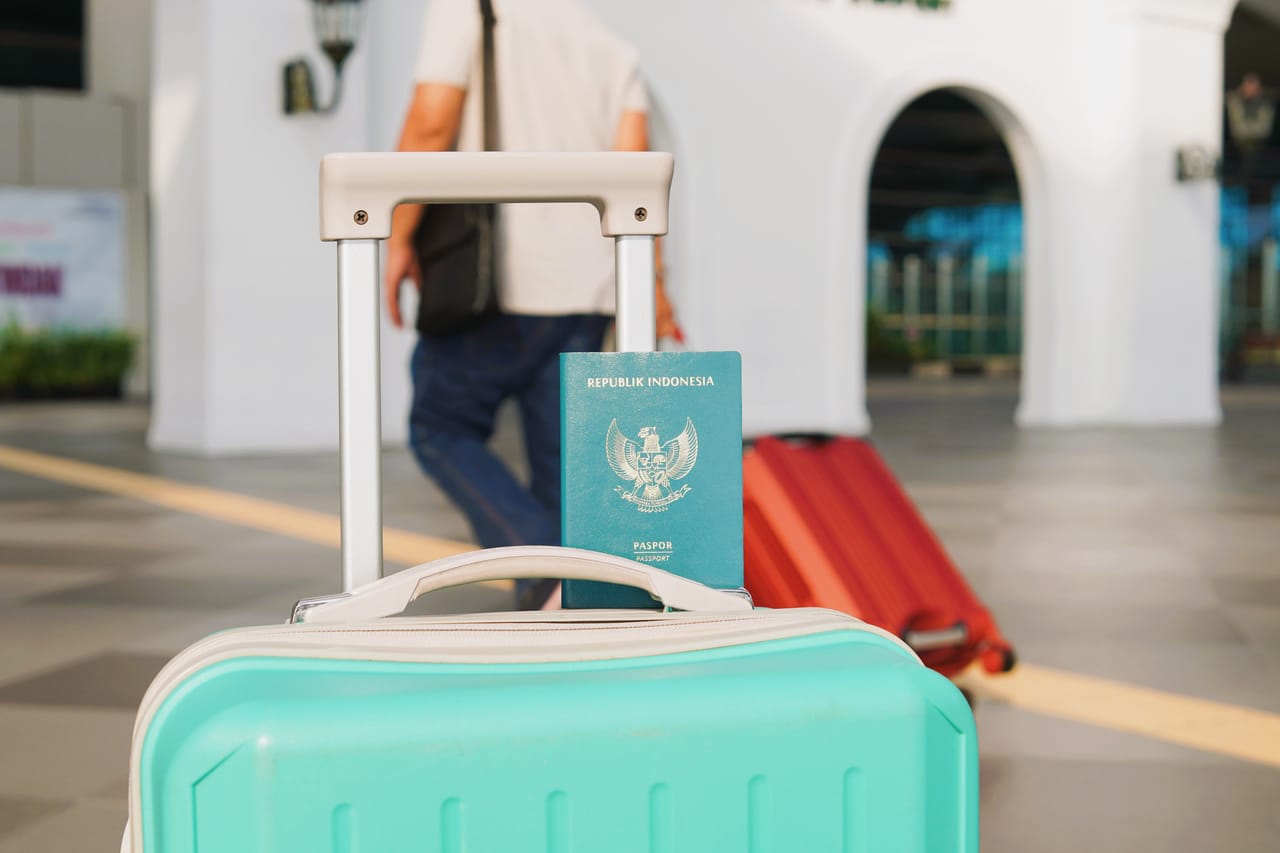
Back in 2022 the tourism ministry floated a headline that traveled around the world faster than any regulation could follow it. The pitch was a five-year visa for digital nomads, with income earned abroad going untaxed in Indonesia. It landed at the exact moment remote work went mainstream and every country started competing for people who could carry their salary in a laptop bag. The framing was seductive. Blend your job and your wanderlust, pick a beautiful place, stay for years, pay nothing. Academic write-ups of the period describe the same mood, a “digital nomad revolution” where destinations reshape themselves to catch this exact crowd with coworking, connectivity, and lifestyle services built around them.1
That five-year, tax-free version never became a rule you can apply for. It stayed an announcement. What eventually shipped is smaller and more ordinary, and it has a name that sounds like a car part. It’s called the E33G, the remote worker permit. It exists, it works, and it is nothing like the press release. There is no five-year, tax-exempt lifestyle stamp waiting at the airport. There is a limited stay permit with conditions, a real income requirement, and the same reporting obligations that come attached to any Indonesian residence permit.
If you read the 2022 coverage and filed it under “settled, easy, do it later,” this is the correction. The good news is that a legitimate remote worker route does exist now. The rest of this page is about who it actually fits.
The E33G in plain terms

The E33G is a stay permit for people whose income comes from outside Indonesia, from an employer or clients abroad. Once granted it turns into a KITAS, the physical limited stay permit card, and from that moment you’re inside the same system as any foreign resident. That’s the part the glossy summaries skip. It’s the closest thing the country has to a proper digital nomad visa, and it still behaves like a residence permit, with an address on file, renewals to track, and rules about where your money is allowed to come from.
That last rule is the one that reshapes plans. Your income has to originate abroad. You cannot pick up an Indonesian company as a client, take on local work, or earn from anyone inside the country while on this permit. If your income already comes from a foreign employer or foreign clients and you have no intention of chasing local contracts, you fit cleanly. If part of your plan was to build something here that earns rupiah, this is the wrong permit and you want the wider set of routes covered in the Indonesia visa landscape, where the business and investment options live.
Who actually qualifies
You generally need to prove remote income from a source outside Indonesia at a level in the region of USD 60,000 a year, hold a valid passport with room and time on it, and show you can support yourself without touching the local labor market. Meet the income bar and the foreign-income rule and you’re in the target group. Miss the income bar and no amount of enthusiasm changes the outcome.
The income threshold is where a lot of readers quietly drop out, and no page written by an agency that earns a fee per application will tell you that plainly. Sixty thousand US dollars a year is roughly a strong single professional salary in a Western market, not a passive trickle. If you’re a well-paid remote employee or a freelancer with steady foreign clients, that’s clearable and provable with contracts and bank statements. If you’re testing the nomad life on savings and a few small gigs, the numbers won’t line up, and it’s better to know that before you book flights.
People underestimate a second filter, which is proof. Immigration wants documentation that your money is real, recurring, and foreign. Employment letters, contracts, bank history. The soft version of “I work online” doesn’t survive contact with the paperwork.
What the visa does not solve
Here is where the announcement and the reality drift furthest apart, and where you should slow down.
It does not make you tax-invisible. The 2022 talking point was a tax exemption on foreign income, and that framing still floats around unchallenged. What actually applies to you depends on how long you stay, where your tax residency sits, and rules that have nothing to do with the marketing. If you spend most of the year in the country, “I have a nomad visa so I pay nothing” is an assumption that can cost you. Treat your tax position as a separate question with its own answer, not a bonus that comes stapled to the visa.
It does not let you work locally. Worth repeating because it kills so many plans. Foreign income only. No local clients, no local company, no rupiah earnings on this permit.
And it does not free you from being a resident. Once you hold the KITAS you’re inside the system, with the everyday admin that comes with it, from address reporting to the mechanics of renewals. What that residence actually feels like day to day, the bank account, the contracts, the utilities in your name, sits with the KITAS and daily life side of things rather than with the application itself. The visa gets you in the door. Living behind that door is a different chapter.
What this looks like from Rote, not Bali
Every competitor guide assumes you’re landing in Denpasar and Ubud is a taxi away. Rote is a different proposition, and the visa mechanics change shape here.
Rote Ndao is a 1,227 square kilometre island south of Timor, its highest ground barely 320 metres above the sea, sitting at the far southern edge of the country around 10.7 degrees south.2 There is no immigration office on the island issuing your permit. The one you deal with is across the water in Kupang, which becomes your administrative base whether you like it or not. Flights and ferries connect the two, and any biometrics, any in-person step, any renewal that can’t be done online routes through there. Build that into your timeline. What “your immigration office is in Kupang” means in practice is spelled out in the wider route comparison, and it stays a recurring reality of long stays here.
The upside is exactly the thing the E33G was built for. If your income is foreign and stable, the permit doesn’t care whether you plug in your laptop in a Seminyak coworking space or in a rented house on Rote with the ocean out front. The visa is location-agnostic inside Indonesia. That’s what makes an island most people can’t find on a map a viable base for a remote salary, provided you’ve handled the practical side of actually working remotely from an island this remote, which is its own set of questions about connectivity, power, and time zones.
If you don’t qualify, here’s what people actually do
This is the half of the story no agency writes, because there’s no application fee in it.
Say you don’t clear the USD 60,000 bar, or you want to test six months before committing, or your income is too lumpy to document cleanly. You’re not stuck. Plenty of long-stayers on Rote never touch the E33G at all.
The most common starting move is the visa on arrival route, which gets you in for a short stretch and can be extended once, enough to scout, rent a place, and decide whether the island is a fantasy or a fit before you commit to anything heavier. For people whose lives are split across countries, who spend a few months here and a few months elsewhere every year, a multiple entry setup for people who come and go often makes more sense than any residence permit, because it’s built around exactly that rhythm.
There’s also the second home visa, aimed at people with significant funds who want a long horizon without the income-source rules of the E33G. It solves a different problem for a different wallet, and it’s worth knowing exists before you assume the nomad permit is your only long-stay option.
The honest framing is that the E33G is one tool among several, and it’s the right tool only for a specific person. That person has foreign income comfortably above the threshold, plans a genuine long stay, and has no intention of earning locally. Everyone else has better-fitting options, and the mistake is forcing yourself into the permit with the trendiest name.
A quick orientation on applying
The step-by-step lives on twenty better-ranked agency pages, so this stays short on purpose.
The application runs through the official e-visa portal online, so you don’t need to be standing in Kupang to begin. Assemble the core documents ahead of time. You’ll want a passport with enough validity and blank pages, proof of foreign remote income at the required level, bank statements backing it up, and the supporting paperwork immigration asks for. You submit, you pay the government fee, you wait for approval, and once you’re in the country the permit converts to the KITAS card.
The single most useful piece of advice is to get the income documentation airtight before you touch the portal, because that’s where applications stall. If the paperwork or the back-and-forth with immigration feels like more than you want to manage from a remote island, that’s the moment to weigh whether a visa agent earns their fee, and how you’d pick one you can trust.
Common questions
Is there really a five-year tax-free digital nomad visa in Indonesia?
No. That was a 2022 announcement that never became a rule you can apply for. What exists today is the E33G remote worker permit, a limited stay permit with an income requirement and residence obligations, and no automatic tax exemption.
Can I work for Indonesian clients on this visa?
No. The E33G is for income earned outside Indonesia only. Local clients, local companies, or any rupiah earnings are off-limits on this permit. If earning locally is your goal, you need a different route entirely.
Do I have to live in Bali to use it?
No. The permit works anywhere in the country. The only Rote-specific wrinkle is that your immigration office is in Kupang, across the water, so factor travel into any in-person steps and renewals.
What if my income is below the threshold?
Then this isn’t your visa, and that’s fine. Short stays and split-year living work through the visa on arrival or a multiple entry setup, and higher-net-worth long-stayers have the second home route. The nomad permit is one option, not the only one.
Sources
Related guides
Footnotes
-
Transforming Remote Work and Tourism in the Digital Nomad Era. play.google.com ↩
-
Rote Island — dati (Wikidata). wikidata.org ↩