
An old woman you’ve never met slides a wooden box across the floor toward you, lifts out a folded green leaf, a hard nut and a smear of white paste, and holds them out. You have about ten seconds to respond, and whatever you do next tells the room exactly who you are. This happens in Rotenese homes far more often than any guidebook prepares you for, and getting it right costs nothing except knowing what’s going on.
What They’re Actually Handing You
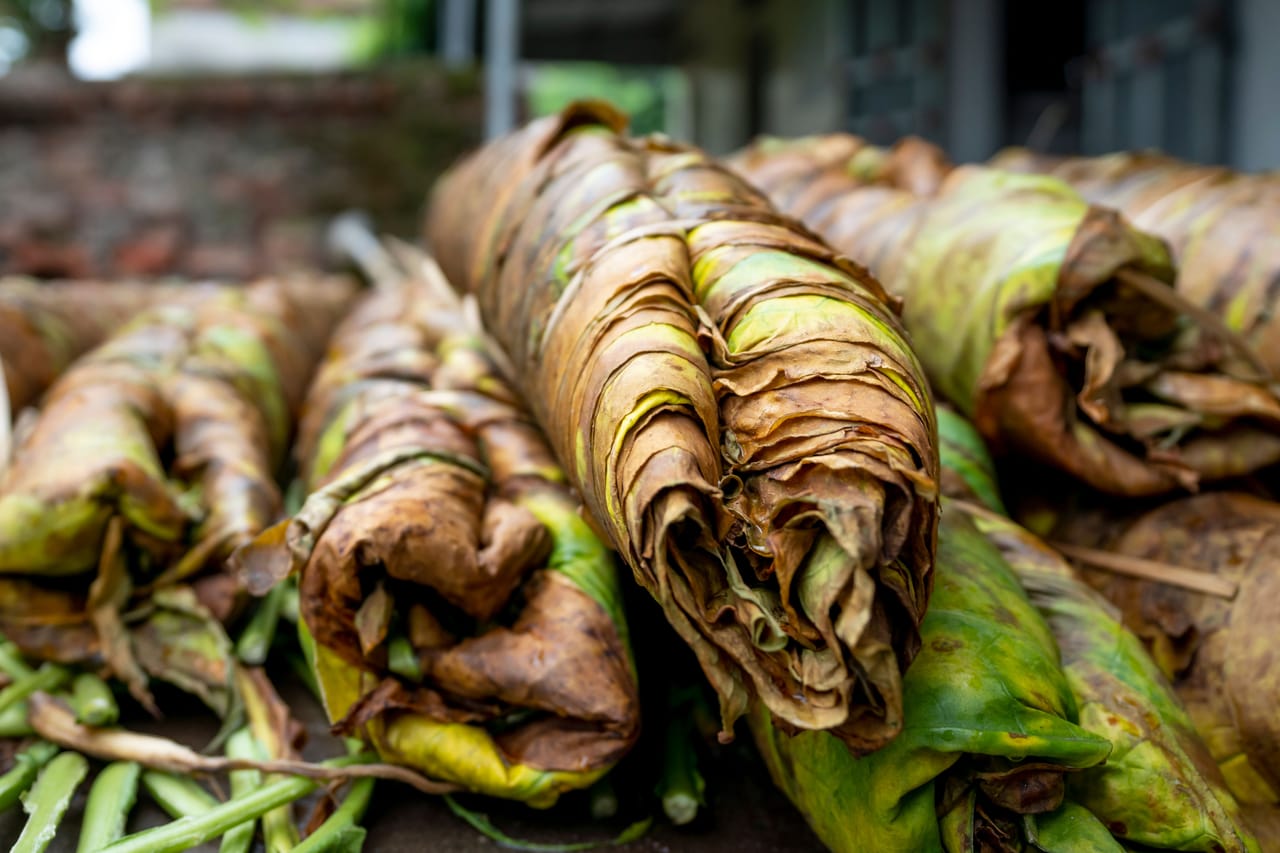
The bundle has three or four parts. The nut is the seed of the areca palm, Areca catechu, which botanists and locals both call betel nut even though the “betel” part is really the leaf. That leaf comes from a different plant, Piper betle, a climbing pepper vine, and it’s used to wrap the rest 1. Into the fold goes a dab of slaked lime, the white paste, made from burnt coral or shells. Many people add a pinch of tobacco, a newer habit layered onto a practice that Austronesian sailors carried across the tropics more than three thousand years ago 1. In the Micronesian studies that documented these mixes closely, almost everyone who chews adds the lime and most add the leaf, with tobacco close behind 2.
You fold it, tuck it between cheek and gum, and chew slowly. Within a minute your saliva turns brick red, which is why you’ll see crimson stains on doorsteps and church steps across the island. The effect is a mild stimulant, something like a strong coffee with a warm flush and a slightly numb mouth. Indonesia grows a lot of it, enough that the pyramids of it stacked on market tables never run dry.
Is Betel Nut Bad for You?

Here’s the honest part, because if you search betel nut in Indonesia online, half the results are medical warnings, and they aren’t wrong. Long-term chewing is tied to oral cancer. Roughly 600 million people worldwide chew areca nut, close to a tenth of humanity, so this is one of the most common habits on earth that most Westerners have never heard of 34.
The practical read is calmer than the headlines. You are not going to develop cancer from accepting one betel quid at one greeting. The risk lives in decades of daily use, and the daily users are overwhelmingly older and rural, the grandmothers and grandfathers whose teeth are already stained dark red 3. Taking the offered bundle once, holding it, or passing it on carries no meaningful health cost. Declining it every day for months because you happen to live there is fine too. Knowing that difference lets you make the social choice without a health lecture running in your head.
The First Thirty Seconds Inside a Rotenese Home
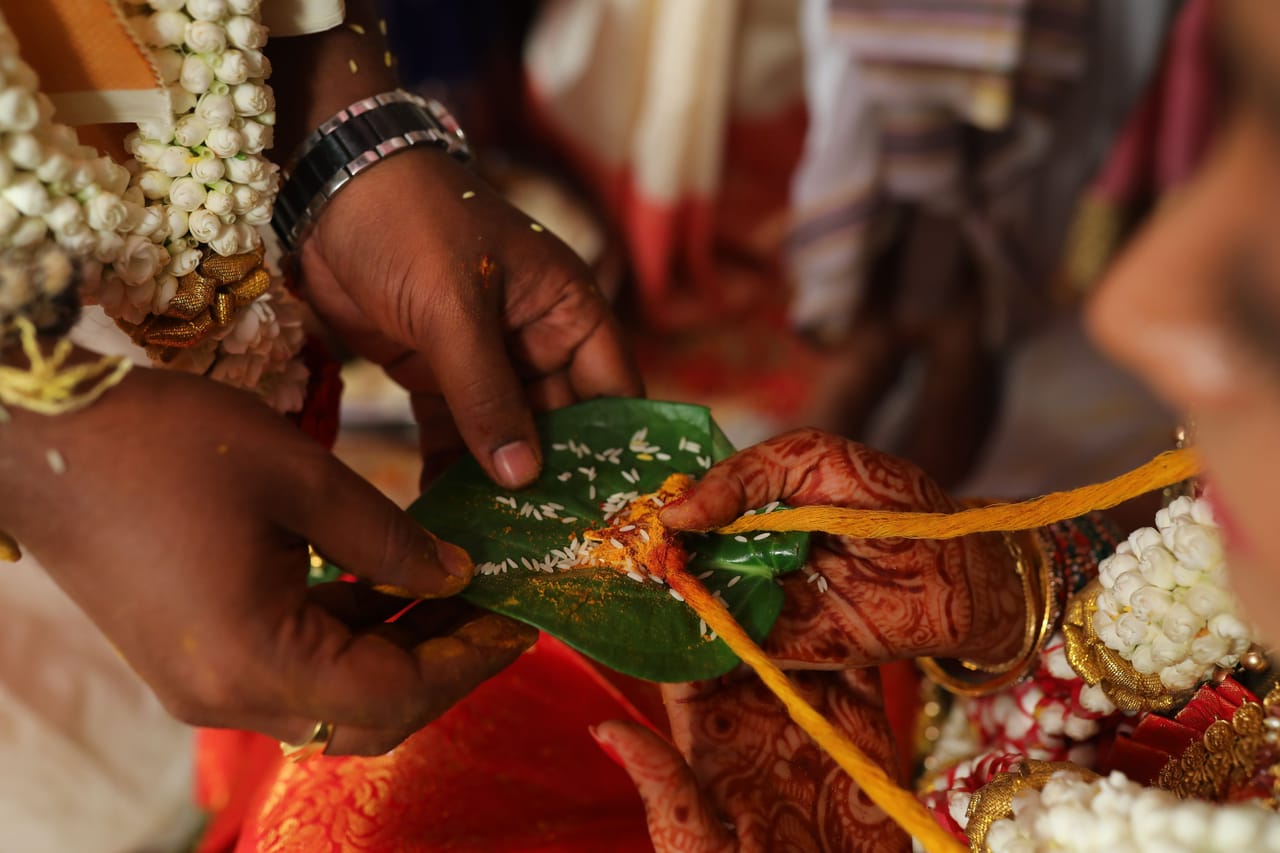
The offer is not really about the nut. Sirih pinang is how a Rotenese household says you are welcome here, the same way an Italian grandmother puts coffee in front of you before you’ve sat down. When you’re invited in, someone, usually the oldest woman present, brings out the box. The offer comes early, near the door or the moment you settle onto the floor mat, before conversation has even warmed up.
What you do with your hands matters more than the nut itself. Take it with your right hand, or with both hands cupped together, never with the left alone. Left-hand giving and receiving reads as an insult across the country, and the social codes that decide whether you’re accepted turn on exactly these small physical gestures. A slight bow of the head as you accept adds warmth. Sit lower than or level with your host, keep your feet from pointing at anyone, and you’ve already done most of the work.
If you do chew, expect the flush and the red spit, and ask where to spit before you need to. If you bring something to give back, you close the loop. Coffee, sugar and cigarettes are the standard small gifts when you enter a home, and a bag of any of them, handed over with your right hand, lands perfectly.
How to Refuse Without Closing the Door
Most foreigners don’t want to chew betel, and that’s completely acceptable. Refusing badly is the one move that stings. Waving it off, pulling a face, or blurting out that it’s unhealthy turns a gift into a verdict on your host’s entire life.
The refusal that works has three moves. Accept the bundle with your right hand so the offer is honored. Smile and hold it to show you value it. Then decline the chewing gently, resting your hand on your chest and saying you’re saving it for later, or that your mouth isn’t used to it yet. You can admire it and set it down beside you. The welcome was in the offering, and you’ve received the welcome even without chewing a thing. Add a quiet word of thanks and the whole exchange takes five seconds.
The single thing to avoid is a health-based no. Telling a grandmother who has chewed for a lifetime that her sirih causes cancer is heard as an attack, and it’s the surest way to turn a warm room cold.
Rote Is a Christian Island, and That Changes the Rules
Most Indonesia etiquette advice is written for Bali or Java and assumes a Muslim setting. Rote is overwhelmingly Christian, and a good chunk of the standard Indonesian customs list points the wrong way here.
Several things shift. Men and women shake hands freely, where in stricter Muslim regions you’d wait for a woman to offer first. Palm wine, the local tuak, flows at gatherings and is poured openly, so a blanket “don’t mention alcohol” rule simply doesn’t fit. Sunday is the fixed point of the week, church is the center of village life, and dropping in on a family during the morning service is bad timing in a way it wouldn’t be elsewhere. Pork is on the table, and so is the smoked sei sapi that anchors a feast, so the food taboos you may have read about relax. When a village throws a wedding, the reciprocity and obligation run deep, and the Rotenese wedding traditions are where an outsider most needs to watch and follow rather than lead.
The betel itself carries across all of it. It sits at funerals, weddings and ordinary afternoons alike, older than the churches and untouched by the religious line.
Why the Local Word Beats the National One
You’ll learn terima kasih for thank you and permisi for excuse me, and you should. On Rote there’s a shortcut that lands harder than any national phrase. Greet people in the local language rather than the Indonesian halo when you step toward a doorway or nod at the old men on the church steps, and faces change.
The reason is simple. Anyone passing through picks up a little Indonesian. Using a word in the local language signals you didn’t just land, you stayed long enough to notice that Rote has its own tongue. It’s the same instinct behind bringing the right gift or taking the sirih with the right hand, a small sign that you’re trying to be a neighbor rather than a visitor. Two words in Rotenese do more for you than twenty in careful Bahasa.
None of this asks you to chew a single nut. It asks you to know what the box on the floor means, to take it with the right hand, to decline in a way that keeps the door open, and to greet people in their own word. Do that, and the second visit is always easier than the first.
Sources
Footnotes
-
Areca nut — Wikipedia. en.wikipedia.org ↩ ↩2
-
Areca (betel) nut chewing practices of adults and health … - PMC. pmc.ncbi.nlm.nih.gov ↩
-
Prevalence of betel nut chewing and its pattern … nature.com ↩ ↩2
-
Epidemiology of areca (betel) nut use in the Mariana Islands. stacks.cdc.gov ↩