The swell goes flat around Nemberala for a week most Julys. The lineup empties, the forecast app gets refreshed forty times, and the question every long-stayer eventually asks out loud arrives right on cue: after three weeks here, what do you actually do with a day like this?
If you came to Rote for a seven-day surf itinerary, this is where you get bored and book a flight. If you came to live here, or to spend three to eight months a year on the island, a flat week is not dead time. It is the only time you get to see the other half of Rote, the half that faces away from the water. Turn your back on the coast, point the scooter inland, and the island stops being a strip of beach camps and becomes 1,227 square kilometres of rolling hills, dirt tracks, salt pans and villages that have never once cared about the surf report. 1
This is about that inland half, and about why it only makes sense if you have days to throw away.
What a flat day looks like when you live here
A visitor with six nights treats a no-swell day as a loss. Someone renting a place near Ba’a for the season treats it as the whole point. The rhythm of the island already runs on a weekly clock, market days, church on Sunday, the once-a-week run off the island to Kupang for the things Rote does not sell, and a flat spell just slots into that rhythm instead of interrupting it. That weekly clock is a week of ordinary life on Rote, the pace a normal week here actually moves at.
The practical upshot: inland Rote is not a checklist you knock out in an afternoon. It is a set of small, unhurried outings you fold into months of living. The nine curated outings the island’s operators run exist precisely because none of them fills a whole holiday. They fill an ordinary Tuesday.
Why the inland half only exists if you stay
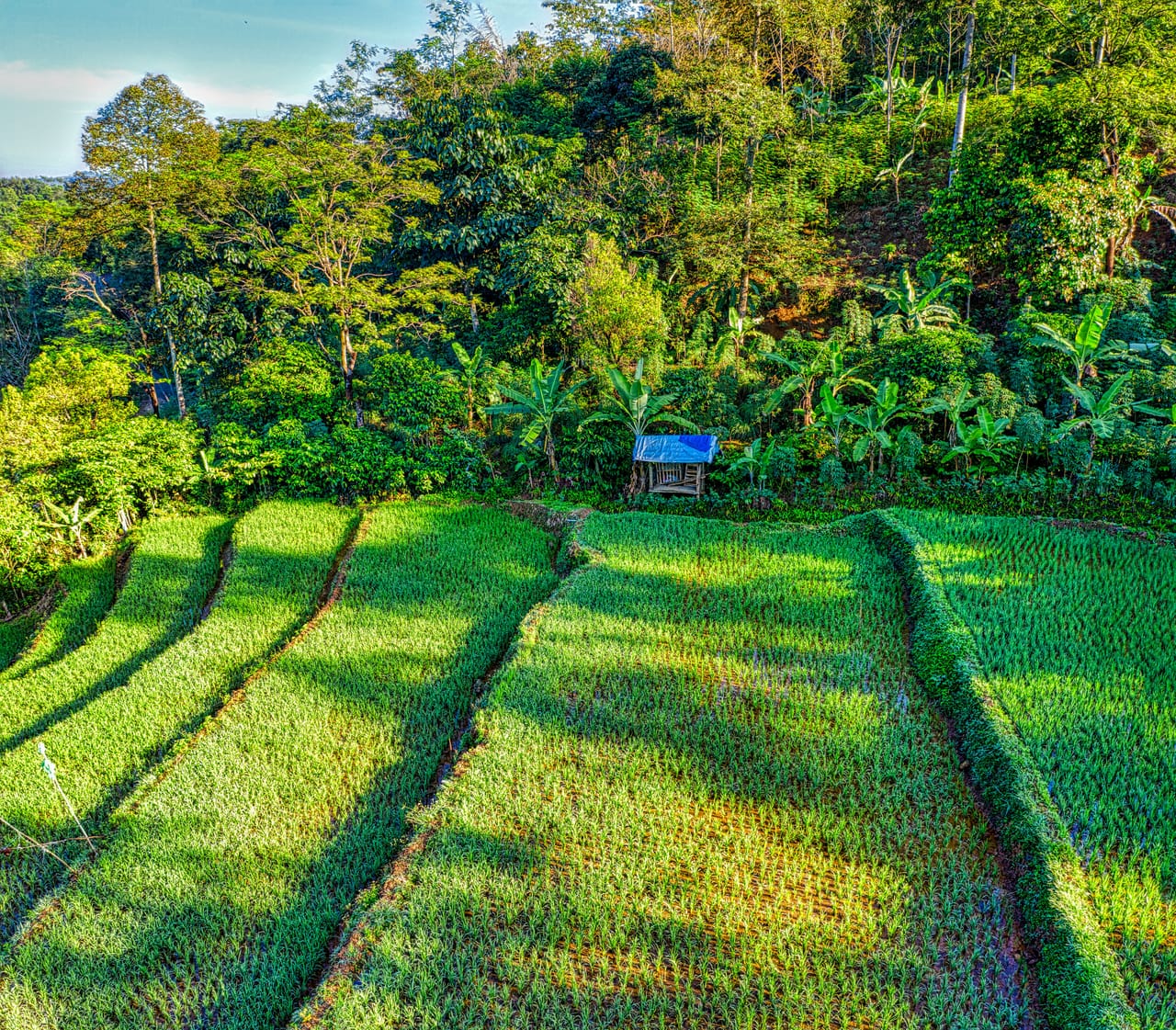
Rote is geologically young. The whole area sits on Cenozoic sedimentary rock laid down over the last 23 million years, some of it younger than 2.6 million years, pushed up out of the sea by the same slow Banda arc collision that raised nearby Savu. 23 That history is why the island is not a flat coral pancake but a set of terraced hills that climb to around 320 metres, with savanna, acacia palm and patches of forest between the plantations. 13
You do not see any of this from a surf camp. The coast is a thin margin. The interior is where the island earns its living, off the lontar palm, off cattle, off salt and seaweed, and it moves at the speed of people who have farmed the same slopes for generations. A three-day guest never gets past the beach. Someone on a long stay, who has already run out of famous Rote surf spots to check off, starts driving inland out of simple curiosity, and that is when the island opens up.
The salt flats are the biggest thing happening inland
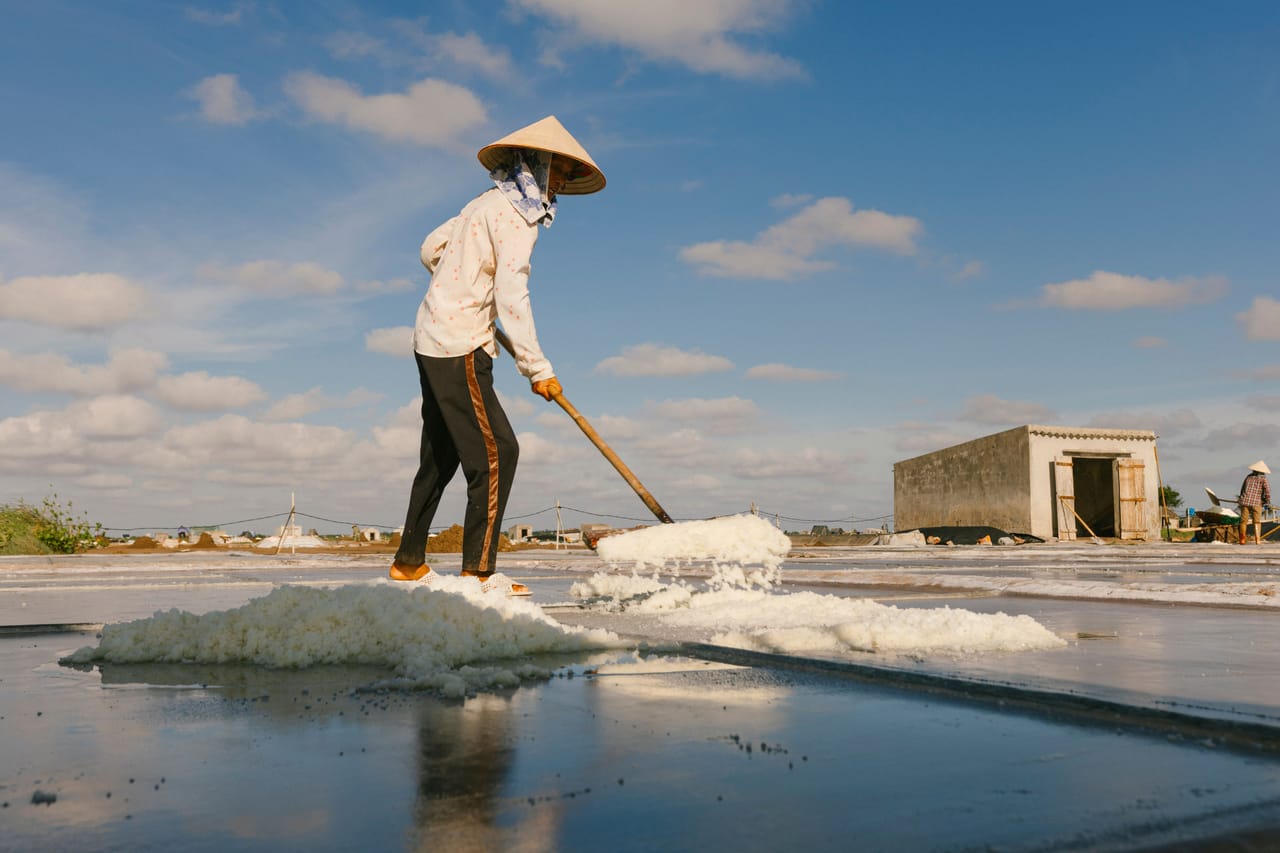
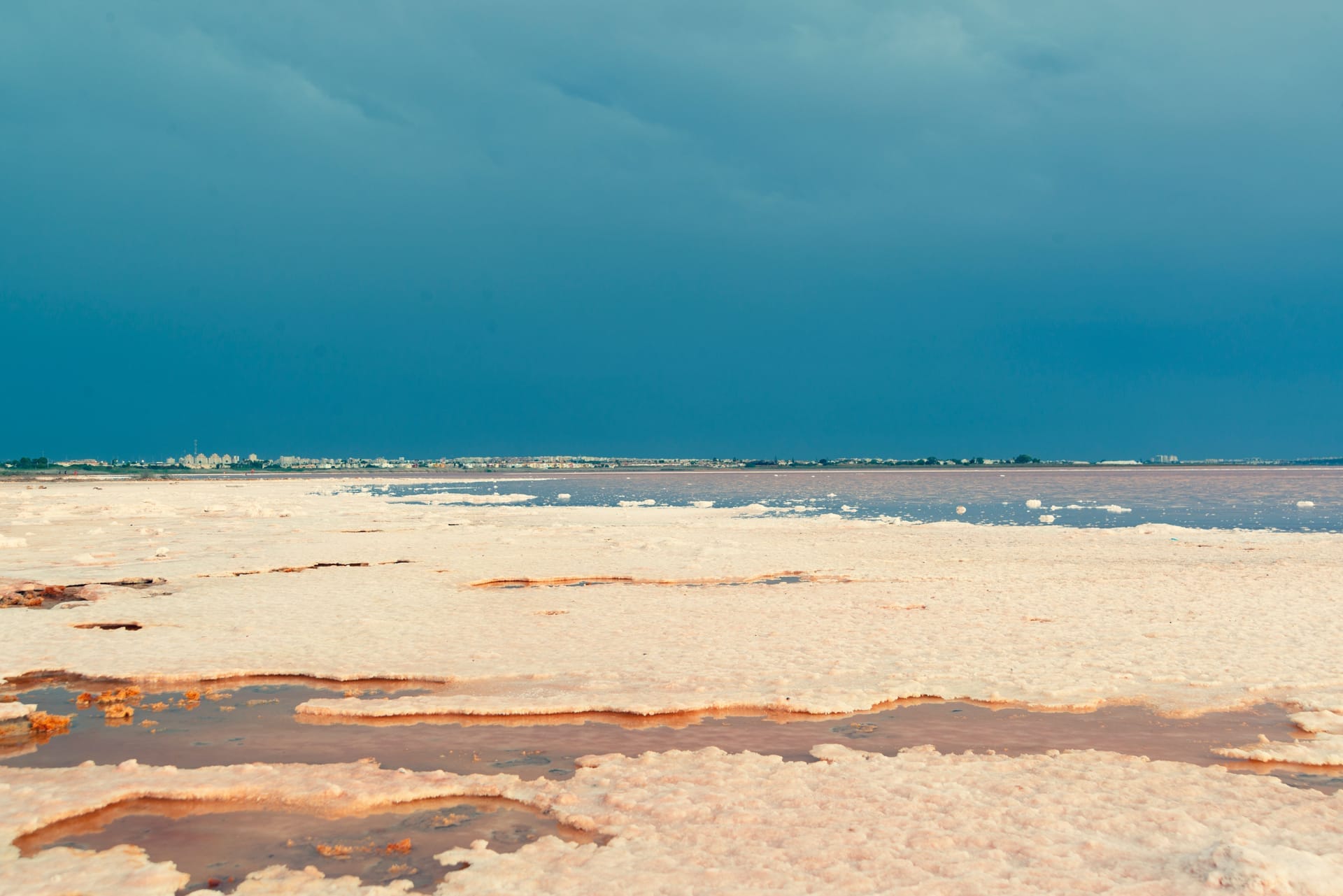
Drive the flat coastal margins on the drier, north-facing side and you start seeing them: shallow rectangular ponds cut into the mud, edged with hand-packed banks, drying to a crust that flashes white at midday. Salt has always been made on Rote the slow way, seawater led into pans and left to the sun, raked by hand as it thickens. On the young, flat sedimentary ground near the coast, with a long dry season and a strong sun, the island has close to ideal conditions for it. 2
What makes the salt pans worth an afternoon is not scenery. It is watching a real economy work with almost no machinery. You will see families walking the banks with wooden rakes, tarpaulins weighted with stones, the crust broken and pushed into cone-shaped piles to drain. Come back a week later and the same pond is a different colour. The work follows the weather with a precision no calendar can fake, which is exactly why it only reads as interesting if you are around long enough to see the same pan twice.
For anyone weighing Rote as more than a place to sit out a season, the salt flats are also the clearest sign that the interior has value beyond a sea view. Flat, productive coastal land does not stay cheap forever once outsiders notice what it does, and that shift is part of what makes land values on Rote worth understanding before you fall for a hillside plot. Stand on a salt-pan bank at four in the afternoon, watch a family rake a season’s income out of the mud, and you understand the island’s economy better than any brochure could tell you.
Down the same coast you will also pass the seaweed racks. Seaweed farming runs on the same logic as the salt, tidal, hand-tended, tied to the moon and the water more than the clock, and the two together are most of what the shoreline actually does for a living when nobody is surfing.
Telaga Nirwana and the water you have to time
Everyone has seen the photo. A green lagoon curled between limestone ridges near the southern tip, drone shot, no people. What the photo does not tell you is that the lagoon is tidal, so the difference between the postcard and a mudflat is a couple of hours either side of high water. Turn up at the wrong time and you are looking at a shallow brown puddle wondering what the fuss was about.
This is the classic case where the inland half rewards patience over planning. A visitor drives out once, gets the tide wrong, and leaves disappointed. A long-stayer checks the water, goes on the right morning, and has one of the quieter beautiful spots in eastern Indonesia mostly to themselves. The people who run trips out to Telaga Nirwana handle the access, the boat and kayak options and the tide timing, and it is genuinely worth going with them the first time rather than guessing.
Goa Kristal, Batu Termanu and the landmarks you find by asking
Goa Kristal is a freshwater cave pool inland from the Nemberala side, a cool clear pocket of water under a rock overhang where the light comes in sideways and the water sits still and green. There is no ticket booth and no signpost worth the name. You find it the way you find most inland Rote, by asking someone at a warung and following a track that does not look like it goes anywhere. Bring your own light and watch your footing on wet limestone.
Batu Termanu is the other one, a pair of dark rock outcrops the island half-mythologises, one said to be male and one female, standing off the north coast where the old sailing routes passed. It is the kind of landmark that means far more to Rotenese than to any guidebook, tied up with local stories rather than views, and it repays going with someone who can tell you what the rocks mean rather than just photographing them.
Neither of these is a headline attraction. Both are the sort of place you get to on a slow week, once you have stopped treating the island as a set of things to tick and started treating it as somewhere you live.
Is the Tuesday market in Ba’a worth the early start?
Yes, and it is one of the most useful mornings you can spend if you are settling in for a season. The Ba’a market is where the island restocks: produce trucked in from the villages, fish off the morning boats, palm sugar, betel, cheap plastic everything. Go early, bring cash, expect no English, and treat it as the island’s living room rather than a photo op.
What makes an Indonesian traditional market matter to a long-stayer is not the shopping, it is the calibration. This is where you learn what things really cost, which vegetables are in season, who sells the good fish, and how the island talks to itself. Do it once as a tourist and it is colourful chaos. Do it every week for two months and it becomes the backbone of your grocery routine, the same way it already anchors the weekly rhythm most residents live by.
The villages where the lontar palm still runs everything
Head into the interior proper, to hamlets like Oetutulu, Boni and Suelain, and you meet the plant the whole culture is built on. The lontar palm feeds Rote: its sap is tapped and boiled down into the dark palm sugar you tasted at the market, its leaves thatch the high peaked roofs, and its fibre finds its way into everything from rope to the famous ti’i langga, the wide-brimmed hat with the single antenna-like point that Rote uses as its emblem.
The same villages are where you hear the sasando, the bamboo-and-palm-leaf harp that sounds like nothing else in Indonesia, and where the ikat weaving still happens on backstrap looms in the shade. The palm, the loom and the instrument are the deeper thread of Rotenese culture and customs. Visiting a village is not a performance you buy a ticket for. You go quietly, you bring something small, you accept the coffee, and you understand that about 80% of the island is Christian and Sunday is not a day for showing up unannounced. 3
While you are out there, the food follows the same logic as the land. Ask about sei sapi, the smoked beef that eastern Indonesia does better than anywhere, and you will eat better in a village kitchen than in any beachfront café.
What the season decides for you
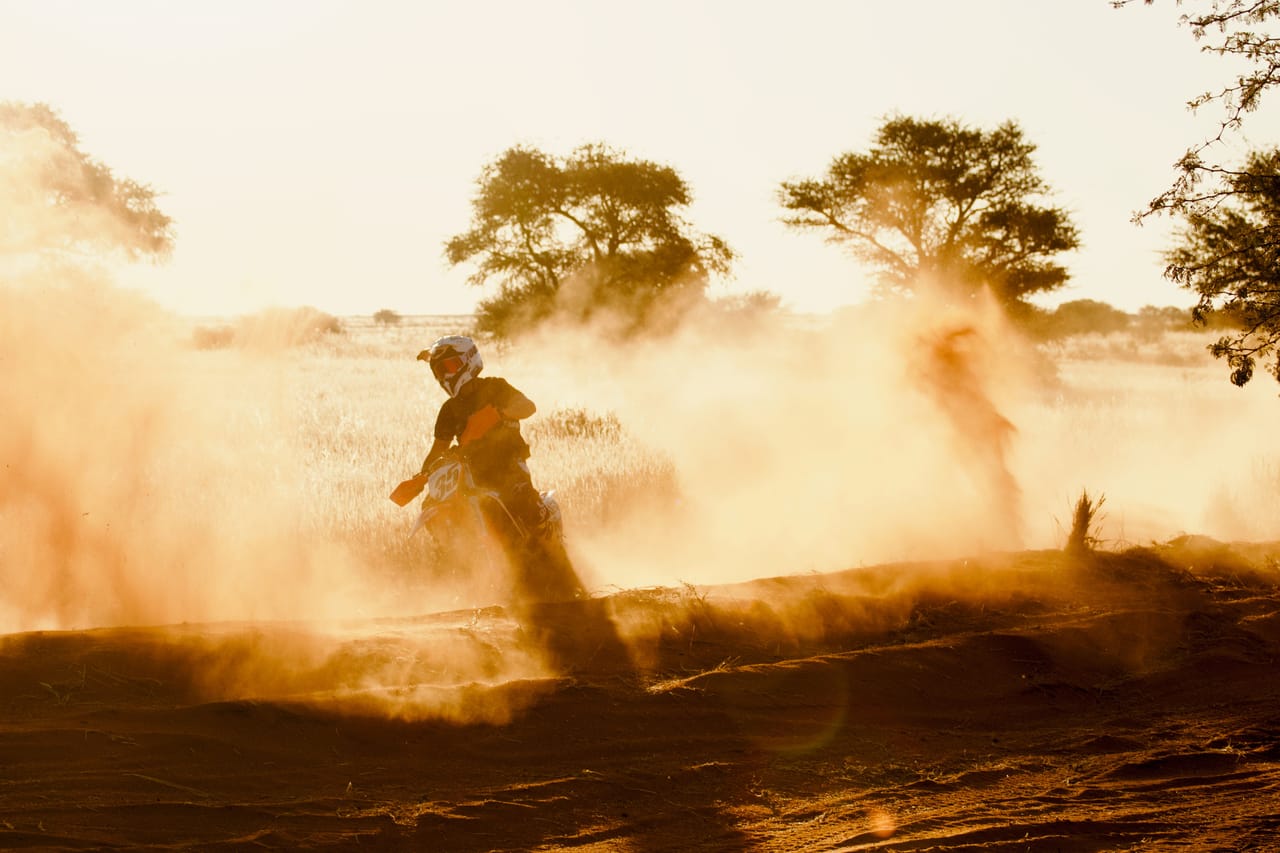
The single fact that ruins more inland plans than any other: the roads change with the weather. Rote runs a long dry season from roughly April to November and a sharp wet season around December to March. In the dry, the interior tracks are hard, dusty and driveable on a scooter, and half the island opens up to you. In the Indonesian rainy season the same tracks turn to slick red mud, river crossings fill, and places that were a casual afternoon ride in August become genuinely stuck-till-it-dries in January.
This is another reason the inland half belongs to people who stay. A two-week visitor gets whatever season they booked. A long-stayer plans the ambitious inland trips for the Indonesian dry season and saves the wet months for the coast, the markets and the short paved runs. Knowing which is which before you commit to a place to live is worth more than any list of attractions.
If flat weeks pile up and you have genuinely run through the interior, that is also the point at which people push out to the smaller islands. Ndana, uninhabited and only 14 square kilometres, is the southernmost point of Indonesia and a short hop off the coast, and the wider ring of islands around Rote, including Ndao and Savu, open and close with the same seasons. 3
What not to do out here
Do not treat the interior as empty just because it is quiet. Those savanna slopes and terraced hills are dense with life: GBIF has logged more than 3,300 wildlife records around Rote, and the birds alone, sunbirds, flowerpeckers, white-eyes and the little swiftlets that nest in the caves, are reason enough to carry binoculars on a flat day. 4 The cave you swim in is somebody’s swiftlet colony. Tread lightly.
Do not photograph people, weaving, or ceremonies without asking, and do not turn a horse ceremony or a village visit into a backdrop. Rote runs horses and their rituals as living tradition, and the difference between a guest and a nuisance is whether you asked first.
Do not skip a guide to save a few rupiah on the outings that have them. The people who run trips to the southernmost point, the horse ceremonies, the hill viewpoints and the quieter inland beaches are not selling you access you could get alone. They are selling you the context that turns a rock into a story and a dirt track into a place you understand.
And do not come for three days and expect the inland to deliver. It will not. It gives itself up slowly, on flat weeks, over months, to the kind of person who stopped counting the days a while ago. That is the honest pitch for the other half of Rote. It is not for the itinerary. It is for the life.
Sources
Footnotes
-
Rote Island — dati (Wikidata). wikidata.org ↩ ↩2
-
Geologia dell’area di Rote Island (Macrostrat). macrostrat.org ↩ ↩2
-
Rote Island — Wikipedia. en.wikipedia.org ↩ ↩2 ↩3 ↩4