
Most people arrive in Nemberala counting nights. Ten, maybe fourteen, enough to catch a couple of good tides on the reef and fly back to Kupang with a tan and a story. This is the other version of Nemberala on Rote Island, written for the person who has started counting months instead of nights. I pay rent here. I buy my own gas, argue about water, and wait out the flat spells like everyone else who stays.
So this skips the café list. Instead you get the three things nobody puts online: what actually exists in the village and what you’ll drive an hour for, how land changes hands when there’s no listing and no price tag, and the honest part, who ends up happy here and who quietly leaves after six weeks.
Nemberala in Plain Terms: What the Village Actually Is

Nemberala is a village on the south-west coast of Rote Island, in Rote Ndao Regency, East Nusa Tenggara, the southernmost stretch of inhabited Indonesia. Rote itself is small, roughly 1,227 square kilometres, low and flat, topping out around 320 metres of elevation, sitting at about 10.7 degrees south. 1 The village strings along a shallow bay behind a coral reef, a line of houses and homestays between the road and the sand, with dry savanna and lontar palms starting the moment you turn inland.
From the harbour town of Ba’a, the regency’s administrative centre, it’s a drive of a bit over an hour on a road that has improved a lot in recent years and still surprises you with a pothole where you least want one. That road matters more than any single thing in this article, because almost everything Nemberala doesn’t have sits at the other end of it.
The land here is old sea floor. The bedrock is Cenozoic sedimentary rock, marine limestone lifted and weathered over millions of years. 2 That single geological fact quietly runs your daily life once you live here. It’s why the wells taste the way they do, why the coastline is reef and coral rag rather than volcanic black sand, and why building on it behaves the way it does. The birdlife tells you the same story from the other direction. The dry scrub around the village is thick with honeyeaters, flowerpeckers, and the little Rote white-eyes and gerygones that biodiversity records for the island keep logging as its most common residents. 3 You wake up to that, not to traffic.
What’s Here, and What You’ll Drive to Ba’a For
Answer first, because it’s the question everyone actually asks. Nemberala covers the basics of daily eating, sleeping, and surfing well, and almost nothing else. For a proper shop, a bank, a pharmacy with range, or anything official, you go to Ba’a. For a hospital, a wide choice of goods, or a flight, you go to Kupang across the water.
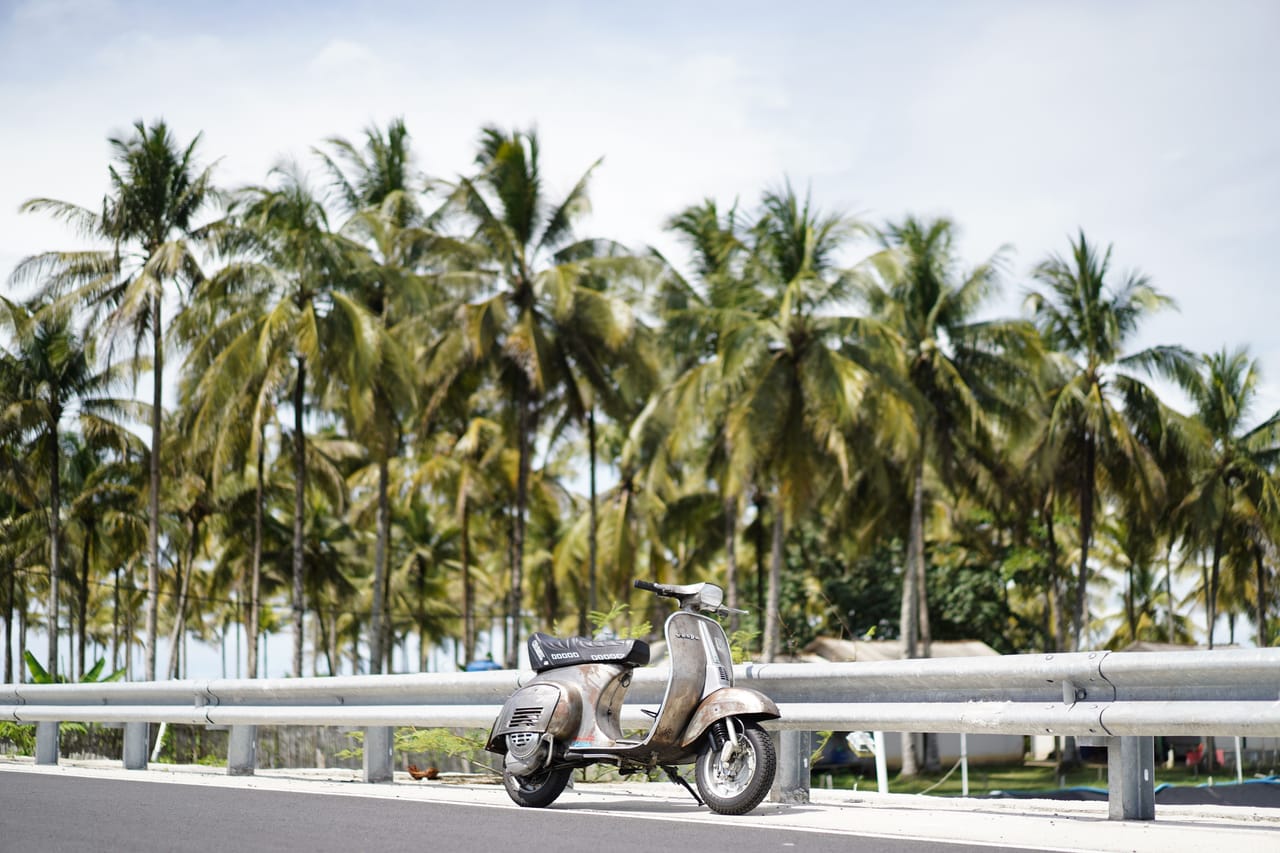
Here’s the honest split, from someone who restocks it every week.
What the village has: warungs and a handful of traveller-facing cafés and places to eat, small shops for rice, eggs, instant noodles, cold drinks and the everyday minimum, fuel sold from bottles and jerry cans along the road, motorbike repair of the practical kind, homestays and a few resorts, and a mobile signal that carries a video call on a good day and drops it on a bad one.
What it doesn’t have: a supermarket, a real pharmacy, a bank branch or a reliable ATM you’d trust for a big withdrawal, a hardware store with any depth, specialist medical care, or most of the building materials you’ll want the day you decide to fix or build anything. Cement, timber, tiles, decent hardware, a wider grocery run, all of that is a Ba’a trip, and the heavier or more specific the item, the more likely it becomes a Kupang trip instead.
This is where Kupang stops being a place you fly through and becomes your logistics base. Long-stayers here learn to batch. You keep a running list, and when you cross to the mainland you come back loaded, because a forgotten part can cost you three days, not three minutes. Plan your accommodation with that rhythm in mind rather than the postcard, which is exactly the calculation behind choosing where to stay in Nemberala between the village centre, Bo’a, and Oeseli.
How Land Works Around the Village
Land around Nemberala is family-held and changes hands through conversation, not listings. There is no property portal, no published prices, no public map of plots. Word that a plot might sell spreads by ear, prices float, and a sale usually needs several relatives to agree, on their timeline rather than yours.
There is no property portal for Nemberala. No listings, no published prices, no map with pins. If you sit at your laptop in Europe expecting to browse plots, you’ll conclude nothing is for sale, and you’ll be wrong. Most of the land around the village is family-held, passed down, with boundaries that live in people’s memory and in agreements between neighbours rather than in a tidy public register.
What that means in practice is that land moves through conversation. You hear a plot might come free because someone’s cousin needs money for a wedding or a boat. A price gets floated, then floated differently the next week. The seller is often not one person but a family, and getting a clean yes means getting several people to agree, sometimes across two islands. None of this happens on a timeline you set. It happens on theirs.
Two things follow, and I’d tell any friend the same. First, presence beats browsing. The people who buy well here are the ones already living in the village, drinking coffee with the right neighbours, known and trusted before the topic ever comes up. Second, the friendly handshake stage and the legal stage are two different worlds. How you actually secure title, what a nominee arrangement is, when a notary comes in, and where a foreigner legally stands, all of that sits with property and investment on Rote and deserves proper care, not a paragraph in a village explainer. My job here is only to tell you how land surfaces in Nemberala in the first place, and it surfaces slowly, by ear.
A Week Here Doesn’t Look Like a Holiday
The thing that trips people up isn’t the lack of a supermarket. It’s the shape of the day once the novelty burns off.
Life here runs on daylight and tide. You’re up early because the light and the wind are best early and because the village is already moving. Errands happen in the morning while it’s cool. The middle of the day is heat, and you learn to stop fighting it. Things you’d do in an hour back home take half a day, because the person you need has gone fishing, or the part isn’t in, or the road to Ba’a ate your afternoon. You stop treating that as friction and start treating it as the climate.
If you work remotely, this is the honest picture. The connection carries a lot of real work, and it will also embarrass you in front of a client at the worst possible moment, so you build slack into everything and keep the mainland as your fallback for anything that truly cannot drop. Power comes and goes. You keep devices charged the way sailors keep water, topped up whenever you can, because you don’t know when the next cut lands.
And there’s the surf, which for a long-stayer is context rather than the point. Nemberala sits next to the reef that made T-Land famous, a long, forgiving left that on its day is worth the whole move. On a short trip you’ll probably miss it. Waves here are inconsistent and get crowded fast, which is why Rote punishes the two-week surf tourist and rewards the resident. The whole logic of slow surfing is being here long enough that the good days come to you. You have to be around, and patient, and not counting.
Power, Water, and the Salt That Eats Everything
Nobody tells you about the salt until it’s already cost you money.
Electricity reaches the village, and it is not the flat, invisible utility you’re used to. Cuts happen. Voltage wanders. If your life or your work depends on power staying on, you plan for the gap yourself, with batteries, a small solar setup, or a generator, and you treat the grid as the thing that usually works rather than the thing that always does.
Water comes from the ground, and the ground here is that lifted marine limestone. 2 Wells and pumps do the job, but the water is hard and can run brackish, and quality varies plot to plot in a way that genuinely affects where you’d want to live. Ask about the water before you fall in love with a view.
Then the salt. You’re on a windward coast, and salt-laden air is on everything, all the time. It rusts hinges, kills cheap electronics, chews through fittings, and turns a bargain fan into landfill in a season. People who last here buy for corrosion resistance, rinse gear, and accept that the sea is slowly eating the house whether they maintain it or not. Building materials get chosen for that reality, which is another reason the good stuff comes from Kupang and not from a shop down the road.
Who Nemberala Works For, and Who It Doesn’t
Nemberala suits low-maintenance people who like quiet routine: retirees wanting space and warmth, remote workers with async schedules, surfers on a long clock, anyone planning three to eight months a year here. It does not suit people who need nearby healthcare, nightlife, reliable power, constant variety, or guaranteed waves on a two-week trip.
Let me save some people a hard six weeks.
Nemberala works for you if you’re genuinely low-maintenance about comfort, if a quiet village where the entertainment is the reef, the light, and your own routine sounds like a relief rather than a sentence. It works if you can fix things or pay to have them fixed and wait, if you like being known by name, and if your income doesn’t hang on a flawless connection every single hour. Retirees who want space, warmth, and slowness do well here. Remote workers with async work and low ego about latency do well here. The plan of spending 3 to 8 months a year, part of it here and part of it back in the wider world, fits this place better than almost anywhere.
It doesn’t work if you need a hospital close by, a pharmacy, nightlife, variety, or the reassurance of a shop that always has what you need. It doesn’t work if a power cut ruins your day, if you can’t stand waiting on other people’s time, or if you came for surf and only surf, because the waves won’t keep that promise on a short clock. And it doesn’t work as a spreadsheet exercise from another continent. You have to come, stay a while, and feel it before you commit money or years.
Before any of that turns into a real budget or a plan, two things sit outside this article and matter enormously. What a month here actually costs, food, fuel, rent, the trips to Ba’a and Kupang, belongs with the full cost of living on Rote. Whether you can legally stay for months at a stretch belongs with visas and permits. Get honest with yourself about the village first. The paperwork is the easy part once you know you’d stay.
Sources
Related guides
- The Other Breaks, and Why Most of the Year They’re Not On
- Line-Up Etiquette When You’ll See the Same People All Year
Footnotes
-
Rote Island — dati (Wikidata). wikidata.org ↩
-
Geologia dell’area di Rote Island (Macrostrat). macrostrat.org ↩ ↩2