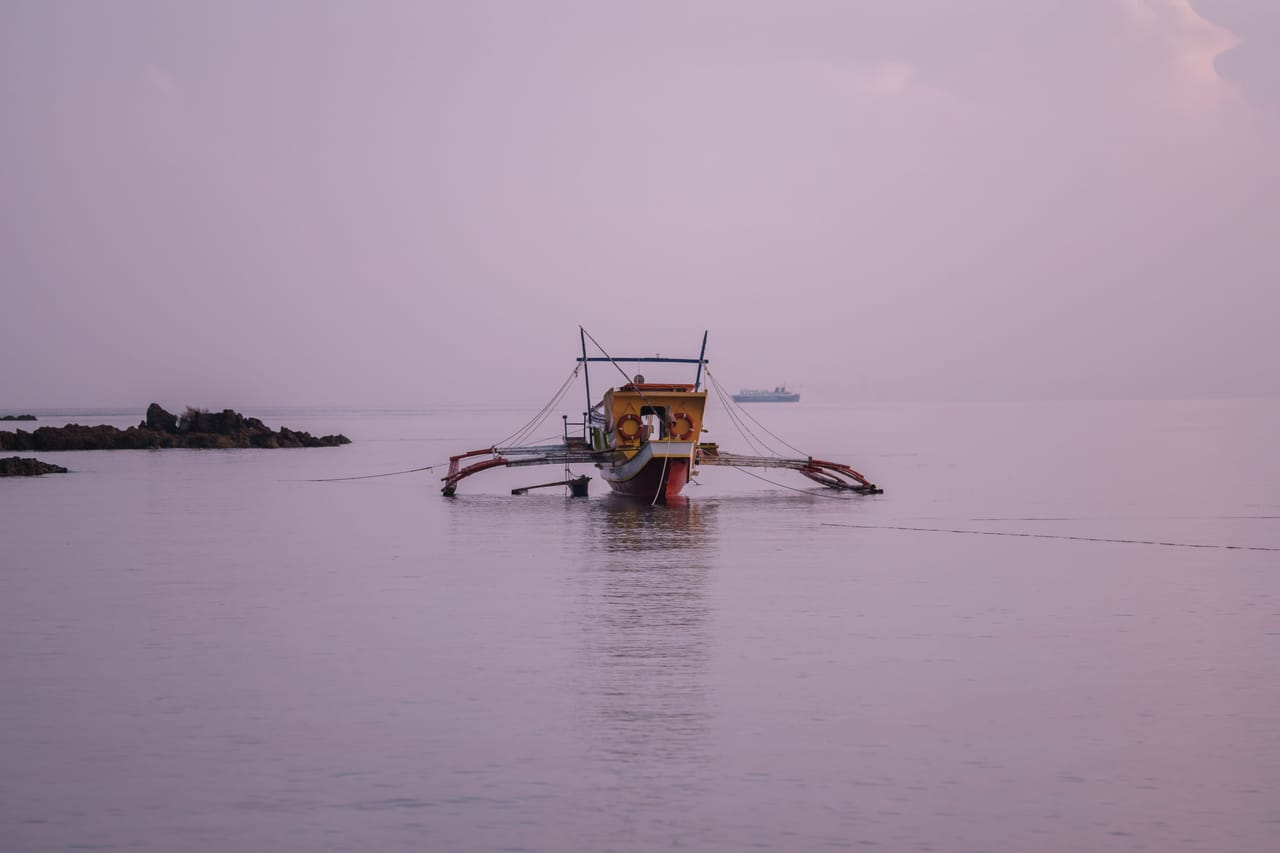
The boat leaves the beach at six. Seven of us on it, boards stacked, nobody talking much yet. I already know that if I drop in on the guy across from me this morning, I’ll be sitting next to him on this same bench tomorrow, and the morning after, and probably every good swell until the rains come. That single fact changes how you paddle out on Rote more than any localism reputation ever could.
Short-trip surfers get to be strangers. They can burn someone on a set wave and fly home Thursday with no bill to pay. Living here works the opposite way, and the slow surfing idea rests on exactly that arithmetic: stay long enough and your behavior in the water starts to compound. Think of it like the open tab at the warung. You know you’ll settle it, and you know the owner watches you settle it. Every wave you give and every wave you snake goes on the same running total, and on an island this small the total never resets.
This piece is about how you actually keep that tab clean, morning by morning, in the water and out of it.
Why the rules bite harder on a small island
There’s real research on why people behave in lines, and it maps onto a reef better than you’d expect. Queue theorists have shown that when the same people interact repeatedly, cooperation gets enforced by the community itself, without any manager handing out priorities. Reputation carries the weight, and indirect reciprocity does the rest: help someone today and the payback often comes from a third person down the line who saw you do it 1.
A single-shot line behaves differently. Work on the social norms of queues found that when strangers deal with each other only once, the only stable rule that survives is first-come-first-served, and cutting in has to be rejected outright to keep the system honest 2. That’s the tourist version of a line-up, all rigid priority and short tempers. What you get on a home reef is looser and warmer, because everyone is playing the long game and everyone knows it.
So surf etiquette here isn’t a poster on a wall. It’s the quiet accounting a small crew runs on itself, day after day, and it’s the reason a low-localism spot stays low-localism. People behave because they’ll see you at the coffee place by nine.
Where you sit is the first thing people read
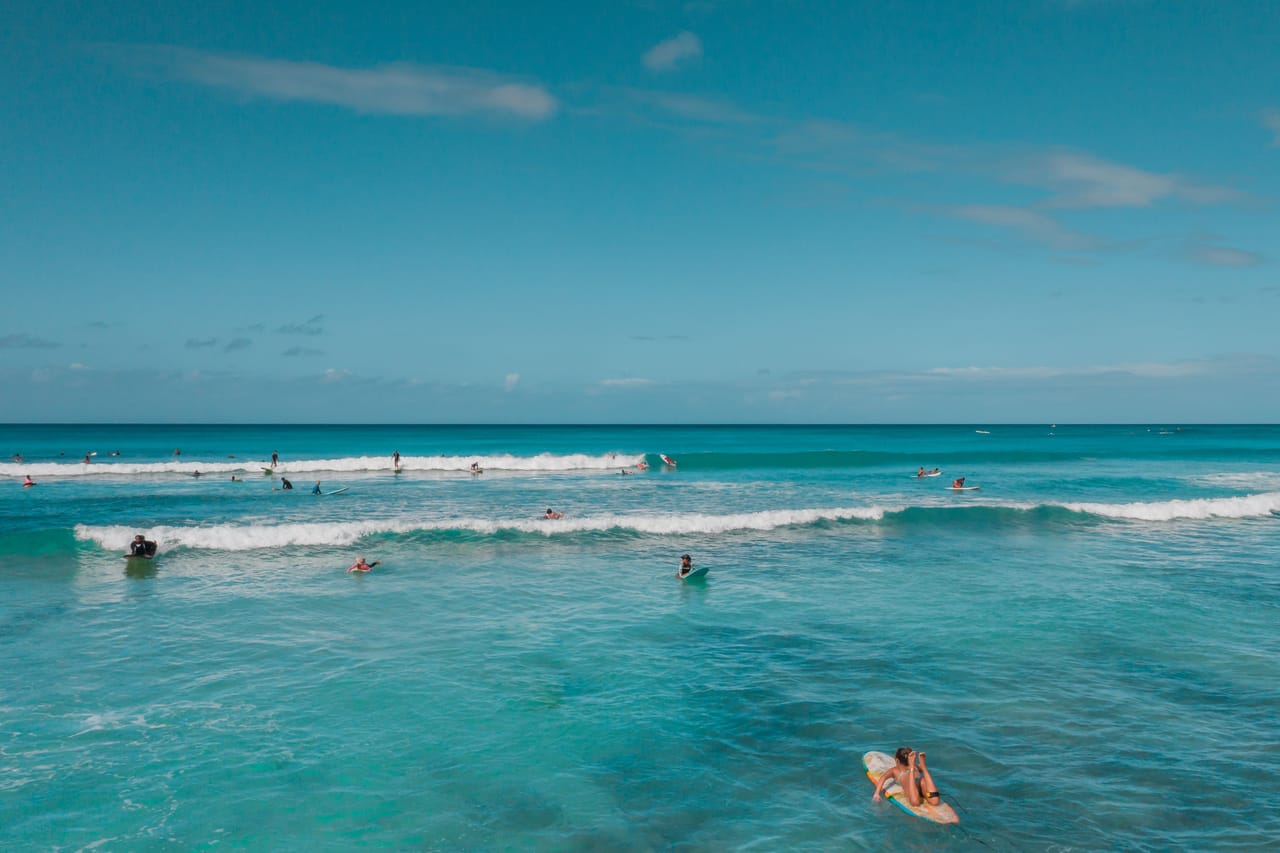
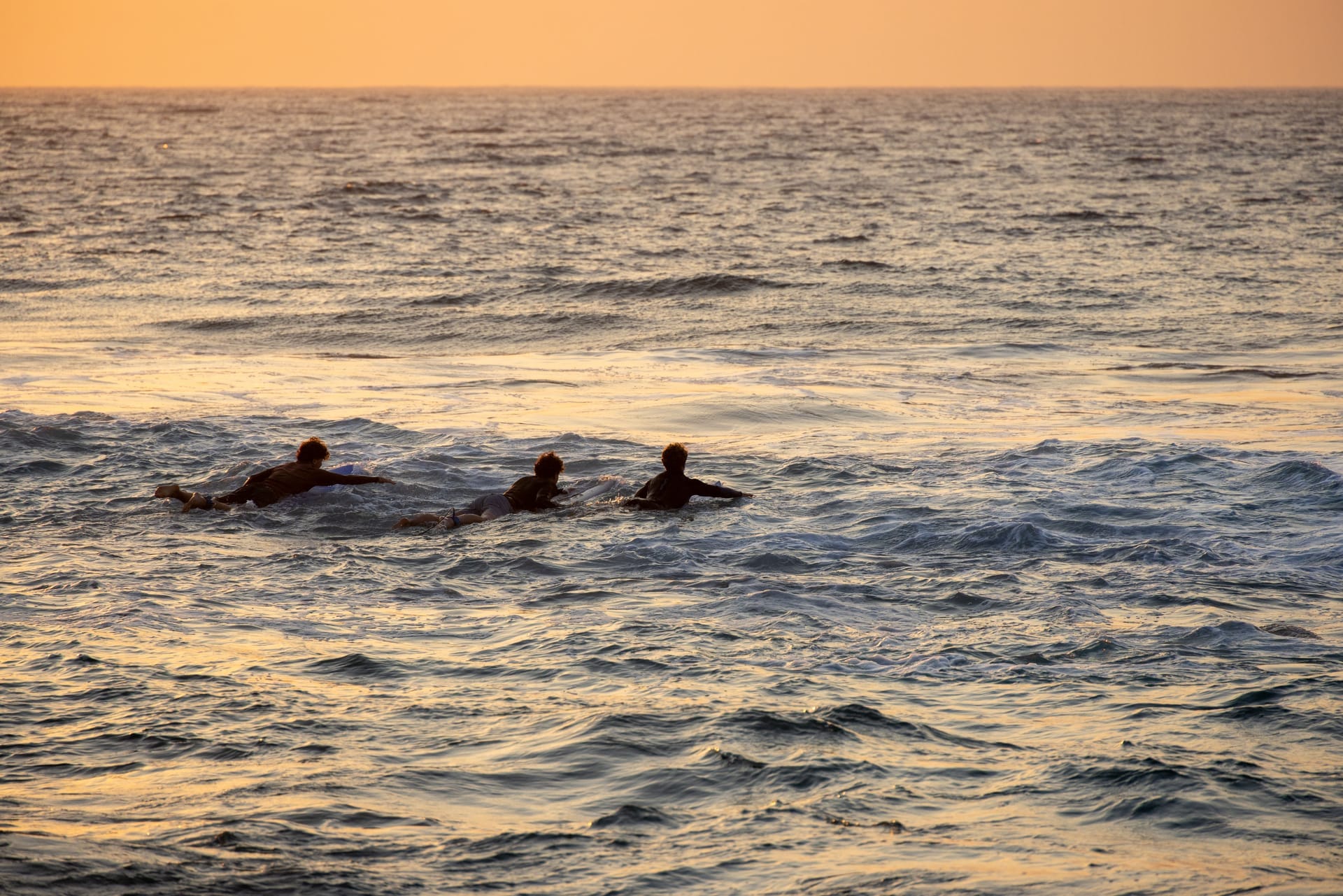
Before you catch a single wave, the crew has already clocked where you paddled. On a long reef break the line-up spreads across distinct sections, and picking the right one for your level is the opening move of good manners. Sit up on the top section, at the peak, and you’re claiming the pick of the sets. That’s fine if you can make the drop and hold the line. It’s rude if you can’t, because every wave you blow at the top is a wave nobody behind you gets to ride.
The mechanics of how the wave actually breaks belong to the T-Land reef itself, and it’s worth understanding them before you sit anywhere. What matters for etiquette is simpler. Longboarders and intermediates who slot into the softer middle and inside sections keep the peak clear for the people trading the bombs, and the whole reef holds tens of riders on the same left without anyone getting run over. Break that distribution and the friction starts, no matter how polite everyone is trying to be.
Read the crew for a session before you plant yourself at the top. Watch who sits where, who calls waves, who defers. That five-minute audit tells you more than any rule list.
The boat is your first line-up
Etiquette starts before the water, on the bench. The boats to the outer reefs run on a social rhythm that has nothing to do with the fare. Whoever is ready at six gets the calm loading. Whoever shows up at ten past, hair wet from a shower, wax and leash still in the bag, makes seven other people wait in a rocking boat while the good early glass goes to waste.
Forget your leash and you’ve now created a problem for the whole crew, because someone either lends you theirs or the skipper turns back. Do that twice in a week and you become the guy people quietly plan around. Nobody says anything. They just start telling you the boat leaves at six-fifteen so you’ll actually make six.
Small stuff, all of it. Bring your own water. Know the drill for getting in and out over the reef. Don’t be the passenger who treats the boatman like a taxi driver, because he lives here too and he talks to everyone you’ll be sharing waves with for the next four months.
The favor ledger, and how it gets paid
The tab I mentioned isn’t just about waves given and taken. There’s a parallel economy of small help, and it’s where reputation gets built fastest.
Someone snaps a leash on the reef, you paddle over with your spare. A traveller shows up with a fresh cut across the shin from the coral and no idea what to do, you walk them through coral cut treatment before it turns into a week off the water. A visiting surfer dings a rail on the flight and can’t find surfboard repair, you point them to the guy who does resin work out of his garage, or you lend a board while theirs sets.
None of this shows up on a bill. All of it lands on the ledger. The queue research calls this community enforcement, and it works precisely because everyone is on both sides of it over time. Today you’re the one with the spare leash. In three weeks you’re the one who forgot yours. People who lend, wait their turn, and pull beginners out of the impact zone quietly find the water opening up for them across a season. People who take and never give find the opposite, and no one ever has to say a word to make it happen.
Lend a board and you’ve made a deposit. Snake a set wave from a local on a crowded morning and you’ve made a withdrawal, one that costs far more than the wave was worth.
When July fills the reef
For most of the year the crew is stable and manageable. A handful of expats, some Rotenese who grew up on the reef, a rotating cast of long-stayers, everyone knowing everyone. Then the peak weeks arrive and the whole thing inverts. Suddenly the regulars are outnumbered by people who flew in for ten days and want their money’s worth, fast.
The seasonal swing is the same one that shapes the wider island, the Rote community that swells for the crowded months and empties out after the rains. In the water it means the code stops being automatic. You can’t assume the person dropping in next to you knows the distribution or cares about a tab they’ll never have to pay.
The regulars hold the line by example, not by aggression. They keep giving waves, keep sitting where they should, and let the visiting crowd sort itself out. And they use the pressure valve: when the main left is stacked with decades of people on the same section, the other breaks around the island soak up the overflow. Knowing which spot goes empty when the famous one fills is one of the real privileges of staying, and it keeps the peak-season friction from ever boiling over.
If you’re here for the long haul, peak season is when your accumulated goodwill pays out. The crew already knows you. You get the nod, you get the set wave waved onto you, you get the space. The visitor grinding for every scrap doesn’t, and can’t, because there’s no time to build what you’ve spent months building.
When the code leaves the water
The tab doesn’t close at the beach. The same face you shared the peak with this morning is buying rice at the same warung tonight, and the courtesy carries over. Rote runs on tight social rules that predate surfing by centuries, the kind of village etiquette woven into the Rotenese clans and the way daily life gets negotiated here. Around 80% of the island is Christian, and Sunday morning belongs to church, not the reef 3.
Treating a local badly in the line-up and then smiling at him across the market doesn’t work. Word moves faster than any swell. The guy who runs your boat, the family who rents you your room, the woman who cooks your breakfast are all connected to the people you surf with, often by blood. On an island of roughly 1,227 square kilometres this is not a metaphor about small communities, it’s the literal size of the place you now live in 4.
This is why the transplants who last aren’t the best surfers. They’re the ones who understood early that the reef is a room in a much larger house, and they behaved accordingly. If you take up spearfishing on the same reefs, or spend a stretch over in the Nemberala area, the same accounting follows you there. Different water, same tab.
A short field guide to keeping your tab clean
Some of this is obvious once you’ve lived it, but new arrivals get it wrong constantly, so it’s worth spelling out.
- Sit where your ability puts you, and let the people who can ride the top section have it.
- One person per wave. If someone’s already up and riding, it’s theirs, full stop. Priority in a repeated line-up flows to whoever was there first, and jumping that order is the fastest way to earn a reputation you can’t outrun 2.
- Wait your turn even when you could paddle around it. The crew notices patience more than skill.
- Say hello. Learn names. The morning nod is currency.
- Help without being asked. Spare leash, first aid on a coral cut, a lift to the boat. Deposits, all of them.
- Never burn a local to impress a visitor. The visitor leaves. The local remembers.
- When it’s packed, give more than you take. That’s the season your goodwill was saved up for.
The long math of behaving well
Rote got its name, so the story goes, when a lost Portuguese sailor asked a farmer where he was and the farmer, not understanding a word, gave his own name instead 3. It’s a fitting origin for a place where reputation and identity blur together this completely. You don’t get to be anonymous here. Every session adds to a record the whole crew keeps on you, whether you like it or not.
The upside is enormous for anyone planning to stay. Behave for one season and the reef genuinely opens up, in a way no amount of talent buys on a two-week trip. The regulars stop treating you as a variable and start treating you as one of theirs. You get waves waved onto you. You get the empty spot when the main break is a zoo. You get the kind of surfing that made you consider moving here in the first place.
All of it comes from the same small discipline. Show up on time. Sit where you belong. Give more than you take. Pay your tab, and let them see you pay it.
Sources
Related guides
Footnotes
-
Social Psychology: Handbook of Basic Principles. books.google.co.id ↩
-
Cutting in Line: Social Norms in Queues. faculty.wharton.upenn.edu ↩ ↩2
-
Rote Island — Wikipedia. en.wikipedia.org ↩ ↩2
-
Rote Island — dati (Wikidata). wikidata.org ↩