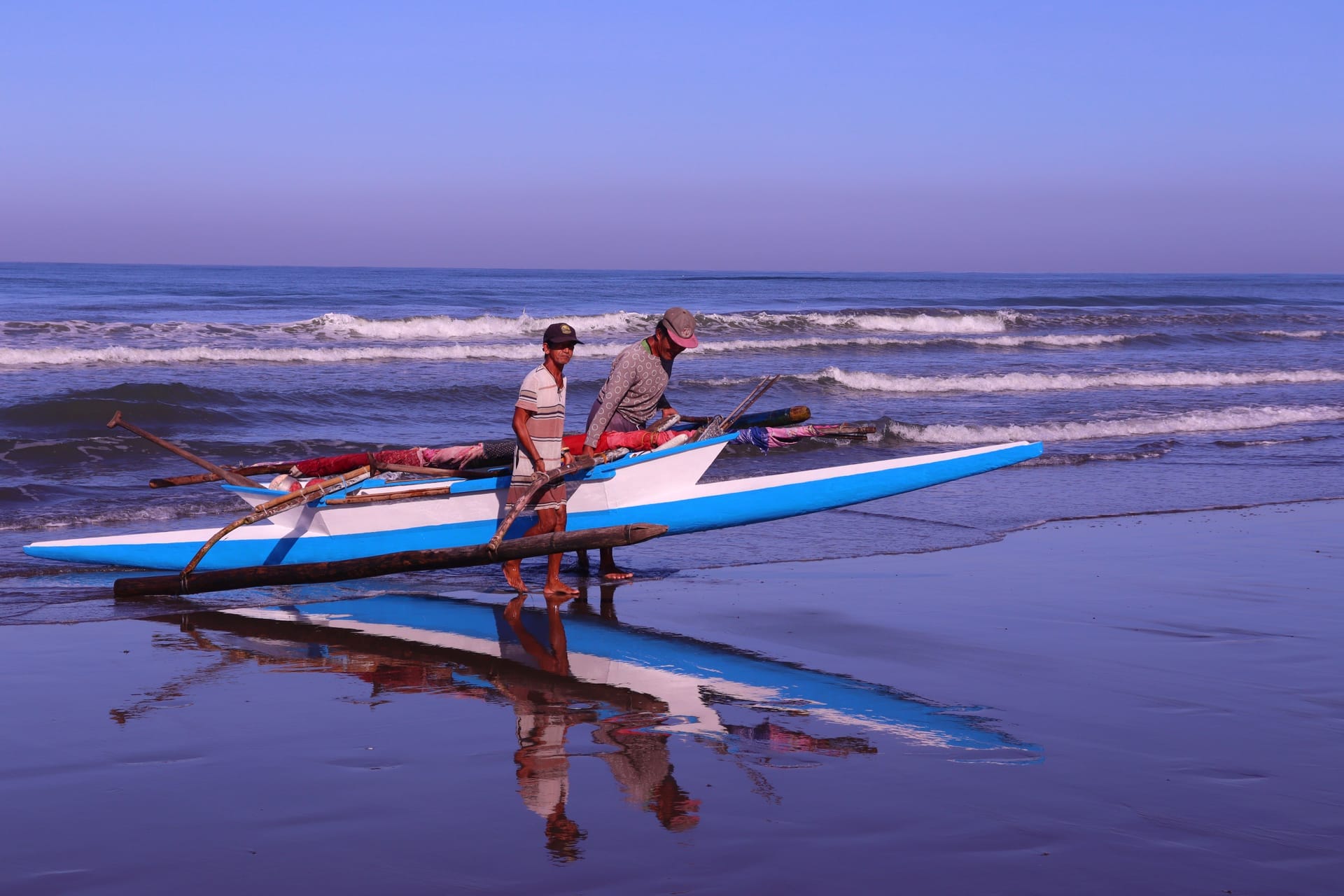
The inverter for your solar setup is sitting in a warehouse in Surabaya. It cleared the port, it made it onto a truck, it reached Kupang. Then it stopped. Nothing on Rote has an address a courier will drive to, so the box waits on the mainland until a human being puts it on a boat and carries it across the water. That gap, the last stretch of sea between where things arrive and where you actually live, is where most people lose their stuff, their patience, or both.
Rote sits about two hours by ferry off the tip of West Timor, a low island of rolling hills and savanna covering roughly 1,227 square kilometres, topping out around 320 metres of altitude.1 Small enough that everyone knows the ferry schedule by heart. Remote enough that “just order it” is a phrase with no practical meaning here. Whatever you want on this island either flew in your hand luggage, crossed on the boat, or is still on its way through the mainland freight network hoping someone remembers to collect it.
This is about the road your things travel, and what stops them on it.
Three Ways Your Things Get Here
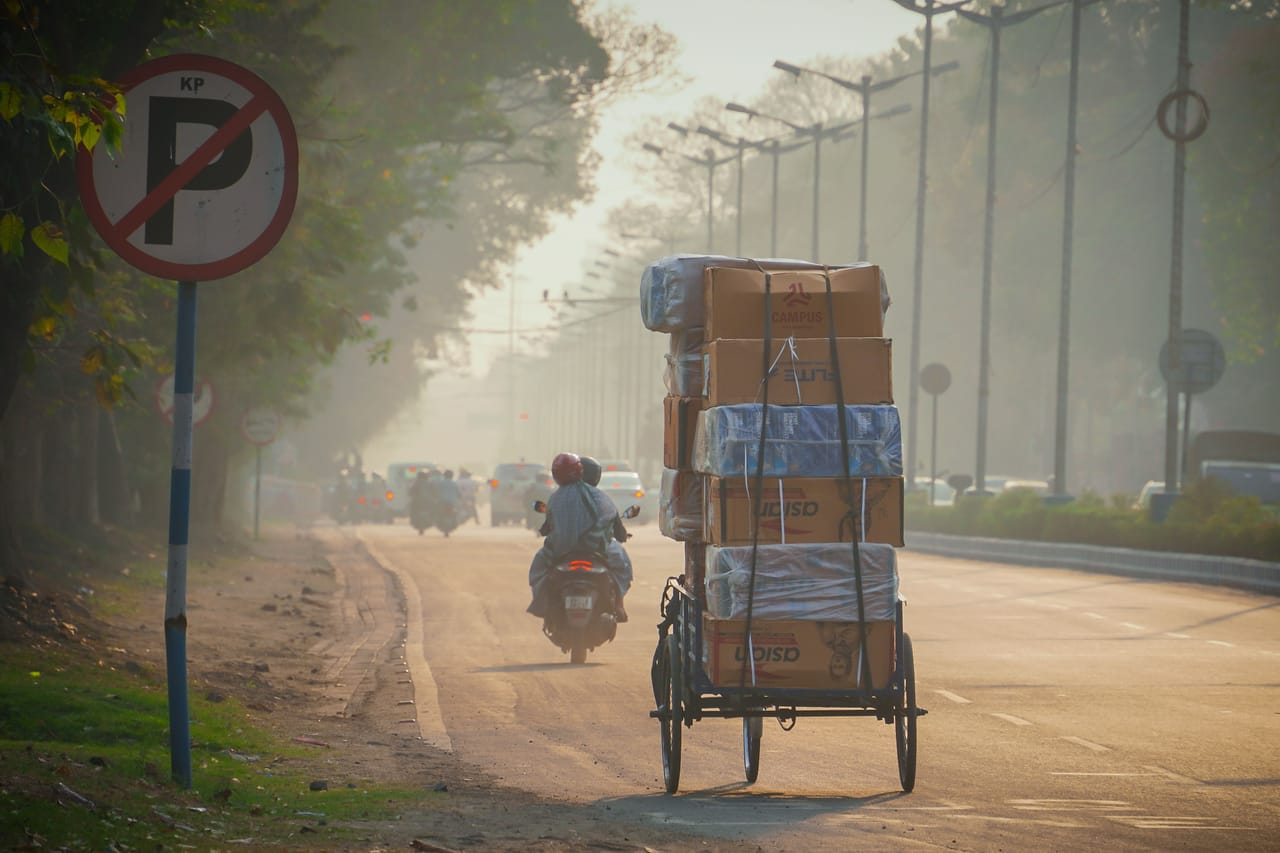
Everything you own on Rote arrived by one of three channels, and knowing which one to use for a given object saves you weeks.
The first is your own luggage. Whatever comes in on the Wings Air flight from Kupang, a thirty-minute hop into David Constantijn Saudale Airport, or in the boot of a car on the ferry, is the fastest and safest route there is.2 You watched it the whole way. Nothing gets misrouted when it never left your side.
The second is the ferry as a cargo mover. The daily crossing between Kupang and Ba’a leaves around 8.30 in the morning, runs roughly two hours, and in 2023 the passenger fare had climbed to 202,000 rupiah, close to 13 US dollars at about 15,600 rupiah to the dollar.2 The point of the boat is not the ticket price. The point is that it carries vehicles and volume, which is exactly what a real stock-up run on Kupang needs. A fridge, a mattress, a motorbike loaded with boxes all cross this way.
The third is mainland freight. Domestic couriers and cargo lines run to Kupang all day. They do not run to Rote. Your parcel’s journey ends at a depot on Timor, and someone has to close the final gap by hand.
Match the object to the channel. Fragile, urgent, or irreplaceable travels in your luggage. Big, heavy, and tolerant of a shaking rides the ferry. Everything ordered from off-island lands in Kupang and needs a plan for the last leg before you ever click buy.
The Load That Follows You, and the Load You Carry

There is a hard divide between what you bring in your hands and what you send ahead, and getting the split wrong is expensive.
Carry the things that cannot be replaced or cannot wait. A laptop, a hard drive with your work on it, prescription medication, the one adapter your gear actually needs. Anything that a three-week delay would turn into a real problem belongs in a bag you personally lift onto the plane or the boat. The medication case is worth spelling out, because pharmacies here do not stock specialist drugs, and the sensible move is to build a buffer of medication large enough to outlast any supply gap. You do not want to discover a shortfall while your refill is stuck in a depot on Timor.
Send ahead the things that are heavy, bulky, and shatterproof enough to survive rough handling. Furniture, kitchen equipment, tools, anything you can buy on the mainland and let the ferry carry. This is where volume works in your favour, because a single crossing can move a full household’s worth of boxes if you load a vehicle properly.
The mistake I see repeatedly is people flying in light, planning to “sort it out once I’m settled,” then spending their first two months waiting on parcels that keep stalling in Kupang. If you are moving here for the long term, treat your arrival as your single biggest shipping opportunity. The trip you take to reach the island, covered in how to get to Rote, is also the one time a large volume of your possessions travels under your own eyes from door to door. Fill that trip.
Where a Parcel Actually Stops
Order something online in Indonesia and the tracking looks reassuring right up to the moment it goes silent. There is no next-day courier dropping a box at your gate on Rote. The delivery network treats Kupang as the edge of the map, and past that edge your parcel becomes your problem.
Picture the real sequence. You buy a water pump part from a seller in Java. It ships, it crosses to Timor, it reaches a Kupang depot, and the app marks it “arrived at destination facility.” That destination is not your house. It is a warehouse counter forty minutes from a ferry that runs once a day. Unless someone collects it, carries it to the harbour, and shepherds it onto the boat, it sits there accruing storage time and, in the worst cases, gets quietly returned.
This is why so many long-stayers end up treating Kupang as their real logistics base. The city is where parcels land, where you buy the things the island does not carry, and where the last-mile gap either gets closed or does not. A parcel that reaches Kupang is not a parcel that reached you. It reached the mainland, and the sea is still in the way.
The objects that suffer most from this gap are the urgent ones. A specific replacement part for something that broke, a component your work depends on, anything that turns a working week into a dead one while you wait. For those, the honest answer is that speed comes from having a person on the ground who can grab the box the day it lands and put it on the next boat, rather than from any tracking number.
What Breaks on the Way
Distance is not the thing that damages your belongings. Handling is. Every object that reaches Rote gets loaded and unloaded several times, and each transfer is a chance for something to crack.
Heat does quiet damage. Boxes sit on open decks and warehouse floors in tropical sun for hours. Anything with a battery, anything sealed, anything that warps or melts near forty degrees pays a price nobody warns you about. I have watched candles arrive as puddles and vacuum-sealed food arrive swollen and split.
Vibration finishes the job. The ferry crossing is not gentle, roads on the island are patchy, and a motorbike loaded past sense will rattle a poorly packed box to pieces over a few kilometres of rough surface. Screens crack, ceramics chip, threaded parts shake loose.
Pack for the worst leg, not the average one. Double-box electronics. Wrap anything glass as if it will be dropped, because at some point it probably will be. Seal against damp, because sea spray and humidity get into everything. And label the outside with what it is and who receives it, so a box that ends up in a stack at the Kupang harbour has a name on it and does not vanish into the pile. The cost of over-packing is a bit of tape and cardboard. The cost of under-packing is buying the thing twice and waiting three weeks for the replacement.
The Box From Abroad, and Customs
Shipping to Indonesia from overseas is a different animal, and the friction lives at the border long before anything reaches Kupang.
International parcels clear customs at a major entry point, usually Jakarta or Surabaya, and only then start the domestic hop toward Timor. That customs step is where timelines stretch from days into weeks and where costs appear that the sender never mentioned. Duty and tax get assessed on the declared value, electronics draw scrutiny, and a package held for inspection sits until it is inspected, on nobody’s schedule but the office’s.
A few things make it smoother. Declare honestly, because a mismatch between the label and the contents is the fastest way to get a box opened and held. Keep the paperwork with the shipment, invoices and receipts, so the value is not guessed at by someone who will guess high. And understand that whatever residency status you hold, spelled out in the detail of a long-stay permit, does not shortcut the customs queue for goods. Your permit governs you. It does not govern your parcel.
The practical upshot is that anything you can carry through the airport in a checked bag skips this entire process. A box shipped from Europe might spend a fortnight in customs limbo before it even begins the trip to Kupang. The same object in your suitcase clears with you in an afternoon. For expensive or time-sensitive gear, the cheapest freight solution is often an extra checked bag on your own flight in.
Who Receives It on This Side
Every channel described here ends at the same bottleneck. A thing arrives on the mainland, and somebody has to be there to take it the rest of the way. That somebody is the whole game.
If you are already on the island, this means planning your own Kupang runs around what you are expecting, timing a stock-up crossing to collect the parcel you know is landing, matching the vehicle to the load so a fridge and a month of supplies come across in one trip. It also means knowing, before you order, roughly what the island does not carry, so you are not making a special crossing for something you could have bought in Ba’a. Batching is everything. One well-planned run beats four frantic ones.
If you are not on the island when the box lands, or you simply do not want your week organised around a warehouse counter, this is precisely the job a local hand exists to do. Having your mail and deliveries received, collected, and carried across turns a stalled parcel into a solved one, because the person doing it is physically present at both ends of the gap. The heavier version of the same service, actual sourcing and shipping handled from both ends, takes over the entire chain, from buying the thing in Kupang to putting it on the boat, which is the only real answer when the object is urgent and you cannot drop everything to chase it yourself.
None of this is glamorous, and none of it is hard once you understand the shape of the problem. Things reach Rote the way people do, by air in your hands, or across the water on a boat, and the last stretch of sea is always the part that needs a plan. Sort out who closes that gap before you order, and your belongings arrive. Leave it to chance, and they wait in Kupang while you do too.
Sources
Footnotes
-
Rote Island — dati (Wikidata). wikidata.org ↩
-
Rote Island — Wikipedia. en.wikipedia.org ↩ ↩2