No plane lands on Rote from outside the country. To get to the southernmost inhabited island of Indonesia you fly into Kupang, then cross by ferry for about two hours, with the nearest international runway already behind you.1 That crossing is the first condition the island sets for anyone thinking about retiring in Indonesia somewhere quieter than Bali. Brochures sell the beach. What follows is the ferry timetable, the rent, and the version of you who will one day need a doctor. Rote does not ask for much money to live well. It asks for other things, and they are harder to pack.
The island asks you to earn the distance
Rote sits only 500 kilometres from mainland Australia and stays almost completely cut off from it. There are no direct commercial flights onto the island from any international airport, so every arrival funnels through Kupang by air and then a two-hour ferry ride.1 Wikivoyage puts it plainly for the off-the-beaten-path traveller: the beaches and sleepy villages are there for the taking, you just have to figure out how to get here.2
For a holiday that friction is charming. When you retire in Indonesia and this becomes the road home from every hospital visit, every airport pickup of a grandchild, every replacement part for a broken pump, the charm thins out. The distance is not a one-time cost you pay at the move. You pay it again every time you need something the island does not have, and you will need those things more, not less, as the years pass. If you resent that after six months, the island was never going to work for you. Kupang stops being a stopover and becomes the place you route your life through, which is why long-stayers treat Kupang as a base rather than a nuisance.
Plan for the version of you that needs help
The island handles the ordinary. Clinics cover the everyday scrapes, fevers and prescriptions. Anything serious means leaving, back across that same two-hour ferry or by air through Kupang and onward from there.1 The chain matters more than any single link in it, and the honest shape of healthcare on Rote is that treatment for the big things happens somewhere else.
There are no retirement homes here. No assisted-living wing down the road, no agency that sends a carer on a Tuesday. So plan for the version of yourself that needs help getting up the stairs, because the island will not supply it and you cannot conjure it on arrival. This is the part most people skip when they picture retiring in Indonesia as a foreigner. You are not planning for the healthy sixty-two-year-old reading this. You are planning for the person you become at seventy-eight, and Rote asks you to have that person’s back before you sign anything.
Does retiring abroad actually do you good?
Yes, mostly, and the evidence points at your head more than your body. A systematic review of 22 longitudinal studies found strong evidence that retirement benefits mental health, and mixed, contradictory evidence for its effect on physical and general health.3 Life expectancy at 65 has climbed steadily in the countries most of these retirees come from, which means the retirement you are planning is longer than your parents’ was.3
Read together, those two facts set the brief for the island. The move can lift the weight off your mind, the slower days, the sea, the absence of the commute you hated. It will not on its own fix your knees or your heart, and you may be living with both for two decades. A place that soothes the mind while sitting a ferry and a flight from serious care is a genuine trade, not a free lunch. Rote is exactly that trade, and it asks you to make it with your eyes open.
It asks you to live on island time
Rote is small and flat by the standards of dramatic islands, 1,227 square kilometres with nothing higher than about 320 metres.4 The land is young sedimentary rock, limestone hills and thin soil.5 That geography sets the pace. Things arrive when the boat arrives. The internet has good days. The rains have a season of their own, and building a life around the Indonesian rainy season is not optional once you live through one.
The quiet is real and it is full. Naturalists have logged more than 3,300 wildlife records around the island, with honeyeaters, flowerpeckers and small white-eyes among the most frequent sightings, so the mornings come with company.6 If you surf, treat it as slow surfing. The reef throws world-class waves, the kind that first drew Australians here decades ago, and only people who stay long enough to wait score the good days.2
Island time also touches the boring machinery of a life. What daily existence actually costs is its own reckoning, laid out in the numbers behind the cost of retiring in Indonesia. If a dog or cat is coming with you, bringing pets to Indonesia is a project of its own, with lead times that do not bend to your moving date. The island rewards people who stop fighting the tempo and starts punishing the ones who keep checking their watch.
Arrive as a guest, not a landlord
Rote is not empty land waiting for your plans. Around 80% of the island’s people are Christian, and church is woven through community life rather than tucked away on Sundays.7 The name itself is a small lesson in how outsiders land here. Legend says a lost Portuguese sailor asked a farmer where he was, and the farmer, unable to speak Portuguese, simply gave his own name, Rote.7 Misunderstanding, then a name that stuck.
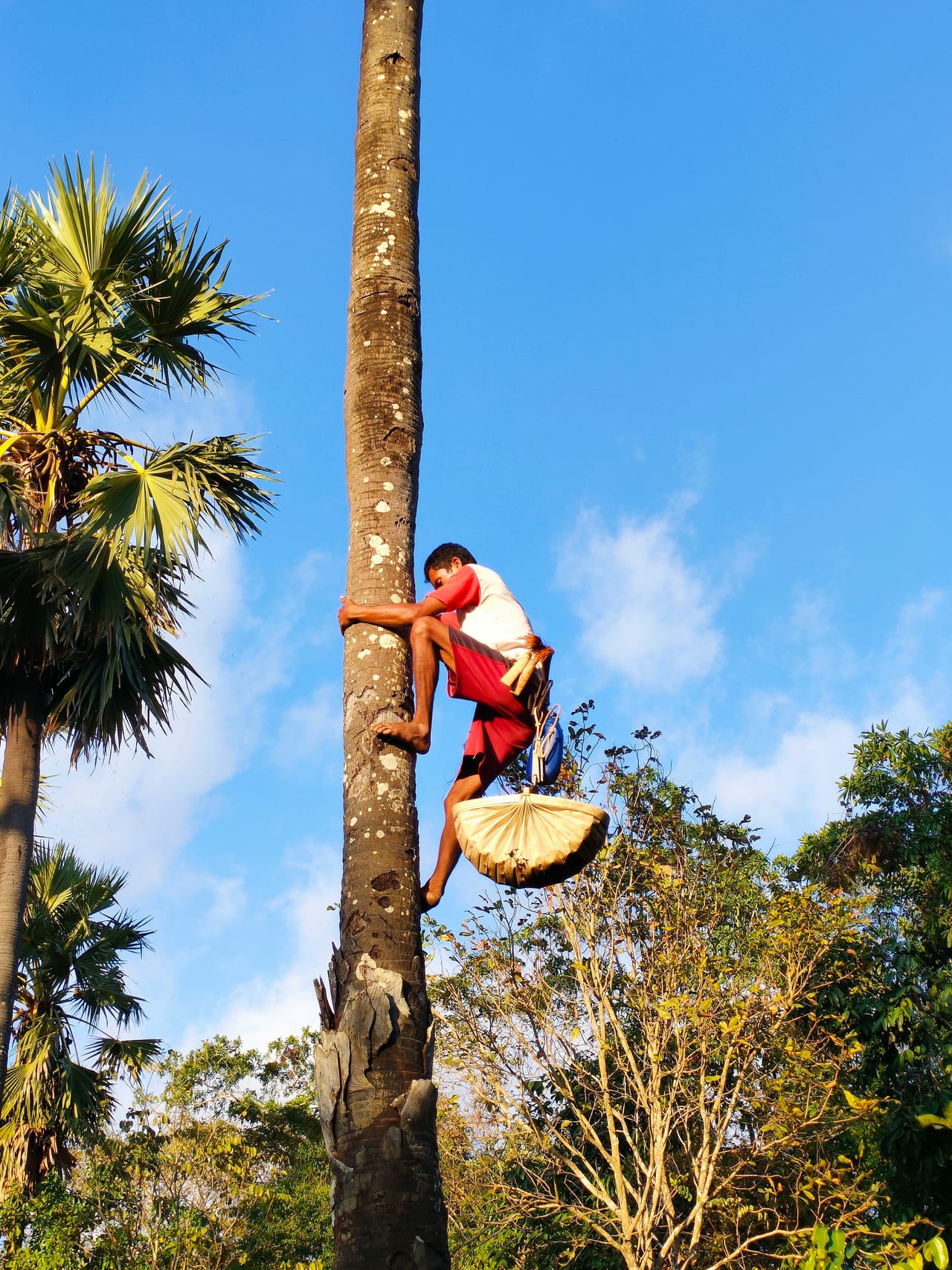
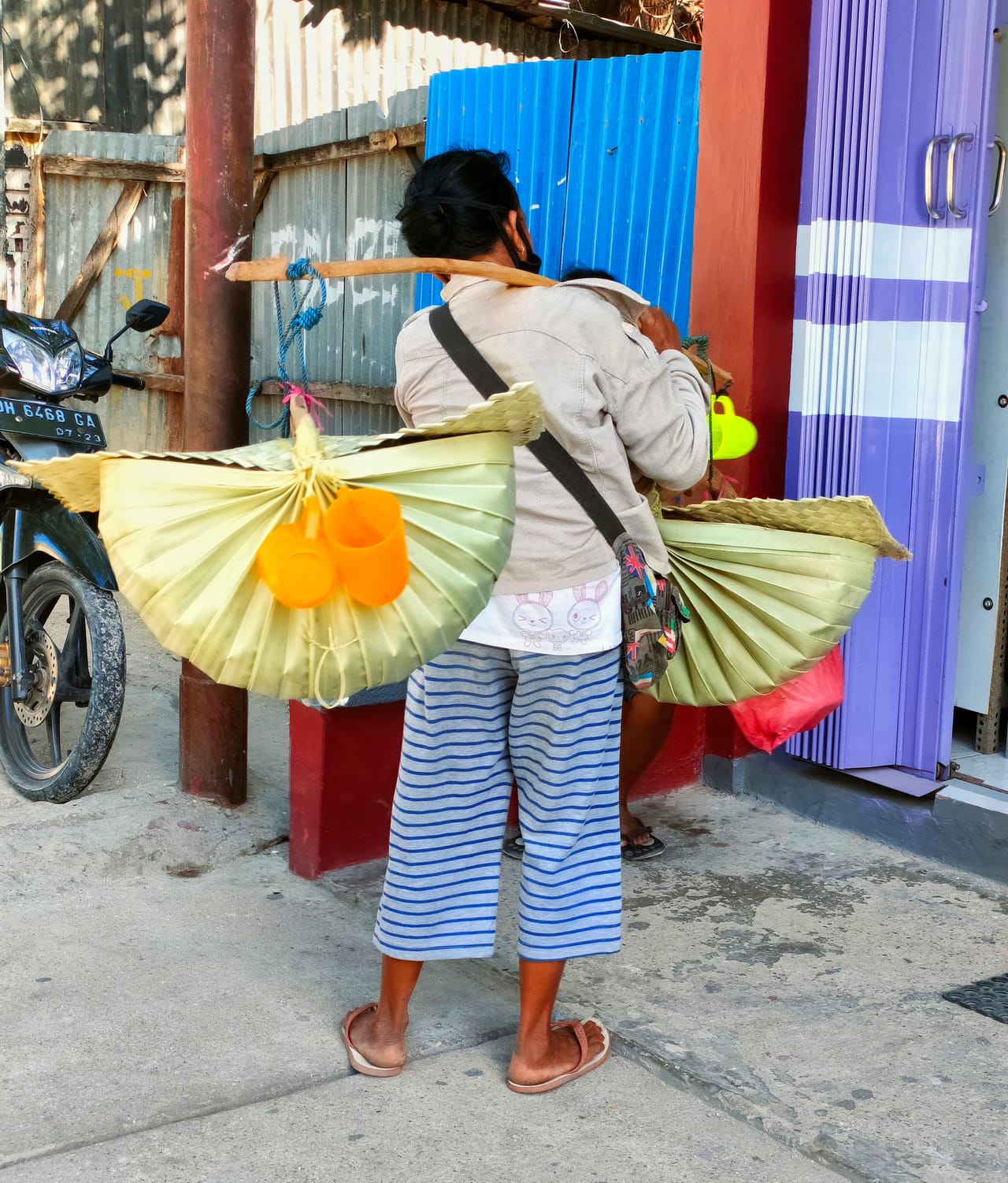
It is also a poor place by the numbers, and pretending otherwise is the fastest way to become the retiree nobody wants next door. Residents of the wider province live on roughly a third of the average Indonesian income, and much of the population gets by on less than a dollar a day, with basic infrastructure in many villages.1 Traditional life has long turned on the lontar palm, its juice, timber and oil carrying families through lean seasons, alongside subsistence farming and fishing.1 Living in Indonesia after retirement means dropping into that fabric as a wealthy stranger, and the island asks you to do it with humility. Learning enough Bahasa Indonesia to greet your neighbours, and respecting how the Rotenese clans organise social life, is not decoration. It is the rent you pay in respect, and it costs nothing but effort.
The paperwork you renew, not the status you win
Retiring in Indonesia as a foreigner runs on a permit you keep renewing, not a status you earn once and forget. The thresholds, the categories and the renewal cycle all live inside the Indonesia retirement visa rules, and most people hand the moving parts to a visa agent rather than fight the counters alone. What matters for your decision is the shape of the thing, not the fee schedule. Your right to stay is conditional and periodic. You hold it by staying on top of it, year after year, and it can lapse if you let it drift. Anyone who wants a place they can settle into and never think about again is asking the wrong country for the wrong favour.
Can you still leave?
Yes, but the exit is easier to imagine than to use, and you should map it before you need it. The framework built for younger movers, the one aimed at people weighing a move between 35 and 55, treats reversibility as arithmetic, income that travels, a lease you can break, ninety days to undo it all. For a retiree the triggers are different. A health decline that Rote cannot manage. A partner who can no longer handle the ferry. A currency swing that thins a fixed pension until the maths stops working.
So keep the door you came through open. Do not sink everything you own into a place a two-hour boat ride from the nearest hospital that can save your life. If you are still choosing the country at all, the shortlist of the best places to retire in Indonesia belongs earlier in your thinking than Rote does. The honest version of retiring abroad in Indonesia keeps a hand on the exit, not because you expect to run, but because the freedom to run is what lets you stay without dread.
What the island is really asking
Strip away the postcard and the demands are clear. Rote asks you to earn its distance, to plan for the frail version of yourself, to live at its pace, to arrive as a guest, to keep your papers current, and to protect your way back out. Meet those, and it gives you space, silence and a low cost of living that few places on earth still offer. This is the entry fee for retiring on Rote, and whether you are willing to pay it is the only question that decides the rest. If the answer is yes and you want a hand turning it into a working life, that is what the island’s concierge services are for.
Sources
Footnotes
-
On the Edge of Crisis: Contending Perspectives on Development, Tourism, and Community Participation on Rote Island, Indonesia. aseas.univie.ac.at ↩ ↩2 ↩3 ↩4 ↩5
-
Rote — Wikivoyage. en.wikivoyage.org ↩ ↩2
-
Is retirement good for your health? A systematic review of … - PMC. pmc.ncbi.nlm.nih.gov ↩ ↩2
-
Rote Island — dati (Wikidata). wikidata.org ↩
-
Geologia dell’area di Rote Island (Macrostrat). macrostrat.org ↩
-
Rote Island — Wikipedia. en.wikipedia.org ↩ ↩2