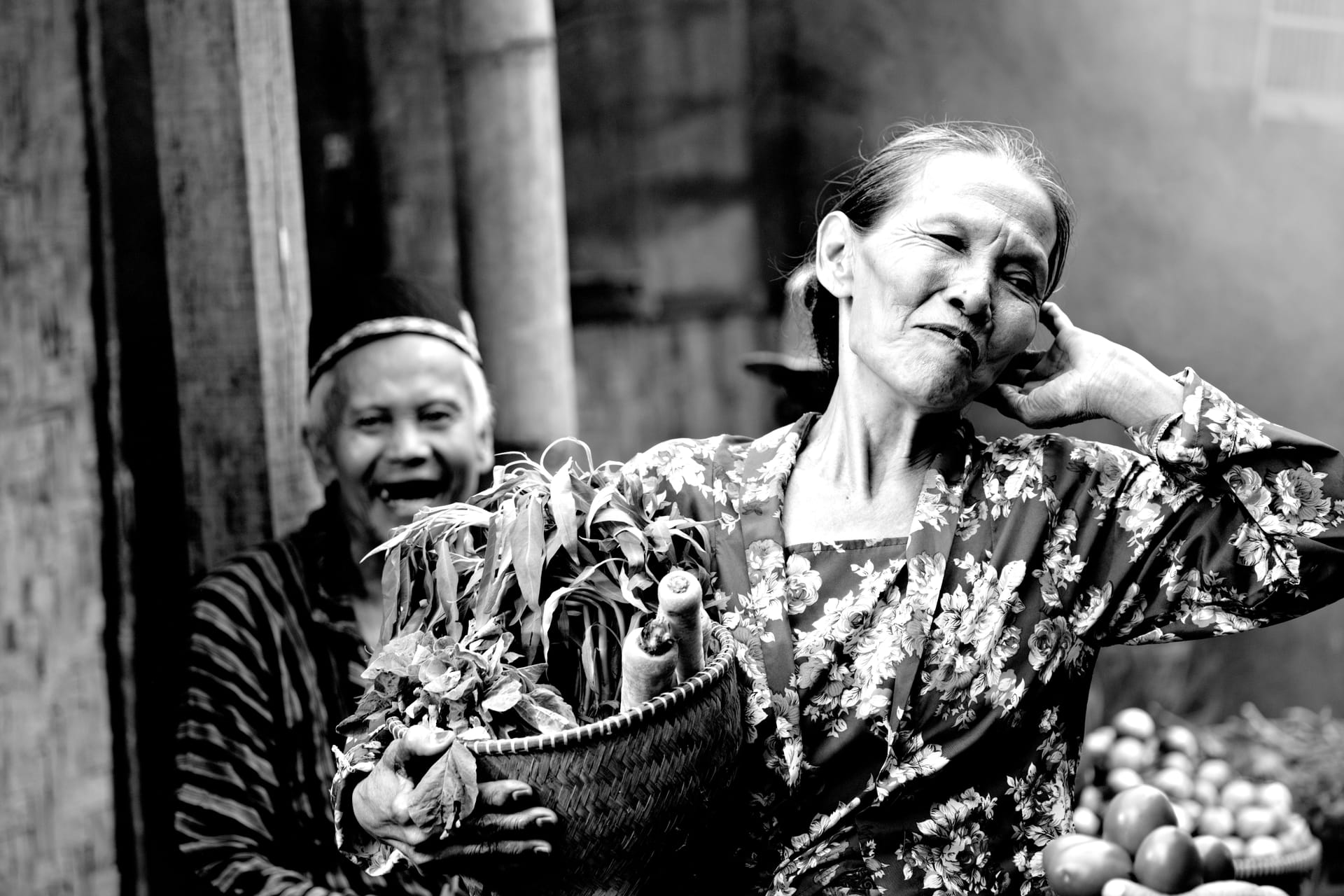
You’ve probably downloaded an app already. Duolingo, a phrasebook PDF, an audio course you play in the car. Keep it, it won’t hurt. The trouble starts your first Tuesday at the Ba’a market, when the woman selling you kangkung answers in something the app has never taught, and you work out that the language you studied and the language people speak around you are two different animals.
Nobody selling courses will tell you the honest thing, because the honest thing shrinks the product. So here it is from someone who pays rent on this island: you need far less Indonesian than the schools imply, and you need it in a very specific shape. The real question when you move here isn’t how do I study? It’s what’s the threshold? How much language buys you a normal life. That number is smaller than you think, and knowing where it sits saves you months of studying the wrong things.
How Much Indonesian Do You Actually Need on Rote?
Enough to run your own day without a translator at your shoulder. In practice that means somewhere around 500 to 1,000 active words, present-tense verbs, all your numbers, and the fixed phrases for renting, buying, asking directions, and being polite. Fluency is a nice hobby. Function is the goal, and function comes faster than any course timeline suggests.
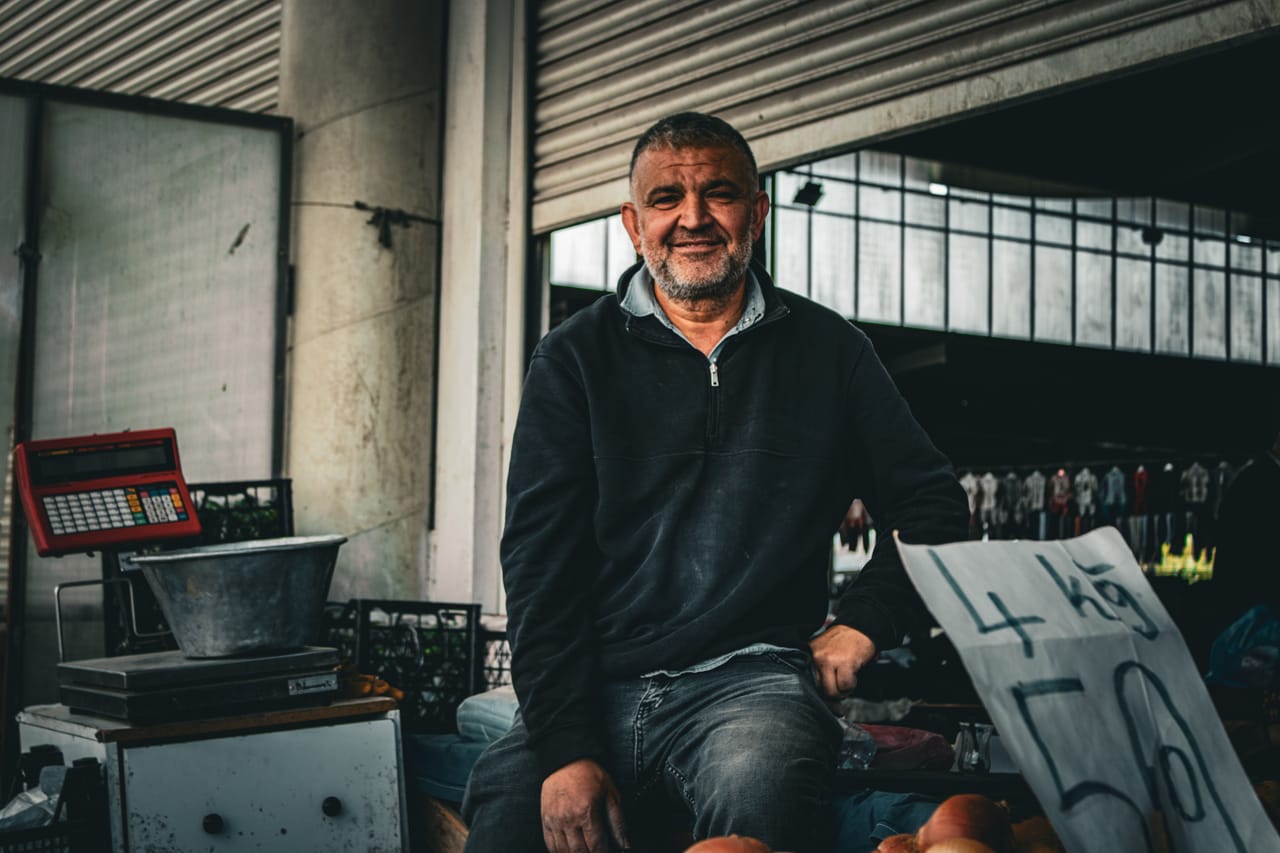
Indonesian helps you here in a way few languages help beginners. It’s a standardized variety of Malay that has worked as a lingua franca across the archipelago for centuries, and today it’s the official national language, with over 97% of Indonesians fluent in it according to the 2020 census.1 The grammar is kind. No verb tenses to conjugate, no grammatical gender, no case endings, no articles to trip over. You bolt words together and people understand you. A retiree I know was ordering coffee, negotiating a scooter rental, and joking with his landlord inside six weeks, all on a vocabulary you could fit on two sides of a notebook.
The mistake is treating the language like an exam you have to pass before you’re allowed to live properly. You don’t. On an island of 1,227 square kilometres where daily life runs on face-to-face contact,2 the standard for “enough” is set by the next conversation you actually need to have, not by a certificate on a wall.
The Three Languages You’ll Actually Hear

Every course, every app, every SERP result treats Indonesian as one smooth uniform thing. On Rote you’ll hear three distinct registers, often inside the same ten minutes, and knowing which is which stops you feeling like your studying failed.
First, bahasa Indonesia itself. This is the language of school, government offices, the immigration desk, the news, official forms, and anyone speaking to you carefully because they know you’re foreign. It’s the standardized Malay the state built and promotes, the one the Youth Pledge of October 1928 anchored as the national language.1 This is what your app teaches, and it’s the version you’ll read on every sign.
Second, Kupang Malay. This is the Malay creole of Kupang and the wider region, and it’s the everyday spoken language of ordinary life across this corner of Nusa Tenggara Timur. Kupang, the provincial capital across the water, is the logistical base most long-stayers pass through to reach Rote, and its street language leaks into daily talk here. It shares roots with standard Indonesian but drops formality, reshapes pronouns, and swaps in its own vocabulary. When the market vendor’s reply didn’t match your app, this is usually why.
Third, the Rotenese languages themselves. Termanu, Dengka, Lole, Ringgou, Bilba, Ti’i, Oenale, Dela. These are the mother tongues of the island, spoken at home, at church gatherings, at ceremonies, among neighbours who’ve known each other for life. You are not expected to learn these, and trying to is a poor use of your first year. What matters is recognising when you’ve walked into one of them, so you don’t mistake it for your own bad Indonesian. These sit inside the broader web of Rotenese culture and the social rhythms that decide whether you’re treated as a passer-through or a resident.
The practical takeaway: study standard Indonesian, expect to hear Kupang Malay, and let the local tongues stay in the background where they belong.
The Rooms Where Language Decides the Outcome
Some conversations you can survive with a smile and Google Translate. Others determine money, health, or your legal standing, and in those rooms the amount of Indonesian you carry changes what happens to you. These are the ones worth preparing for by name.
Renting a house and agreeing terms. The difference between a fair monthly figure and the foreigner figure often lives in your ability to talk numbers, push back gently, and confirm what’s included. A landlord who hears you handle Indonesian comfortably prices you differently from a landlord who sees a phone held up between you.
The puskesmas, the local community health clinic. When you’re describing where it hurts, how long, and what you already took, translation lag costs you. Learn your body-part words and the phrases for pain, fever, and allergy early. This is not glamorous vocabulary and it’s the vocabulary that matters most on a bad night.
A police checkpoint. Calm, polite, correct Indonesian turns a tense five minutes into a nod and a wave. Panic and English make it longer.
The immigration office. Your visa and stay permit run through people who work in formal bahasa Indonesia, and the paperwork is unforgiving. This is a room where you often shouldn’t go it alone, and I’ll come back to that.
The RT and RW, the neighbourhood administrative heads. Registering your presence, being known, being vouched for. A few sentences of respectful Indonesian here does more for your standing than any amount of money.
And the ones that are pure social membership, like a neighbour’s funeral. In a place where Christianity in Indonesia shapes so much of communal life, showing up and saying the right small thing in the right language is how you stop being the stranger in the house on the corner. You don’t need a speech. You need presence and a handful of correct words.
Where English Stops
English is a non-topic in every article on this keyword, because they’re written from Bali and Jakarta. On Rote, English is real but sharply bounded. It works inside the surf camps, with a few businesses used to foreigners, and with younger people who studied it. Two kilometres inland, in a village warung, with anyone over fifty, it’s gone.
This catches people out because the first week can feel deceptively easy. You land, the guesthouse owner speaks decent English, the surf crowd switches to it automatically, and you think you’ve dodged the language problem. Then you try to get your gas bottle refilled, or ask why the water’s off, or explain to a builder what you want moved, and the English safety net simply isn’t there. Planning your life on the assumption that English will bridge the gap is the single most common way long-stayers strand themselves.
The First 500 Words Do 90% of the Work
You don’t need a big vocabulary. You need the right small one, front-loaded. Here’s where your first months of effort actually pay off, in rough order of return.
Numbers, cold, both directions. Prices, quantities, times, phone digits, dates. If you learn one thing perfectly, make it counting, because almost every transaction runs on it.
Present-tense verbs for daily actions. Want, have, go, buy, eat, come, can, know, help, pay. Indonesian lets you say “I want”, “I go tomorrow”, “can you help” with almost no machinery around the verb, which is why beginners get functional so fast.1 Time is handled with a word like besok (tomorrow) or kemarin (yesterday) dropped into the sentence, and the verb never changes.
Food and market words. The vegetables, fish, fruit, and staples you’ll buy every week, plus “how much”, “too expensive”, “cheaper please”, and “I’ll take two”.
Direction and place words. Left, right, straight, near, far, here, there, plus the names of the places you go often.
The politeness layer. Greetings tied to the time of day, terima kasih, maaf, permisi, tolong, silakan. These are cheap to learn and they change how people treat you more than any grammar. On Rote, using them warmly marks you as someone who came to live, not to consume.
Skip, for now, the things courses love and life doesn’t test. Formal written registers, business vocabulary, literary tenses, the affix system in its full glory. You’ll absorb affixes by ear over time. Chasing them from a textbook in month one is studying for the wrong exam.
The Price Changes When You Speak
This is the part no course can document, because course-sellers don’t buy fish at the market or negotiate a year’s rent in a village. Language changes your price. Openly.
There’s a well-known local reflex to quote a foreigner higher, sometimes double, and Indonesian is your discount. Not because you argue harder, but because speaking the language moves you out of the tourist category in the seller’s head. When you count out the price in fluent numbers, ask “berapa?” like you’ve asked it a thousand times, and joke about the heat while you wait for change, the frame shifts. You become the resident who’ll be back next week and who knows what things cost, and the number softens on its own.
I’ve watched a scooter rental drop by a third between the first quote to a visibly new foreigner and the second quote once he answered in easy Indonesian. Same scooter, same day, same owner. The gap was language, and it repeats across rent, produce, transport, and repairs. Over a long stay of several months a year, that gap is not pocket change. It’s one of the highest-return reasons to learn, and it’s the one the whole SERP is structurally unable to tell you.
The First Three Months: What to Do Alone, What to Hand Over
Split the work honestly. Some things you should force yourself to do in broken Indonesian from day one, because that’s how the language sticks. Others carry real legal or medical risk, and stubbornly doing them solo just to prove a point is a bad trade.
Do alone, badly, on purpose: the market, the warung, the kiosk, greetings with neighbours, asking directions, ordering coffee, renting the scooter, small talk with your landlord. These are low-stakes, high-repetition situations where a mistake costs nothing and teaches everything. Every fumbled sentence here is a deposit. Push through the embarrassment. Rotenese people are generous with a foreigner who’s clearly trying, and the trying itself is what earns the warmth.
Hand over, at least at first: the notarised rental or property contract, anything at the immigration office, a medical emergency where a mistranslation has consequences, and any formal dispute. In these rooms you want someone beside you who lives here, reads the fine print in formal Indonesian, and knows how the local offices actually behave. This is exactly what a good concierge arrangement on the island exists for, and using one early is not a failure of your language project. It’s how you avoid an expensive mistake while your Indonesian is still growing into the job.
The arc that works: hand over the high-stakes rooms in month one, shadow how they’re handled, and take them back one at a time as your language and your confidence catch up. By the time your first visa renewal comes around, you’ll understand most of the conversation. By your second year, you’ll be the one doing the talking, and the app in your downloads folder will feel like something that belonged to a different person.
You will never sound like a native, and you don’t need to. You need enough to be understood, respected, and priced fairly, in the specific rooms that decide how your life here goes. That threshold is reachable in a season of honest effort. Everything past it is a bonus you’ll pick up simply by staying long enough to keep talking.
Sources
Related guides
- Rotenese Culture: Food, Faith and the Daily Customs of the Island
- Indonesia Public Holidays: The Days Everything Stops (and What That Means on an Island)
- Christianity in Indonesia: How Faith Shapes the Week on a Christian Island
- Indonesian Culture and Customs: What to Understand Before You Live Among Rotenese People
Footnotes
-
Indonesian language — Wikipedia. en.wikipedia.org ↩ ↩2 ↩3
-
Rote Island — dati (Wikidata). wikidata.org ↩