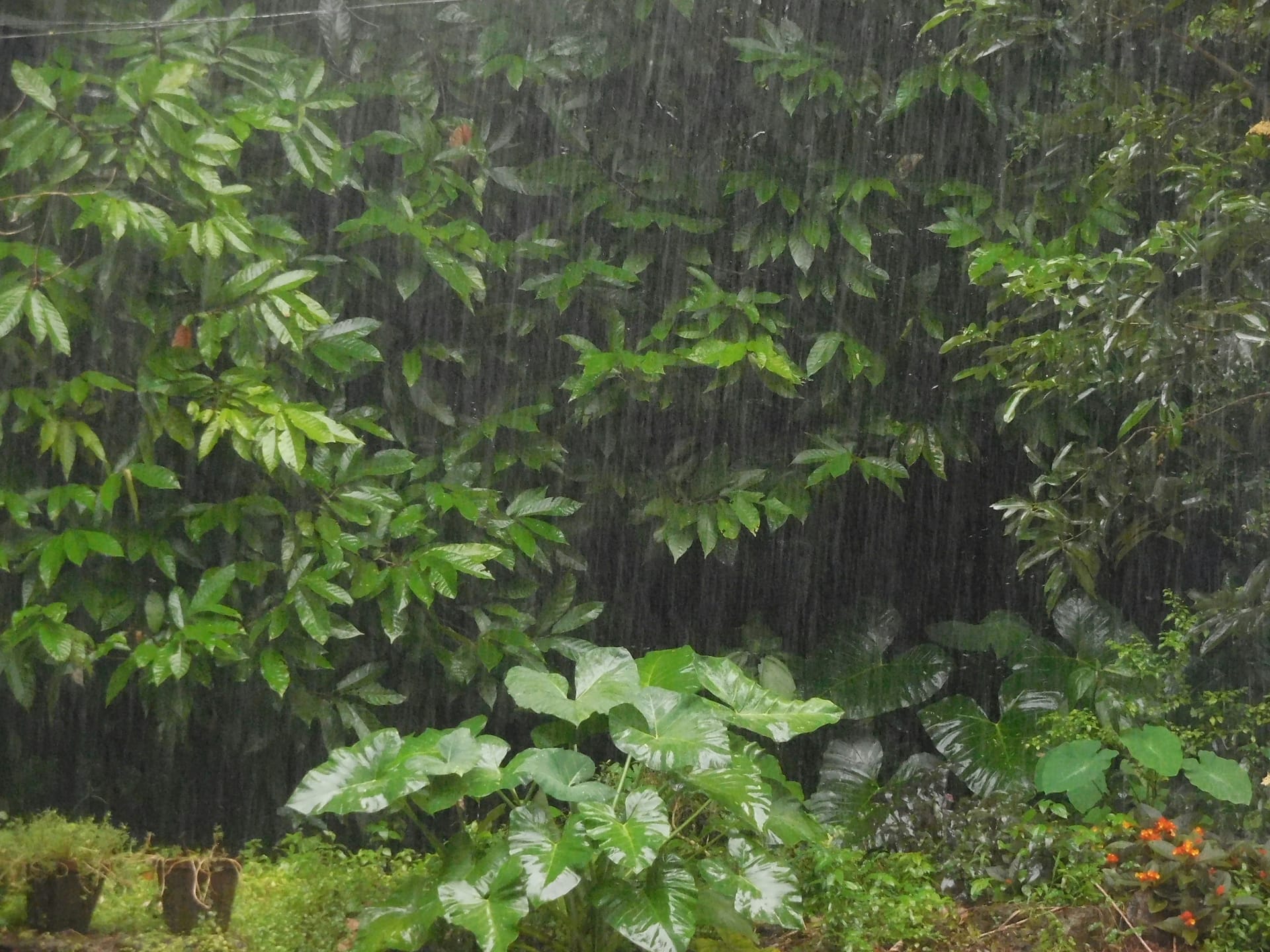
The first big rain of the season doesn’t knock. One afternoon the sky over the Savu Sea goes the colour of wet cement, the wind drops to nothing, and then the water comes down in a single sheet that turns the dirt lane outside your gate into a brown river in under ten minutes. By the time it stops you’ve learned something the booking sites never tell you. Rote in the wet half of the year is a different island to live in than Rote in the dry, and the difference shows up in your walls, your wifi, your fridge, and the boat you take back from Kupang.
That gap is the whole point of this piece. The timing of the indonesia rainy season, and whether it wrecks a two-week holiday, is easy enough to find. Far fewer sources tell you what it feels like to sit through it inside a house you’re paying rent on, with work to deliver and a kitchen to stock. If you’re weighing three, five, or eight months here, that second question is the one that matters.
When the Indonesia Rainy Season Actually Runs Here
Rote sits at the far southern tip of the Indonesian archipelago, down near latitude 10.7 degrees south, almost at the bottom edge of a country that stretches from about 11°S to 6°N and runs 1,760 kilometres top to bottom.12 Position matters, because the monsoon that brings the rain doesn’t arrive everywhere at once. Its onset sweeps from the northwest of the archipelago toward the southeast across the austral spring, so the islands down here at the tail catch the wet later than Java or Sumatra.3
In plain terms, the wet half on Rote clusters roughly from November through March, the dry half fills out the rest. The exact start drifts year to year, and the reason is worth knowing before you commit to a lease. The El Niño–Southern Oscillation exerts its strongest pull on Indonesian rain precisely during that September-to-December onset window, which is why one year the rains come early and heavy and the next they dawdle into December.3 You cannot set your calendar to it with a ruler. Work from the general shape and expect a few weeks of slop at either end.
The month-by-month booking math, when to land, when to fly out, what each extra month adds, belongs to the indonesia dry season side of the decision. Here the job is different. Here we stay inside the wet and look at what it does to the machinery of daily life.
What the Wet Does to a House

Humidity is the thing nobody budgets for. In the wet months the air on Rote stays thick for weeks, and a house that felt airy and fine in August starts to work against you. Leather sandals grow a grey fur overnight. A cotton shirt left folded in a drawer comes out smelling of cellar. The grout between bathroom tiles darkens, and if you’ve got a wardrobe against an outside wall, the back of it sweats.
This is the honest core of rainy season in Indonesia that the travel guides skip. Mould doesn’t announce itself. It moves into the quiet corners first, behind the headboard, inside shoes, along the rubber seal of the fridge door. The fix is dull and constant. You leave cupboard doors open, you run a fan across still air, you don’t let laundry sit damp, and anything you care about, documents, a good camera, spare lenses, lives in a sealed box with silica packs you recharge in the sun when a dry hour opens up.
Electronics feel it too. A laptop that runs cool and quiet in the dry months fights harder in the wet, and a machine stored in a still, humid room can wake up with condensation where you don’t want it. None of this is dramatic on any single day. It compounds. The renters who struggle are the ones who treat a tropical wet season like a wetter version of home and leave things shut up tight.
If the place you’re in will sit empty for part of the year, the stakes climb, because an unwatched house in the wet is where property management indonesia earns its keep. A house someone lives in breathes. A house locked up for months with the rains running grows things in the dark. The two situations meet right here, on the damage humidity does, and they ask for different habits.
The Work Week in the Wet
Remote work on Rote survives the dry season easily and the wet season with planning. The two soft spots are the same ones that hold up fine most of the year and wobble together once the rains settle in. Power and connection tend to degrade as a pair. A storm that knocks the grid also leans on the mobile signal, and the afternoon you most want a stable line for a call is often the afternoon the sky is busy doing something else.
The mechanics of the grid, how often it drops, what dies first, whether you can hold a video call through a cut and how to build a backup that catches you, are their own subject: power cuts, backup internet, and the days you can’t take the call. The seasonal fact is simpler and worth saying flat. In the wet half you should plan as if the worst-case day happens more often, because it does. Move the calls that cannot slip to the mornings, which hold up better than storm-prone afternoons. Keep the battery on the router charged. Treat a heavy-rain day as a day you work offline and sync later, and the wet stops being a threat to your income and becomes a rhythm you schedule around.
None of this makes Rote a bad base for work. It makes it an honest one. You trade a little certainty for a lot of quiet, and in the wet you pay a touch more of that trade.
Roads, Wind, and the Crossing
The sea between Kupang and Rote has a temperament, and it changes with the half of the year. The dry-season trade winds stiffen the crossing and coat everything in a fine dust, an effect that runs with the indonesia surf season and its swell calendar. The wet brings its own version. Squalls come up fast, schedules soften, and the decision of whether today’s boat runs gets made closer to the hour of departure.
For someone already living here, the crossing is a variable in ordinary life, not the one-time puzzle of getting to Rote for the first time. The wet-season shift is about elasticity. A supply run to Kupang that you’d pencil in for a single day in the dry wants a buffer in the wet, because the return leg can slide to the next sailing if the weather turns. Locals read this without thinking. You learn it by missing one boat and building slack in after that.
On land, the dirt roads that web the island turn greasy under heavy rain, and the low spots pool. A scooter ride that’s a ten-minute nothing in June asks for care in January. You slow down, you pick your hour, and you accept that some afternoons the smart move is to stay put and let a downpour finish.
Food, Stocking, and the Supply Rhythm
Rote eats well, and the wet doesn’t starve you. What it changes is the cadence of restocking. The run to resupply, the ordering, the shipping, the way things reach the island, is its own procedure: shipping luggage and the supply run. The seasonal wrinkle is that the wet loosens the reliability of the whole chain. A crossing that slips pushes a delivery. A road that floods delays the last leg from the landing to your door.
The practical answer is a deeper pantry. In the wet you keep more rice, more tinned and dry staples, more of the imported things you can’t source locally, so a three-day run of bad weather is a non-event instead of a problem. Fresh produce keeps coming, the market doesn’t close for rain, but the margin you run on anything shipped gets thinner, and a household that plans a week ahead rides it out without noticing.
How all of this lands on the monthly number, what the wet loosens and what it complicates, sits with the cost of living side of things. The material fact is the one that belongs here. Stock deeper, plan further, and the wet season stops dictating your week.
The Dry Half, Briefly, as the Other Side
It would be dishonest to paint the wet as hardship and leave it there, because the dry half is its own long season with its own texture, five months that can pass without real rain, wells dropping, dust on everything, a particular hard light, the lived texture of living through the dry season. The dry is easier on houses and harder on water. The wet is easier on water and harder on houses. Neither is the good season and the other the bad one.
What the wet gives you is a greener island, fuller cisterns, a softer crowd, and the particular pleasure of a place that empties out a little. What it asks in return is the vigilance this whole piece is about. If you’re the kind of long-stayer who likes a house that breathes, a slower week, and the patience to let weather set some of the pace, the wet rewards you. If you need certainty on every call and every crossing, you’ll want to weight your months toward the dry and read the wet as the off-beat you visit rather than inhabit.
That choice is yours to make with the calendar, and the month math lives with the dry-season side of the cluster. The lived reality of each half, the part you can’t get from a rainfall chart, is the thing you now have.
Sources
Footnotes
-
Rote Island — dati (Wikidata). wikidata.org ↩
-
Indonesia — Wikipedia. en.wikipedia.org ↩
-
Seasonal predictability of daily rainfall statistics over … iri.columbia.edu ↩ ↩2