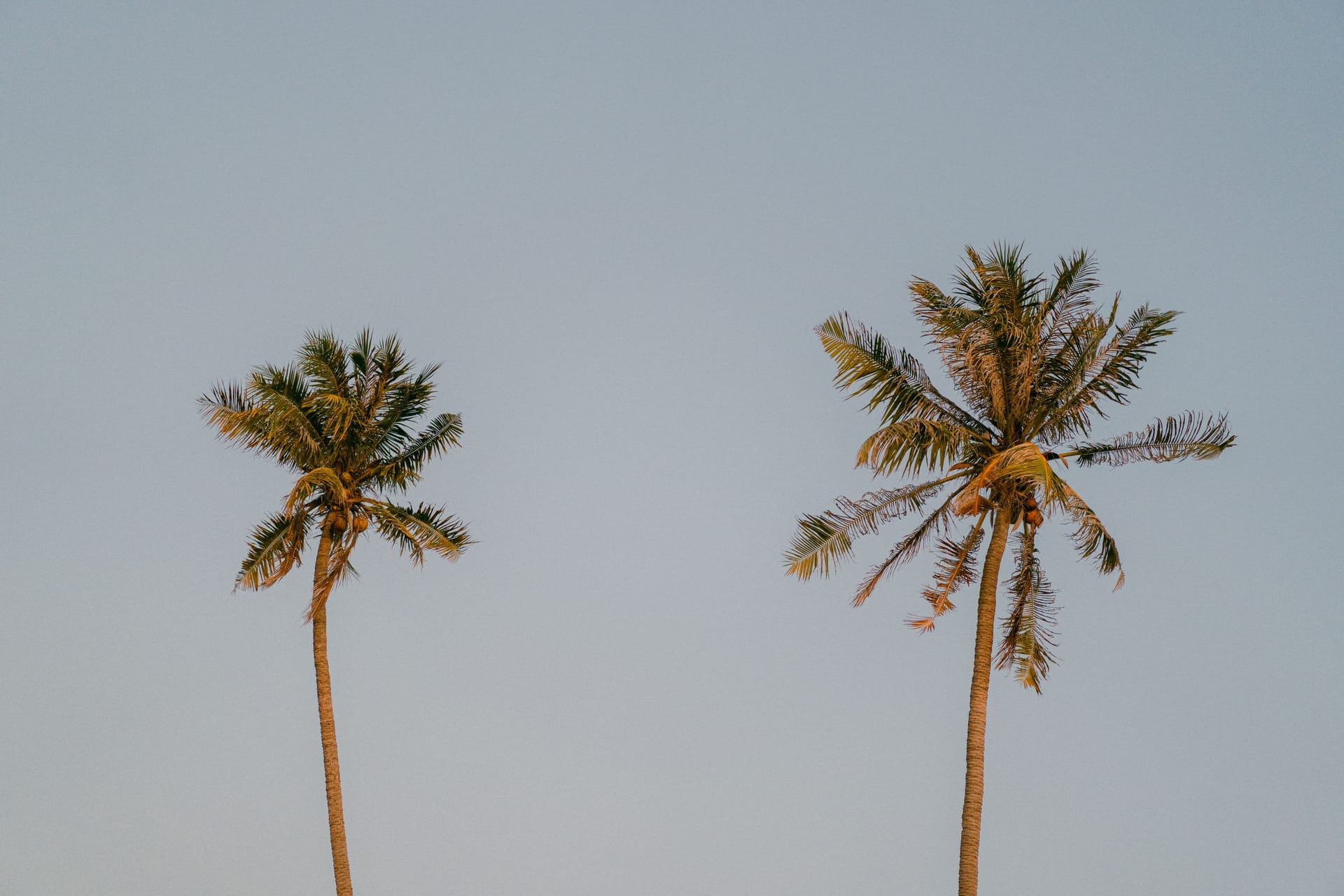
Stand anywhere on Rote at first light and you hear it before you see it. Someone is already up a tree, forty feet off the ground, cutting a fresh sliver off a flower stalk so the sap keeps running into a leaf bucket he tied there yesterday. That man is not harvesting a crop on the side. He is doing the thing the whole island economy has quietly run on for centuries.
The tree he is climbing is the lontar palm, and once you know what it does, you stop seeing Rote as “an island with a lot of palms” and start seeing it as an island that palms made livable.
What the Lontar Palm Actually Is
The lontar is Borassus flabellifer, a tall fan palm also called the palmyra or toddy palm, native to South and Southeast Asia.1 It reaches about 30 metres, with a straight grey trunk and stiff fan-shaped leaves, and on Rote it supplies sap, sugar, timber, roofing and, historically, the leaves people wrote on.
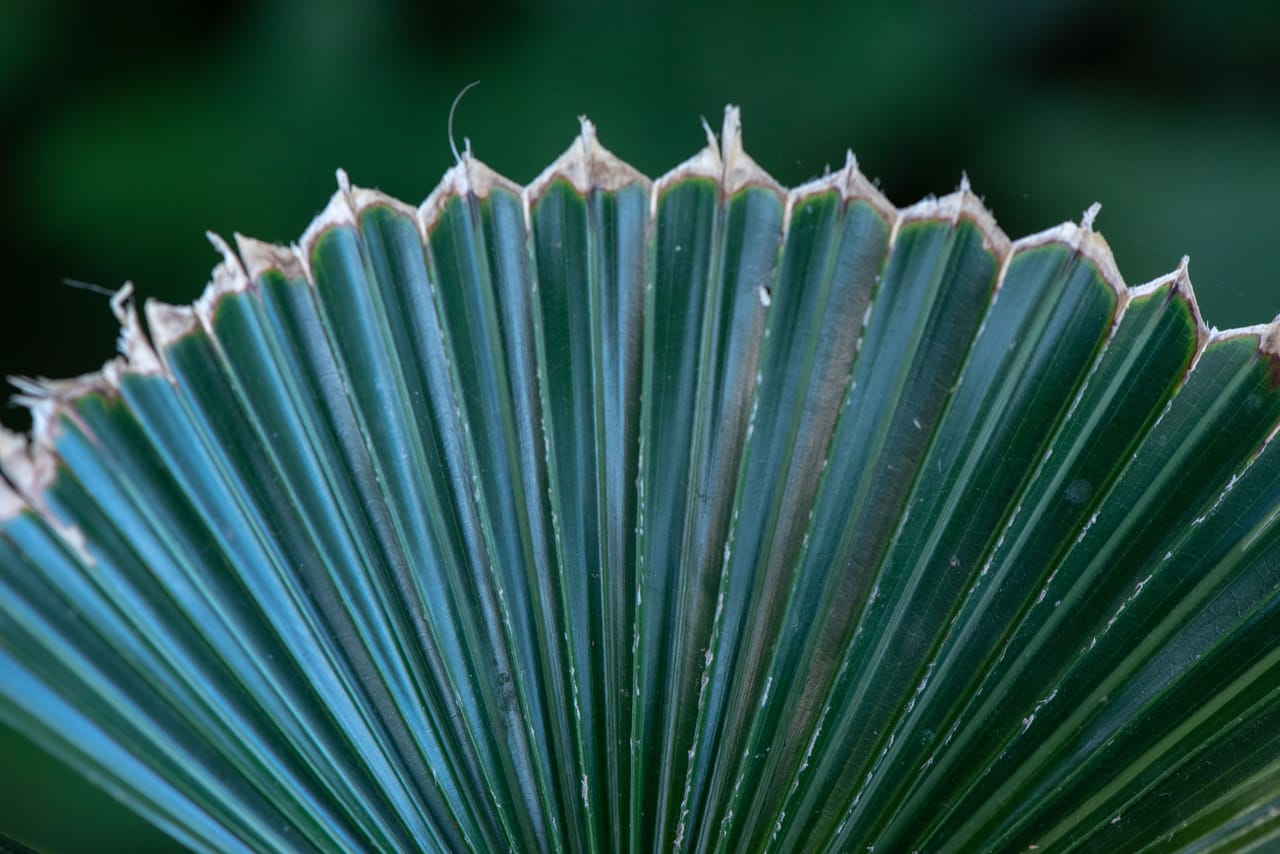
The lontar is Borassus flabellifer, a fan palm native to South and Southeast Asia, common across South India, Bangladesh and the drier parts of Indonesia. It is a big, slow, tough tree that can reach about 30 metres, with a grey trunk ringed by old leaf scars and a crown of stiff, fan-shaped leaves up to three metres long, edged with hard black teeth along the stalk. It goes by a long list of English names, among them palmyra palm, toddy palm, wine palm and ice apple.1
If you arrived picturing coconut palms, reset the picture. Coconut exists on Rote, but it is a bit-player. The tree that shapes the landscape, the diet and the household budget is this one, and it looks nothing like the bending coconut of a postcard. The lontar stands straight and heavy, closer to a grey column than a beach cliché.
The name itself carries a clue about how deep this tree runs in the culture. “Lontar” comes from the Old Javanese ron tal, meaning “tal leaves,” because the leaves were once the paper of the archipelago. People chose leaves of the right size and maturity, boiled them in salt water with turmeric to preserve them, dried them, polished the surface with pumice and cut them to size, then wrote on them with a stylus in a tight, looping script. Each leaf gave four pages.1 Whole libraries of the region were written on this palm before paper arrived. The tree literally held the writing of the culture that grew up under it, and that same leaf still turns up today in the Rotenese culture you meet in everyday village life.
Why Is Rote Covered in These Palms?
Because the lontar is the one tree that thrives in Rote’s dry climate. The island sits in the arid belt of Nusa Tenggara, where rains are short and rice fails often, and the lontar grows on thin soil, tolerates salt wind, and keeps producing sap right through the dry season.
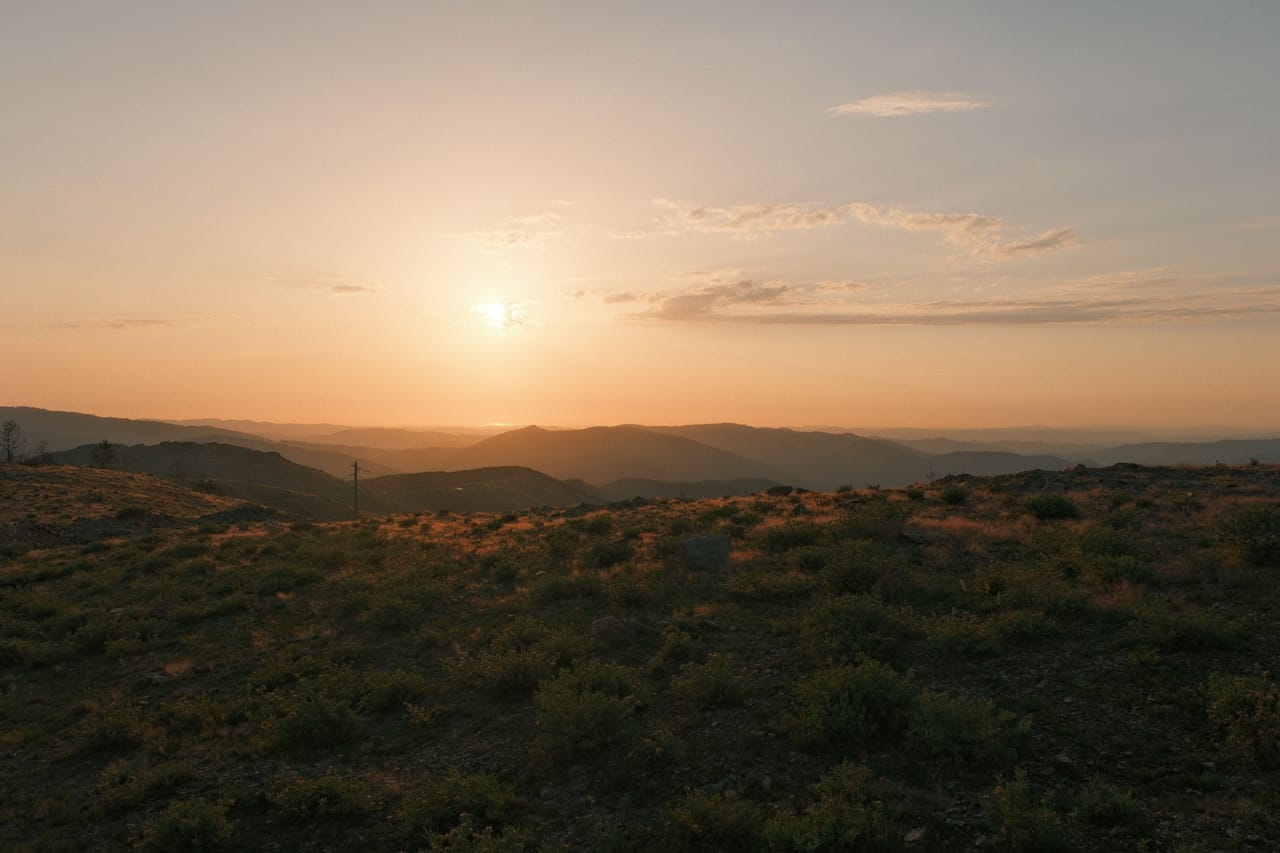
Short answer: because almost nothing else thrives here as reliably, and this one thrives spectacularly. Rote sits in the dry belt of Nusa Tenggara, closer in climate to northern Australia than to green, wet Bali. The rains are short and the long dry season is brutal on rice and most vegetables. The lontar shrugs at all of it. It grows on thin soil, stands up to salt wind near the coast, and keeps producing sap through the dry months when the gardens have given up.
So over generations the island did the sensible thing and leaned on the tree that never quit. On Rote and neighbouring Savu the lontar became the backbone of daily survival, the thing a household could count on when the harvest failed. That is why you see them in every direction inland, on the hills, along the field edges, ringing the villages. They are not landscaping. They are the pantry, the hardware store and the roof supply, all standing in the same field.
For anyone weighing up long stays here, this is the first honest thing to understand about the place. Rote is dry-country living, and the local food culture reflects it, from the palm sugar in your coffee to the smoked beef of se’i sapi at a family meal. The green-lagoon fantasy belongs to other islands. This one runs on grit and on a very generous tree.
The Morning Climb Up the Trunk
The core of the whole system is the sap, and getting it is hard, daily, slightly dangerous work.
The tapper climbs the bare trunk before dawn, often on nothing more than notches cut into the wood or a lashed bamboo ladder. Up in the crown he works the flower stalks, bruising and slicing the tip so the sap bleeds out, then hangs a container underneath to catch the slow drip through the day.1 Traditionally that container is a bucket folded and stitched from a single lontar leaf, waterproof enough to hold liquid for hours. He comes back to empty it, shaves a fresh cut to keep the flow open, and does it again the next morning. A good tree keeps giving for months.
There is nothing romantic about it when you watch it up close. It is a man with a knife, high in a tree, doing the same climb twice a day for years. But that drip is the raw material for nearly everything sweet and everything strong on the island.
From Sap to Sugar and Tuak
The fresh sap, called nira in Indonesian, is where two of the island’s staples split off.
Leave it alone and it ferments fast in the heat, turning within hours into tuak, the local palm wine. Mild and cloudy early in the day, sharper and stronger as it ages, tuak is the everyday drink poured at gatherings, ceremonies and the end of a working afternoon. It is genuinely woven into social life here, not a tourist novelty, and it is one reason the tree carries a status that goes well past economics.
Boil the sap down instead of letting it ferment, and you get palm sugar, the gula that sweetens Rotenese kitchens and much of Indonesia. Reduced slowly over a fire, it sets into hard cakes or discs of gula lempeng, dark and smoky and caramel-deep, or gets worked into loose golden crystals of gula semut. This is the palm sugar Indonesia cooks with, and on Rote it is very much a homemade product, made in the same yard where the sap was collected. In a normal household here a large share of the year’s calories and cash can come from this one loop of climb, tap, boil, sell. Whole families live off iris tuak, the work of tapping.
Taste it once at a traditional market and the mass-produced brown sugar back home stops making sense.
The Roof, the Bucket and the Instrument
The sap is only half of what the tree gives. The rest is the tree itself.
The leaves become roofs. Walk through any inland village and the thatch over the older houses is woven lontar, layered thick enough to shed the rains and keep the interior cool through the dry-season glare. A palm-leaf roof is not a permanent thing. It weathers, it thins, and every few years someone climbs up and relays a section with fresh fronds cut from the same fields. It is ongoing work, built into the rhythm of the year, and it costs the household leaves and labour rather than money. The same leaves are split and plaited into walls, mats, baskets and those stitched buckets the tappers carry up the trunk. The trunk itself, dense and dark, gets sawn into posts, beams and floorboards for houses and tools.
Two of the island’s best-known cultural objects are lontar objects, once you look. The ti’i langga, the wide Rotenese hat with the single spike rising off one side, is shaped from dried lontar leaf. And the fan-shaped resonator of the sasando, the plucked instrument that put Rote on Indonesia’s five-thousand-rupiah note, is a piece of dried lontar leaf folded around the strings to throw the sound. The music of the island quite literally comes out of a palm leaf.
That is the range of one tree. Roof, wall, bucket, basket, timber, hat, instrument, sugar, wine, and once upon a time the paper the language was written on. Older accounts of the palmyra from elsewhere in its range catalogue the same abundance of uses, which tells you this is not a Rote quirk but the deep pattern of the whole species.2
What This Means If You’re Thinking of Living Here
For a long-stayer, the lontar explains two practical things. Daily basics like sugar, roofing and mats are produced locally and cheaply, which keeps living costs low. And a plot of mature palms usually comes with informal harvesting rights attached, so understand who taps those trees before you consider buying land.
For a visitor, the lontar is scenery. For someone weighing a long stay or a move, it is information, and the practical kind.
It tells you what daily life is made of. The sugar in your morning coffee, the roof over the warung where you eat, the mat you sit on, the wine at the neighbour’s celebration, a lot of it traces back to trees within walking distance and to people who work them by hand. This is a place where basic things are still produced locally and cheaply, which is a real part of why costs here stay low and why the food has a taste of somewhere specific.
It also matters if you ever look at land. A field of mature lontar palms on Rote is rarely just standing timber. Those trees are very often already worked, tapped every morning by someone with a long-standing claim to the sap, whether or not that arrangement is written anywhere. A plot “full of palms” can come with living, informal harvesting rights attached to it. Before you picture clearing a view or fencing a boundary, understand who climbs those trees at dawn and what the tree already means to them. Get that wrong and you have not bought a quiet piece of land. You have walked into the middle of someone’s livelihood.
That is the real reason to know this tree before you commit to the island. Rote is not built on beaches or resorts. It is built, very literally, on the lontar palm, and the sooner you can read it, the sooner you understand the place you are thinking of calling home.
Sources
Footnotes
-
Borassus flabellifer — Wikipedia. en.wikipedia.org ↩ ↩2 ↩3 ↩4
-
The Palmyra Palm, Borassus Flabelliformis: A Popular Description of the Palm and Its Products, Having Special Reference to Ceylon: With a Valuable Appendix Embracing Extracts From Nearly Every Author That Has Noticed the Tree. books.google.co.id ↩