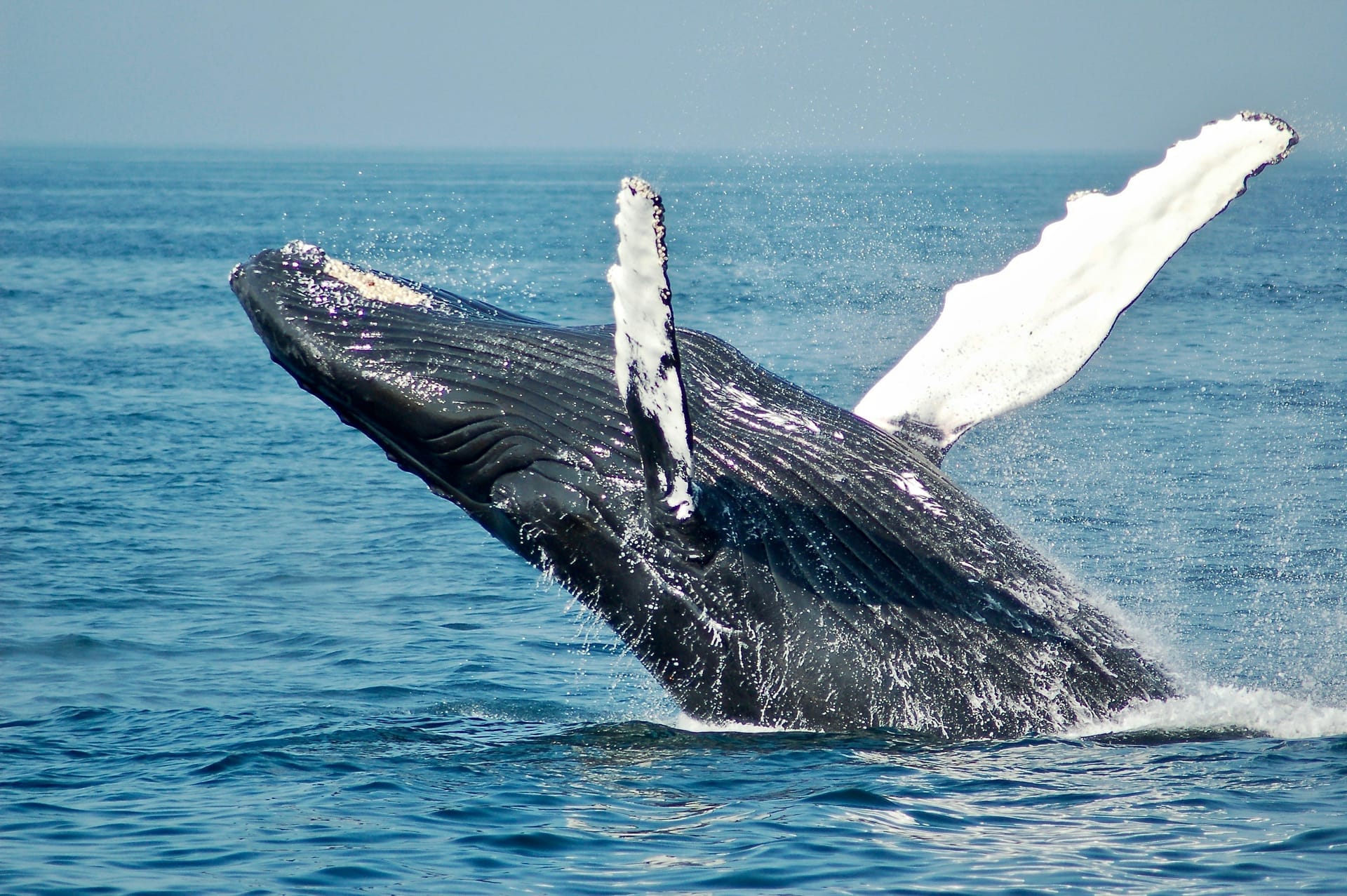
Off Rote’s coast the water is deeper than the highest point on the island is tall. Rote tops out around 320 metres above the sea; the Savu Sea that borders it drops to roughly 3,500 metres. 1 2 That single fact, cold deep water sitting right against a warm shallow coast, explains most of what long-stayers eventually notice here. Why the boats to the outer islands stop for weeks at a stretch. Why the fishermen work the calendar they work. Why, if you sit on the water long enough, something the size of a bus surfaces not far off the bow.
This is the marine world that the islands scattered between Rote and Sumba sit inside, and it rewards the people who stay long enough to read it.
The division that holds
The Savu Sea, also written the Sawu Sea, takes its name from the small island of Savu on its southern edge. It is a semi-enclosed basin, boxed in by land on almost every side. Savu and Raijua close it to the south, Rote and Timor to the east, Flores and the Alor archipelago to the north and northwest, and Sumba to the west. Between those islands the water spills out into the Indian Ocean to the south and west, the Flores Sea to the north, and the Banda Sea to the northeast. 3
It is small as seas go. It runs about 600 kilometres from west to east and roughly 200 from north to south, and its deepest measured point sits near 3,470 metres. 2 The biggest town on its shore is Kupang, the provincial capital over on Timor, with around 450,000 people and the airport and ferry docks that make it the practical base for anyone living out here. 2
Those hard edges matter more than the size. A basin ringed by islands, with narrow straits for exits and deep water in the middle, behaves differently from open ocean. Water gets funnelled, squeezed and pushed up. That is the engine underneath everything that follows.
What this piece does and does not cover
This is background, not a whale-watching itinerary and not a route planner. The practical business of ferries, Susi Air flights and how to build slack into a plan when the sea closes belongs to the crossing over to Savu, and the reef life you can actually swim through gets its own treatment under diving and snorkelling around Rote. What follows is the layer beneath both of those. It is the sea itself, and why it acts the way it does.
If you have read the pillar on the islands around Rote, you already have the map. This fills in what moves through the water between them.
Whale migration through Indonesia runs right past the door
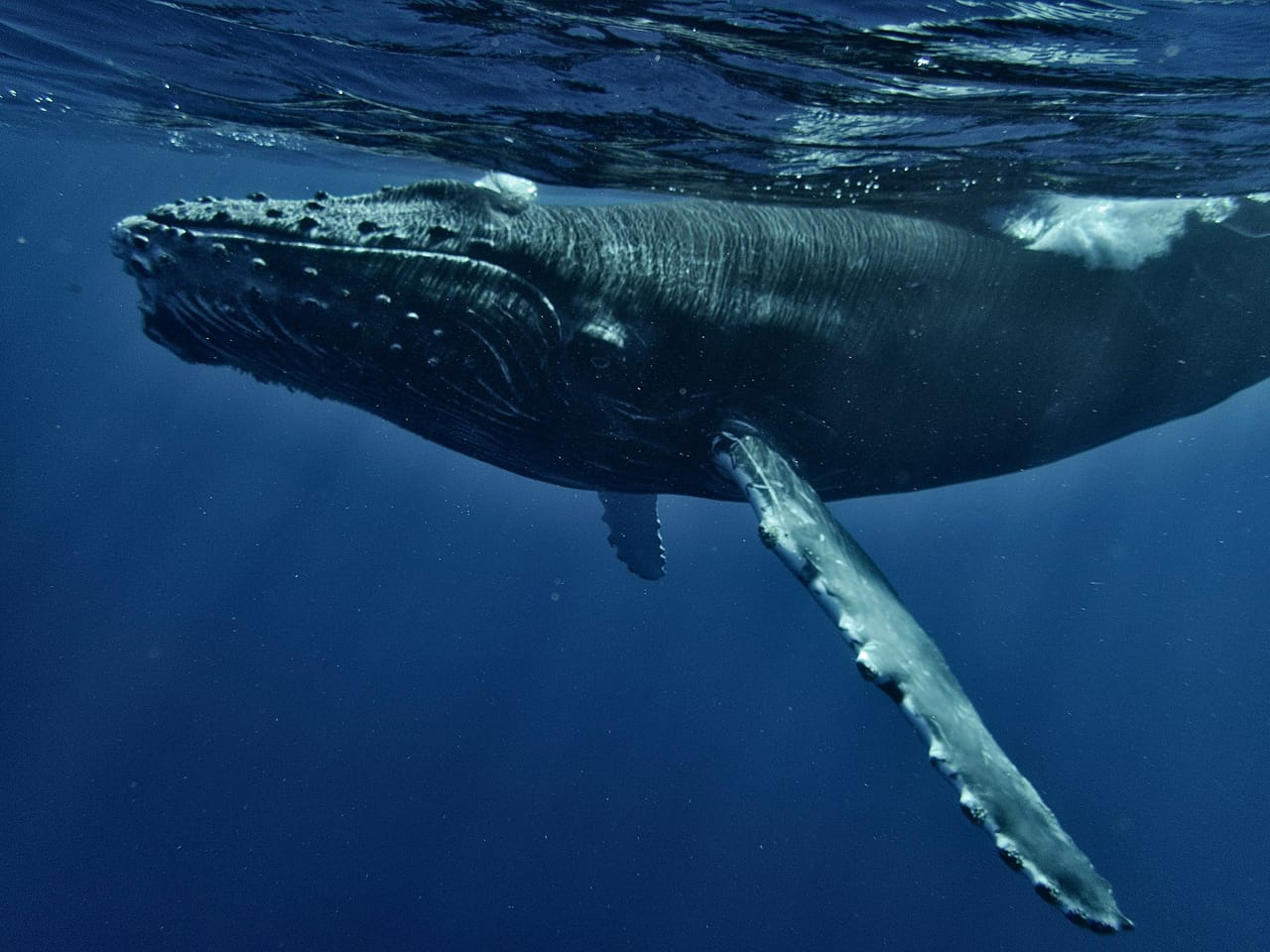
Pygmy blue whales are the headline animal here, and they keep a seasonal appointment rather than a casual one. The waters in and around the Savu Sea have been identified as a migration corridor for pygmy blue whales, linking waters off Australia to the Banda Sea further north. The animals pass through on a seasonal clock. 4
The tracking data makes it concrete. In April 2011, eleven pygmy blue whales were tagged off Australia; by June, five of them had moved into Savu Sea waters. One tagged blue whale later spent more than sixty days in the neighbouring Banda Sea. During an 18-day survey in 2013, running from the Savu islands toward northwest Timor, researchers logged five separate blue whale sightings. 4
Blue whales are only the largest of the crowd. The wider area supports twenty confirmed species of marine mammals, from sperm whales down to several kinds of dolphin. 4 The timing is the part worth memorising. Pygmy blue whale sightings in nearby Solor waters clustered between May and October. 4 Those months are the dry season, the same window that opens the crossings and settles the surf. If you want whales off Rote Island, you want the middle of the year, and you want patience, because none of it runs on a schedule you control.
Why the water runs cold and full
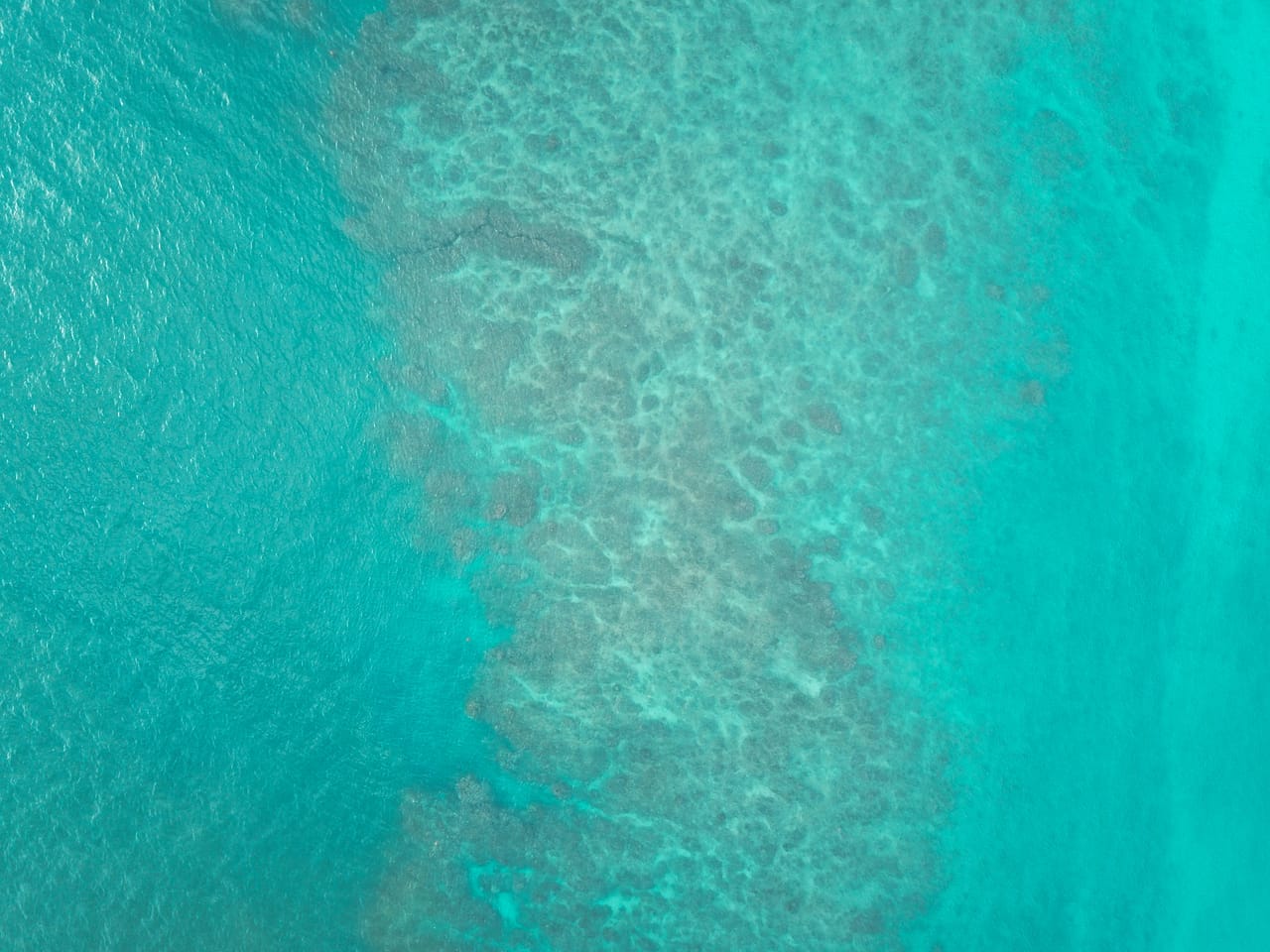
Cold water in the tropics sounds wrong until you understand upwelling. When the southeast monsoon pushes across the Savu Sea through the dry months, it drags surface water away from the coast, and deeper water rises to replace it. That deep water is cold and loaded with nutrients that have been sinking and collecting for years. Bring it to the surface, add tropical sunlight, and you get an explosion of plankton at the base of the food chain. 4
The basin’s shape sharpens the effect. Narrow straits, steep underwater slopes and the eddies that spin off them concentrate everything. Researchers describe the cetaceans here gathering around exactly these features, the upwelling zones, the thermal and chlorophyll fronts, the mesoscale eddies, because that is where the prey stacks up. The whales and dolphins follow the productivity. 4
This is why Savu Sea currents and Savu Sea upwelling carry real weight for anyone spending months on Rote. The same seasonal upwelling that feeds the whales is what fills the fishermen’s nets, and the slack water between monsoons is what lets small boats reach the outer reefs at all. When the water is at its coldest and richest, through the dry season, the whole system is running hot with life at the same moment the weather is finally kind. It is the closest thing this place has to a peak season, and almost nobody comes for it.
What you can realistically see from a small boat
Set expectations honestly. Nobody out here runs guaranteed whale trips, and the sea does not perform on demand. A tagged blue whale can spend two months in one basin and never show a fluke where you happen to be floating. What you get instead is the chance, stacked in your favour if you are already living here through the right months and willing to go out often.
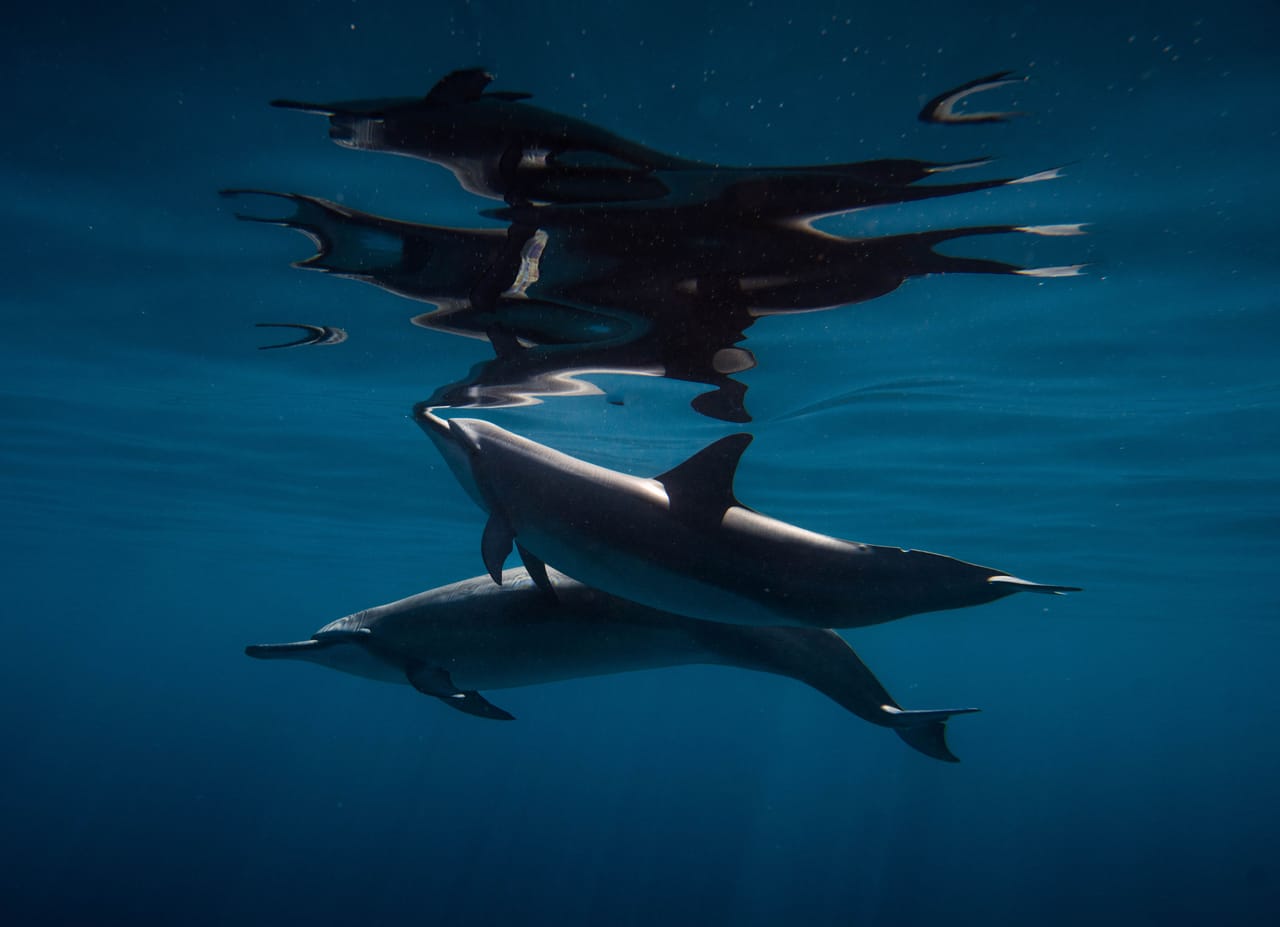
Dolphins are the realistic daily prize. In some bays along the corridor, spinner dolphins gather in the hundreds every morning and afternoon. 4 A charter boat working the calm bays around Oeseli and Ndana, or drifting the channels of the outer reefs, can meet them often enough to make the fuel worth it.
The everyday water is spectacular on its own terms even when the big animals stay hidden, with no shortage of secluded beaches for those who want them. 5 A short charter from Oeseli reaches Telaga Nirwana, a turquoise lagoon. Booking the boats, the spearfishing runs and the transfers out to the reefs is the sort of thing the island’s concierge and boat services handle, and it is the honest way in. You go for the water and the reefs, and the whales are a bonus the sea grants on its own timing.
What the fishing communities kept, and what protection changed
People have hunted this sea for a very long time. The Lamalera whalers, up on the northern rim, have taken sperm whales by hand for more than five hundred years, and that tradition still runs. 4 The pressure has told. Sperm whale catch rates in Solor waters have fallen by around eighty percent, and traditional whaling is still listed among the threats the region carries. 4
Against that history, protection arrived. All marine mammals in Indonesian waters have been fully protected since 1999. 4 Fishing communities in this part of Indonesia have their own long-standing ways of managing the waters they work, and any protection here has to live alongside them.
For a long-stayer this changes the texture of daily life more than it might seem. The fisherman selling you tuna at the Kupang gateway to Rote, the outrigger crews reading the season, the empty stretches of reef with nothing but a hand-line working them, all of that sits inside a protected sea that is still, first and foremost, a place people work to live. Understanding that is the difference between watching Rote and living in it.
Why nobody agrees on how many species live here
Look up the Savu Sea and you will find the number of whale and dolphin species quoted all over the place, and the figures do not match. The marine mammal survey work behind the protected-area designation lands on twenty confirmed species. 4
The gap comes down to what you count and where you draw the line. The formally recognised marine mammal area here covers 160,556 square kilometres. 4 Count every species ever glimpsed once inside that footprint and the tally climbs. Count only the species confirmed as resident or reliably recurring, and it settles lower. Add or subtract the animals that pass through the bordering straits and it shifts again.
For someone deciding whether this sea is worth structuring months around, the honest answer is the useful one. Twenty confirmed marine mammal species, a genuine blue whale corridor running past it, dolphins in the hundreds in the right bays, and an upwelling system that switches on with the dry season. The number stops mattering next to the plainer point. Be on the water through the dry season, keep going out, because this sea gives its best to the people who wait for it.
Related guides
- The islands around Rote: what months of time actually open up
- Savu and the small islands: where a long stay lets you go
- Sumba and the wider region: trips worth taking when you have months
Sources
Footnotes
-
Rote Island — dati (Wikidata). wikidata.org ↩
-
Mare di Savu. it.wikipedia.org ↩ ↩2 ↩3
-
Savu Sea — Wikipedia. en.wikipedia.org ↩
-
Savu Sea and Surrounding Areas IMMA. marinemammalhabitat.org ↩ ↩2 ↩3 ↩4 ↩5 ↩6 ↩7 ↩8 ↩9 ↩10 ↩11 ↩12
-
Rote — Wikivoyage. en.wikivoyage.org ↩