The first wedding invitation slid under our door on a Tuesday, hand-delivered by a kid from three houses down, and I almost treated it like a party I could skip. That was a mistake. On Rote, and across eastern Indonesia, an invitation is not a nice-to-have. It is a small contract. Indonesian wedding traditions, and the funerals that sit right beside them in village life, run on one rule that takes newcomers months to feel in their bones: the big events of a person’s life belong to everyone nearby, and you are now nearby. If you rent a house here, retire here, or spend half the year here, you stopped being a guest the day you moved in. You became a neighbour, and neighbours have jobs to do. Here is what those jobs are, at weddings and at funerals, and how not to get them wrong.
Why Weddings and Funerals Belong to the Whole Village
Back home a wedding is a private celebration with a guest list. Here it works the other way around. A wedding in Indonesia is less the union of two people than a celebration that pulls whole families and communities together, built from customs that shift from island to island 1. In practice the entire neighbourhood where the couple lives is not merely welcome at the wedding. It is expected to turn up 2. The same logic holds the day someone dies.
The machinery behind this has a name people use constantly: gotong royong, mutual help given without anyone asking for it. Neighbours arrive to cook, carry chairs, dig, and sit with the family, and nobody hands out assignments during a wedding or a period of mourning 3. You watch it happen and then, one day, you realise you are supposed to be part of it. This sits inside the broader web of indonesian culture and customs that shapes how you greet an elder, how you accept a plate of food, and how you show up for people.
Here is the part that trips up foreigners. Nobody keeps a ledger of who gave what envelope or which sack of rice, but the memory is long and shared anyway. Show up when your neighbour marries off a daughter or buries a parent, and they will show up for you. Stay home, and that is remembered too, quietly, for years.
What an Indonesian Wedding Actually Looks Like on a Christian Island
Most guides describe a wedding you will never attend here. They walk you through the Javanese akad nikah performed by a penghulu, the panggih where the couple throw betel leaves at each other to ward off evil 4, the siraman flower bath, the henna night 5. That is real Indonesia, but it is Muslim Java and Hindu Bali. Rote is Protestant Christian, and the wedding you get invited to looks different from the picture in your head.
The church ceremony
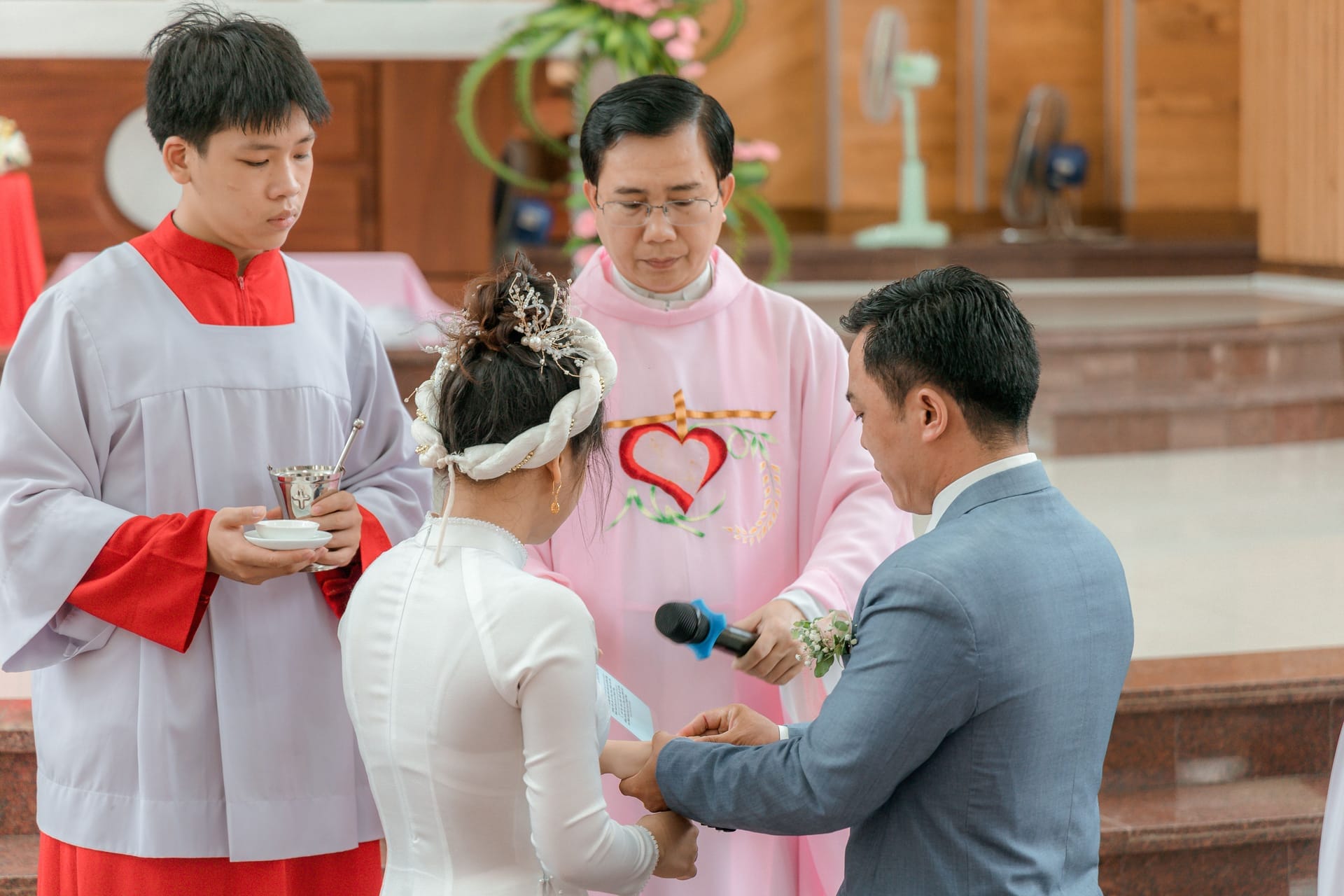
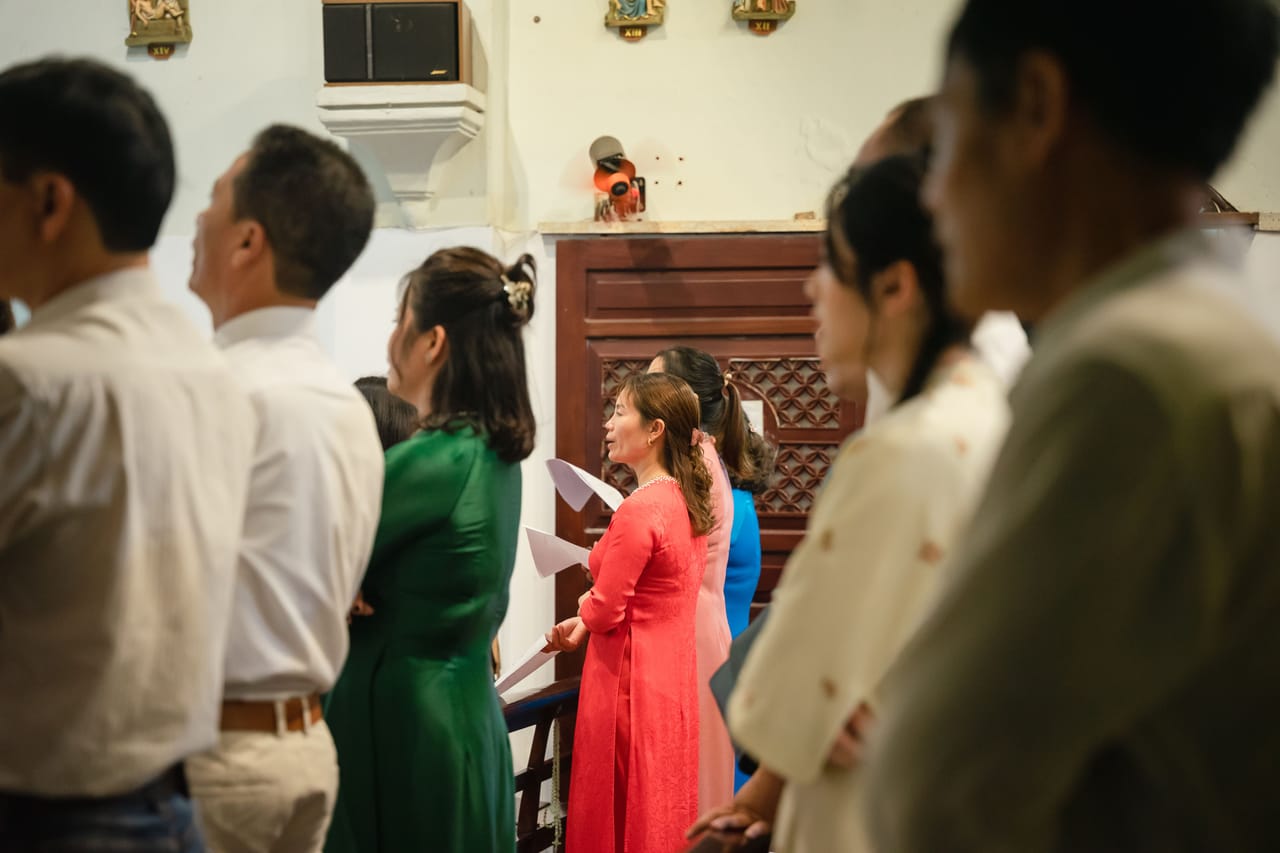
What is a wedding like in eastern Indonesia? On a Christian island it starts in church, with a service, a blessing, and a lot of singing, and only later becomes a legal fact at the civil registry. Across Indonesia a marriage has to follow the couple’s religion to count, and after the religious ceremony the couple completes a civil registration so the government recognises it 6. Most of the country is Muslim, but Protestant, Catholic, Hindu and Buddhist communities all run their own version 6. The faith side of this life is its own long story, woven into the history of christianity in Indonesia and worn lightly in daily village routine. For a foreigner the practical takeaway is simple. There is no akad nikah to observe here. There is a church, a pastor, hymns sung by half the congregation, and a couple who look faintly terrified at the front.
The reception: food, speeches and who does the work
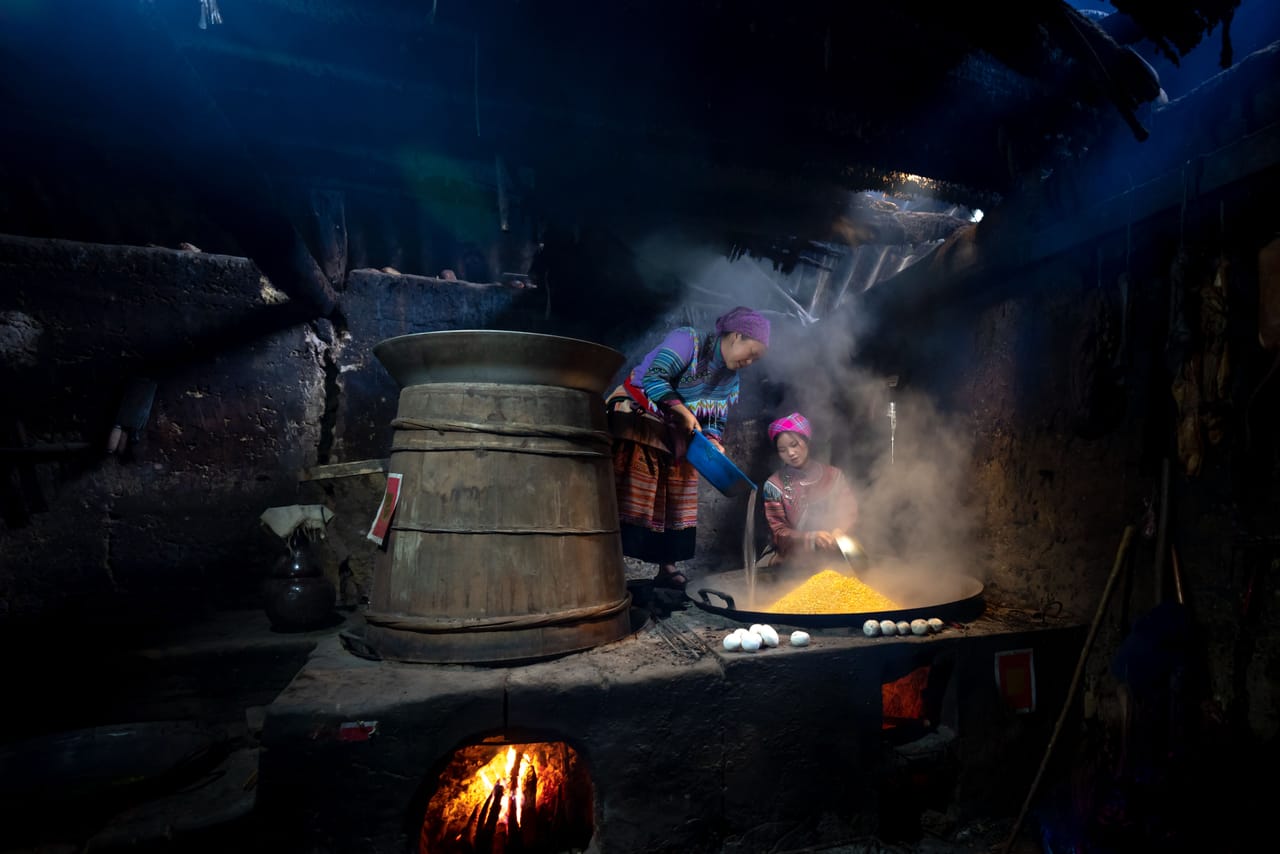
Then comes the reception, and this is where the neighbourhood earns its place. The women next door cook for days ahead of a big wedding. Pigs are slaughtered, rice is cooked in quantities that make no sense until you see the crowd, and the food is meant to be plentiful and shared 5. The feast can run long and generous, from simple fried rice and fish to full spreads of regional dishes 7. Local plates carry the weight here, including se’i sapi, the smoked meat that turns up at every gathering that matters. Then the speeches begin, and they do not end quickly. Family representatives can hold the microphone for up to half an hour each 7. Somewhere in the middle a sasando may be playing, the Rotenese instrument that sounds like nowhere else. You eat, you clap, you sit through the talking, and you stay long enough to be seen.
How long it lasts and when it happens
Do not plan a busy work week around a village wedding. Indonesian weddings are rarely a single afternoon. They spread across several days, with different gatherings and rituals along the way 8 6. That means the cousin who fixes your bike, the woman who sells you vegetables, and half the men on your road may simply be unavailable, because they are cooking, building, or celebrating. Weddings cluster around the calendar in ways that also collide with the rhythm of indonesia public holidays, so a quiet month can suddenly fill with three invitations. When the village disappears from work for a few days, a wedding is usually why.
The Amplop: How Wedding Money Actually Works
How much money do you give at an Indonesian wedding? Enough to be respectful, sized to how close you are to the family, and never so much that you turn a gift into a statement. There is no fixed rate. What matters is that you give, that your name goes in the book, and that the amount fits your real relationship rather than your foreign salary.
The mechanics are worth getting right, because this is where visitors fumble. You put cash in a decorated envelope, the amplop, and hand it to the host or drop it in the box. Your arrival is registered rather than simply noted in passing. That register is not a formality. It is the memory of the village made visible, and it is why the act of giving matters more than the size of the gift.
A few practical rules from living inside this system:
- Give money, not objects. Household gifts used to pile up at big weddings, where a single couple might end up with fifteen blenders, twenty mixers, and a row of rice cookers they could not use 7. Hosts came to ask guests for cash instead 7.
- Match the envelope to the relationship. A neighbour you barely know and the family of a close friend are not the same line in the book.
- Do not over-give. Handing over a foreigner-sized amount does not read as generous. It creates awkwardness and sets a precedent nobody wanted, and it quietly marks you as the rich outsider who does not understand the rules.
- If you are unsure, ask a local friend what is normal for someone in your position and give that.
The honest version is that you are buying membership, not settling a bill. The envelope says you belong.
Funerals: The Obligation Nobody Warns You About
Every wedding guide skips the thing that actually binds you to a village. A funeral is the one event where absence is noticed most. As a Toraja man put it, you can make an excuse for a wedding, but you have to come to a funeral 9. That instinct runs right across the archipelago, and it will land on your doorstep sooner than you expect.
What happens when someone dies
When someone dies in the neighbourhood, the house opens. Family and neighbours gather, the body stays home while people come to sit, and there are days of mourning before the burial. The church runs the service, and the community fills the yard. Elsewhere in Indonesia this can become vast. In Toraja, on Sulawesi, funerals are elaborate multi-day affairs with buffalo sacrifices, where a single animal costs around 20 million rupiah 9, and elite funerals sacrifice dozens of them 9. Rote is not Toraja. A Protestant wake here is quieter and cheaper. The shape of the obligation, though, is the same: you show up, and you keep showing up until the person is buried.
What you’re expected to do as a neighbour
Presence beats perfection. You do not need the right words in Indonesian, and you do not need to understand every prayer. You need to be there, sit down, share a coffee, and be counted among the people who came. This is gotong royong at its most serious, the help you give a grieving family without being asked 3.
Bring a contribution. Money in an envelope works, the same way it does at a wedding, but so do practical goods. Sugar, coffee, rice, sometimes a share toward the animal being cooked for the mourners. A house full of visitors for days has to feed everyone, and your bag of rice is part of how that happens. If you sit down and someone offers you betel to chew, taking it is a small yes to the whole arrangement.
Give your time, not just your money. Men help carry, build, and dig. Women help in the kitchen. A foreigner is not expected to run the operation, but standing usefully at the edge, carrying chairs, washing plates, holding an umbrella over an elder, is worth more than any amount you could put in an envelope. The family will remember who came and who stayed away, and on a small island you live with that memory every day afterward.
Dress, Timing and the Small Rules That Save You
A few practical things nobody tells you, that keep you from being the awkward foreigner in the corner.
Dress modestly and a notch up. For a church wedding or a wake, cover your shoulders and knees, wear something clean and ironed, and lean conservative. There is no single national costume to imitate, because every region has its own dress and fabric, and locals will blend traditional cloth with formal Western wear 5. You are not expected to match them. You are expected to look like you made an effort.
Read the invitation and honour it. Ignoring an invitation from someone you are close to, or skipping their event without a word, causes real offence and can sour the relationship for a long time 7. You are not obliged to attend every wedding on the island. From people you barely know, sending polite regrets is fine 7. From your actual neighbours, it is not.
Manage the timing. In cities, guests sometimes arrive late on purpose to skip the procession and speeches, and many stay only fifteen to thirty minutes before moving on, because a single evening can carry five or six invitations 7. A village is smaller and closer, so err toward staying longer and being visibly present. At a funeral, the calculation flips entirely. You go, and you do not rush.
None of this is folklore you observe from a safe distance. It is the price and the reward of living somewhere that still treats a neighbour as an obligation rather than a stranger next door. Pay it, and the island quietly folds you in.
Sources
Related guides
Footnotes
-
Discovering Indonesian Weddings: A Cultural Journey. polyglotclub.com ↩
-
THE BEAUTY OF WEDDING CULTURE IN INDONESIA. injoqast.net ↩
-
An Ethno Pedagogical Study of “Mepokoaso” in the Tolaki … ejournal.undiksha.ac.id ↩ ↩2
-
Marriage in Indonesia. en.wikipedia.org ↩
-
Customary Indonesian Wedding Traditions to Know. theknot.com ↩ ↩2 ↩3
-
Wedding Traditions in Indonesia: Culture and Customs. remitly.com ↩ ↩2 ↩3
-
Indonesian Wedding Ceremonies and Customs. expat.or.id ↩ ↩2 ↩3 ↩4 ↩5 ↩6 ↩7
-
Wedding Traditions in Indonesia: Culture and Customs for … remitly.com ↩
-
Learn About the Grief and Death Ceremonies of Torajans. nationalgeographic.com ↩ ↩2 ↩3